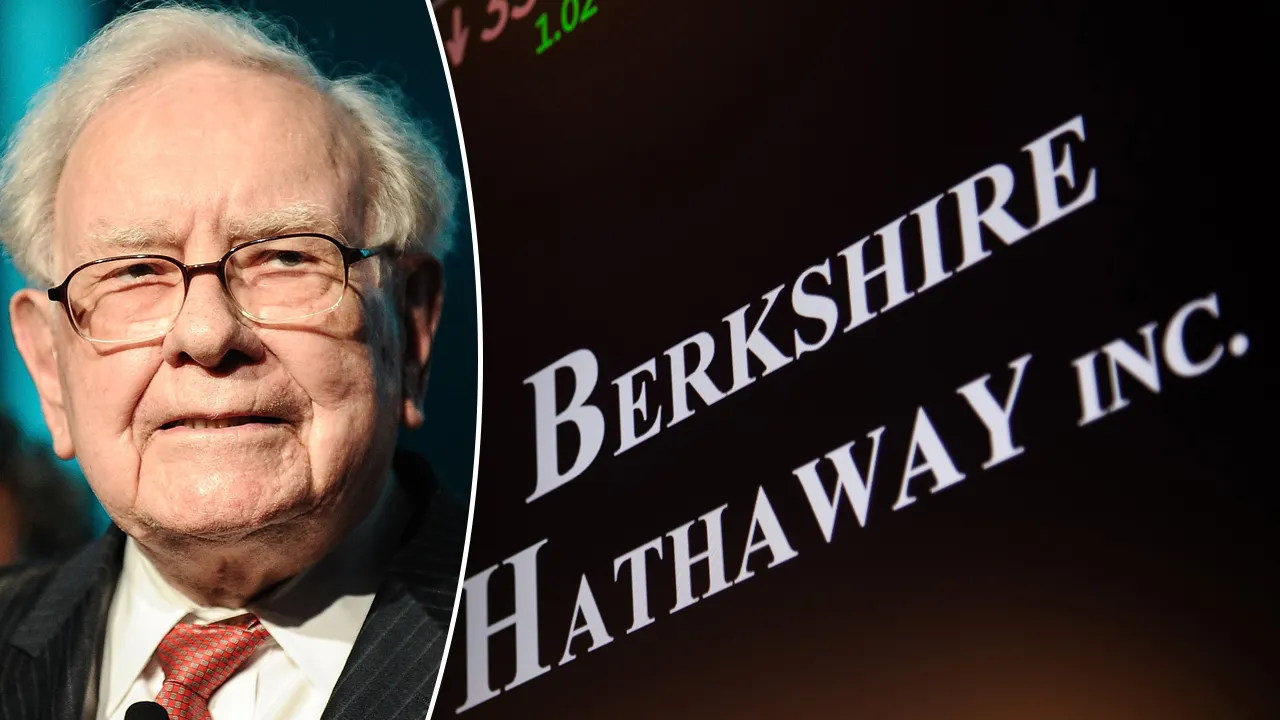
The resumption of share buybacks at Berkshire Hathaway serves as a public declaration of the company’s internal valuation of its own equity relative to the opportunity cost of its massive cash pile. When Warren Buffett directs capital toward the repurchase of Berkshire shares, he is making a binary decision: the expected internal rate of return (IRR) on those shares exceeds the risk-free rate of Treasury bills and the potential return of any currently available bolt-on acquisition or whole-company takeover. This movement is not a signal of confidence in the broader market, but rather a surgical execution of capital allocation based on a specific delta between market price and intrinsic value.
The primary mechanism governing this activity is the Intrinsic Value/Market Price Convergence. Unlike many S&P 500 firms that engage in systematic, calendar-based buybacks to offset dilution from stock-based compensation, Berkshire’s approach is opportunistic and price-sensitive.
The Dual Constraints of Berkshire’s Buyback Policy
The ability for Berkshire to execute repurchases rests on two specific, self-imposed constraints that function as a safety valve for the conglomerate’s long-term solvency.
- The Liquidity Floor: Berkshire maintains a strict requirement to keep at least $30 billion in cash and cash equivalents, primarily in U.S. Treasury bills. This floor ensures that the insurance operations—the engine of the company’s "float"—can meet catastrophic loss obligations without liquidating long-term equity holdings at distressed prices. Any buyback activity only occurs using "excess" cash above this threshold and the operational needs of the non-insurance subsidiaries.
- The Conservative Valuation Buffer: Buffett and Vice Chairman Greg Abel only authorize repurchases when the share price is, in their estimation, "below Berkshire’s intrinsic value, conservatively determined." While the historical "1.2x price-to-book" rule was officially retired years ago, the underlying logic remains: the buyback must result in an immediate accretion of per-share intrinsic value for the remaining shareholders.
The Float-Capital Synergy
To understand why a filing indicating buyback activity is significant, one must deconstruct the relationship between Berkshire’s insurance float and its capital allocation.
Insurance float represents money that does not belong to Berkshire but which it holds and can invest for its own benefit. As this float grows, the pressure to deploy it increases. When the "elephant-sized acquisition" remains elusive due to inflated private equity multiples or high interest rates affecting deal financing, the "excess" float becomes a liability to the Return on Equity (ROE). By repurchasing shares, Berkshire effectively shrinks its equity base, which allows the earnings from its diverse subsidiaries—ranging from BNSF Railway to Geico—to be distributed over fewer outstanding shares. This increases Earnings Per Share (EPS) without requiring any operational improvement in the underlying businesses.
The Opportunity Cost of Treasury Bills
The timing of a buyback resumption is often a commentary on the yield of the "risk-free" asset. If 3-month or 6-month Treasury bills are yielding 5%, the hurdle rate for a share buyback increases. Berkshire must believe that the long-term compounding rate of its own diversified portfolio of businesses will significantly outperform that 5% guaranteed return.
The recent filing suggests a shift in this calculus. If Berkshire is increasing its buyback pace, it implies one of three conditions has been met:
- The market price of Berkshire Class A and B shares has dipped into a range that offers a significant margin of safety.
- The management sees a lack of viable external acquisitions that can clear the current high hurdle rate.
- Internal cash generation from operating businesses has reached a level where the liquidity floor is being exceeded faster than the company can find external places to put the money.
Measuring Accretion: The Shareholder’s Math
The value created by a repurchase is defined by the formula:
$$Value\ Created = (Intrinsic\ Value - Purchase\ Price) \times Shares\ Repurchased$$
If Berkshire buys back shares at 1.4x book value while the management believes the intrinsic value is 1.7x book value, they are effectively transferring wealth from the exiting shareholder to the remaining shareholder. This is a non-taxable event for the continuing owners, making it a more capital-efficient method of returning value than a dividend, which would trigger immediate tax liabilities for the entire shareholder base.
The "glimpse" of resumption provided by the filing indicates that the volatility in the financial sector or specific shifts in Berkshire’s own price-to-earnings (P/E) ratio has re-opened a window of mispricing. In a market characterized by high valuations in the technology sector, Berkshire often trades at a discount to its "sum-of-the-parts" value, particularly when its massive energy and utility holdings are undervalued by a market focused on short-term growth.
The Structural Limitation of Size
Berkshire’s biggest challenge—and the reason buybacks are becoming a permanent fixture of their strategy—is the Law of Large Numbers. With a cash pile often exceeding $150 billion, there are very few companies globally large enough to "move the needle" for Berkshire that are also available at a fair price.
The cost function of a $50 billion acquisition includes a "control premium" that often erodes the margin of safety. Conversely, buying back $50 billion of its own stock requires no premium, no due diligence on unfamiliar management, and no integration risk. It is the cleanest possible transaction for a conglomerate of this scale.
Strategic Execution Path
For an investor or analyst, the signal is clear: Berkshire management views their current stock price as a more attractive investment than the broader market and more attractive than holding maximum levels of cash. This creates a psychological and mathematical floor for the stock.
The move to resume buybacks at scale should be viewed as a tactical retreat to a "fortress" position. Instead of chasing external growth in an overvalued market, the strategy focuses on consolidating ownership of the existing, highly profitable ecosystem. The most effective move for observers is to calculate the implied "Buffett Buyback Price"—the weighted average price at which these repurchases occurred—and use that figure as a proxy for a "hard" intrinsic value floor. When the market price approaches this level, the risk-asymmetric opportunity for entry is at its peak.



