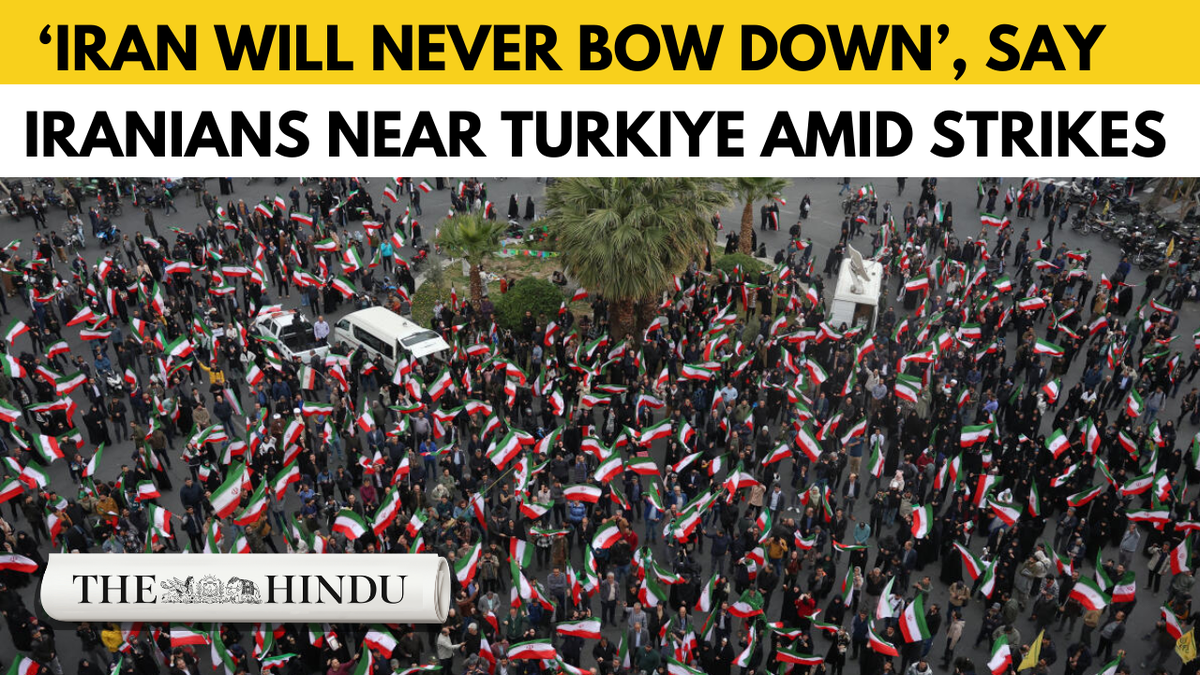
Public sentiment in high-tension geopolitical theaters is rarely a monolith of emotion; it is a calculated output of state-managed narratives, historical inertia, and the physical realities of kinetic warfare. When analyzing the Iranian response to the joint U.S.-Israel kinetic operations of early 2026, the surface-level observation of "defiance" masks a complex underlying architecture of social and military signaling. To understand why a population remains stoic under the threat of advanced aerospace incursions, one must dissect the three structural pillars of Iranian domestic resilience: the Normalization of Kinetic Risk, the Asymmetry of Information Control, and the Calculated Elasticity of Public Dissent.
The Architecture of Kinetic Normalization
The Iranian civilian response to precision strikes is governed by a long-term exposure to regional instability, creating a high threshold for psychological disruption. This normalization functions as a defense mechanism, neutralizing the "shock and awe" intended by Western strategic doctrine. Unlike populations in low-conflict zones, the Iranian populace operates within a Risk-Adjustment Framework where the probability of localized strikes is baked into the daily economic and social cost.
The efficacy of a strike is often measured by its ability to degrade the will of the adversary's base. However, when the state successfully frames these strikes as "violations of sovereignty" rather than "consequences of policy," the external pressure generates a rally-around-the-flag effect. This is not a product of universal support for the ruling clergy, but a visceral reaction to territorial breach. The mechanics of this reaction follow a predictable path:
- External Threat Identification: The presence of foreign aircraft or missiles triggers a transition from internal political friction to external defense posture.
- Resource Prioritization: Domestic grievances (inflation, water scarcity, social restrictions) are temporarily deprioritized in favor of existential security.
- Narrative Consolidation: State media leverages the kinetic event to validate its long-term stance on Western "Arrogance," effectively using the opponent's ordnance as proof of their own ideological claims.
Technical Asymmetry and the Information Vacuum
The reported "defiance" is also a byproduct of a tightly controlled information ecosystem. While Western audiences see high-resolution satellite imagery and B-roll of precision-guided munitions (PGMs) hitting logistics hubs, the domestic Iranian audience receives a curated feed designed to minimize the perceived impact of the strikes.
The Signal-to-Noise Ratio in State Media
The Iranian state employs a Strategic Minimization tactic. By acknowledging the strikes but characterizing them as "failed attempts" or "minor damage to non-essential infrastructure," they prevent the spread of panic. This creates a technical bottleneck for the average citizen: without access to unfiltered damage assessments, their "defiance" is rooted in a reality where the enemy’s capabilities are portrayed as ineffective.
The gap between the technical reality of the strike and the public perception is managed through:
- Latency in Reporting: Delaying news of the strike until a "success narrative" can be constructed.
- Visual Displacement: Focusing cameras on undamaged civilian areas near the strike zone to imply broader safety.
- Acoustic Desensitization: Framing the sounds of air defense systems ($S-300$ or $Bavar-373$ batteries) as "successful interceptions," regardless of whether the intercept was actually achieved.
The Role of Encrypted Parallel Networks
A critical limitation to this state control is the proliferation of VPNs and encrypted messaging platforms. A significant subset of the urban population accesses external reporting in real-time. For this demographic, defiance is not born of ignorance but of a cynical calculation. They recognize the tactical superiority of the U.S.-Israeli hardware but view the political objective—regime change or behavioral shift—as fundamentally flawed. This segment of the population exhibits a "stoic detachment," realizing that their personal safety is rarely the primary target of high-altitude PGMs, which are instead calibrated for $C4I$ (Command, Control, Communications, Computers, Intelligence) nodes and IRGC logistical chains.
The Strategic Logic of Social Cohesion
The social response to strikes cannot be divorced from the economic reality of the "Resistance Economy." For a decade, Iran has structured its internal markets to survive isolation. This economic hardening has a psychological corollary: a population that has survived maximum pressure sanctions is structurally less likely to be moved by a single night of missile strikes.
The Cost-Benefit Analysis of Dissent
In the immediate aftermath of an external attack, the cost of domestic dissent rises exponentially. The security apparatus (Basij and internal police) views any internal protest during a period of "National Defense" as treason rather than civil disagreement. Consequently, the public "defiance" observed by journalists is the only safe public posture available.
We must distinguish between Active Allegiance and Strategic Compliance.
- Active Allegiance: True believers who view the strikes as a religious and nationalistic catalyst.
- Strategic Compliance: Citizens who may dislike the regime but recognize that an Israeli-led strike is not the catalyst they want for domestic change.
This distinction is vital for intelligence analysts. If the "defiance" is perceived as unanimous support for the IRGC, the strategic conclusion is that more strikes are needed to break the bond. If the "defiance" is understood as a temporary alignment against a common foreign threat, the strategy must shift toward decoupling the people from the state's security narrative.
Escalation Dominance and the Threshold of Response
The U.S.-Israel strikes are a test of Escalation Dominance—the ability to increase the stakes of a conflict in a way that the opponent cannot match. The Iranian defiance is a counter-signal. By appearing unbothered, Tehran is communicating that the current level of kinetic pressure has not reached the "Pain Threshold" required to force a diplomatic retreat.
The mechanics of this signaling involve:
- The Reassurance Cycle: Senior military officials appearing in public within hours of a strike to demonstrate operational continuity.
- The Proxy Leverage: Reminding the domestic and international audience that while Iran’s soil may be hit, its "Forward Defense" (proxies in Lebanon, Iraq, and Yemen) remains intact.
- Symbolic Reconstruction: Immediate, visible repair efforts at strike sites to signal that the damage was superficial.
The Fragility of the Defiance Model
While the current posture is one of strength, it is subject to a Law of Diminishing Returns. If strikes transition from strategic military targets to "dual-use" infrastructure (power grids, water treatment, fuel refineries), the psychological armor of the population will likely fracture. Defiance is sustainable as long as life remains functional. Once the kinetic operation degrades the civilian quality of life beyond a certain point, the "Rally Effect" is replaced by "Resource Competition," where the population turns against the state for its inability to provide basic protection and services.
Tactical Intelligence vs. Strategic Outcome
The error made by many analysts is conflating a successful tactical hit with a successful strategic outcome. A $2000$-lb $GBU-31$ hitting a drone assembly plant is a tactical success. If that same strike results in a video of a defiant Iranian grandmother shouting slogans against the West, it may be a strategic failure in the "Information War."
The current environment suggests that the U.S. and Israel have optimized for the former, while Iran is winning the latter within its own borders. The "defiance" isn't just a mood; it is a weaponized social metric used by Tehran to convince its neighbors that the Islamic Republic is an immovable object in the path of Western interests.
The Operational Directive
To penetrate the "Defiance" shell, strategic planners must shift from a kinetic-first approach to a Narrative-Kinetic Integration. This requires:
- Precision Attribution: Clearly communicating to the Iranian public, through non-traditional channels, exactly why a specific facility was targeted (e.g., "This site launched the drones that increased your tax burden").
- The Avoidance of "Collective Guilt": Ensuring that strikes are so surgical that they do not disrupt the civilian grid, thereby denying the state the "Civilian Martyrdom" narrative.
- Exploiting the Gap: Highlighting the disparity between the lavish funding of the targeted military infrastructure and the decaying state of the local civilian economy.
The end-state of the current cycle is not a collapse of the Iranian state, but a hardening of its resolve. To change the trajectory, the external powers must move beyond the "Watch them react" phase and enter the "Shape the reaction" phase. This involves recognizing that every missile fired carries a payload of both explosives and information; if the information payload is not carefully calibrated, the explosives will only serve to reinforce the very structure they were intended to weaken.
The next logical move is the deployment of localized, non-kinetic disruptions that target the regime's ability to communicate its success. By neutralizing the state's narrative-forming tools—specifically its control over the mobile data environment—the "defiance" will be forced to compete with the unvarnished reality of tactical loss.