The current pause in direct kinetic engagement between the United States and Iran is not a stable equilibrium but a high-maintenance standoff defined by asymmetric risk tolerances and misaligned incentive structures. To evaluate why this ceasefire remains on "shaky ground," one must look past the diplomatic rhetoric and analyze the three structural pillars currently preventing a formal resolution: the Proxy Autonomy Trap, the Sanctions-Enrichment Feedback Loop, and the Domestic Political Veto.
The Proxy Autonomy Trap
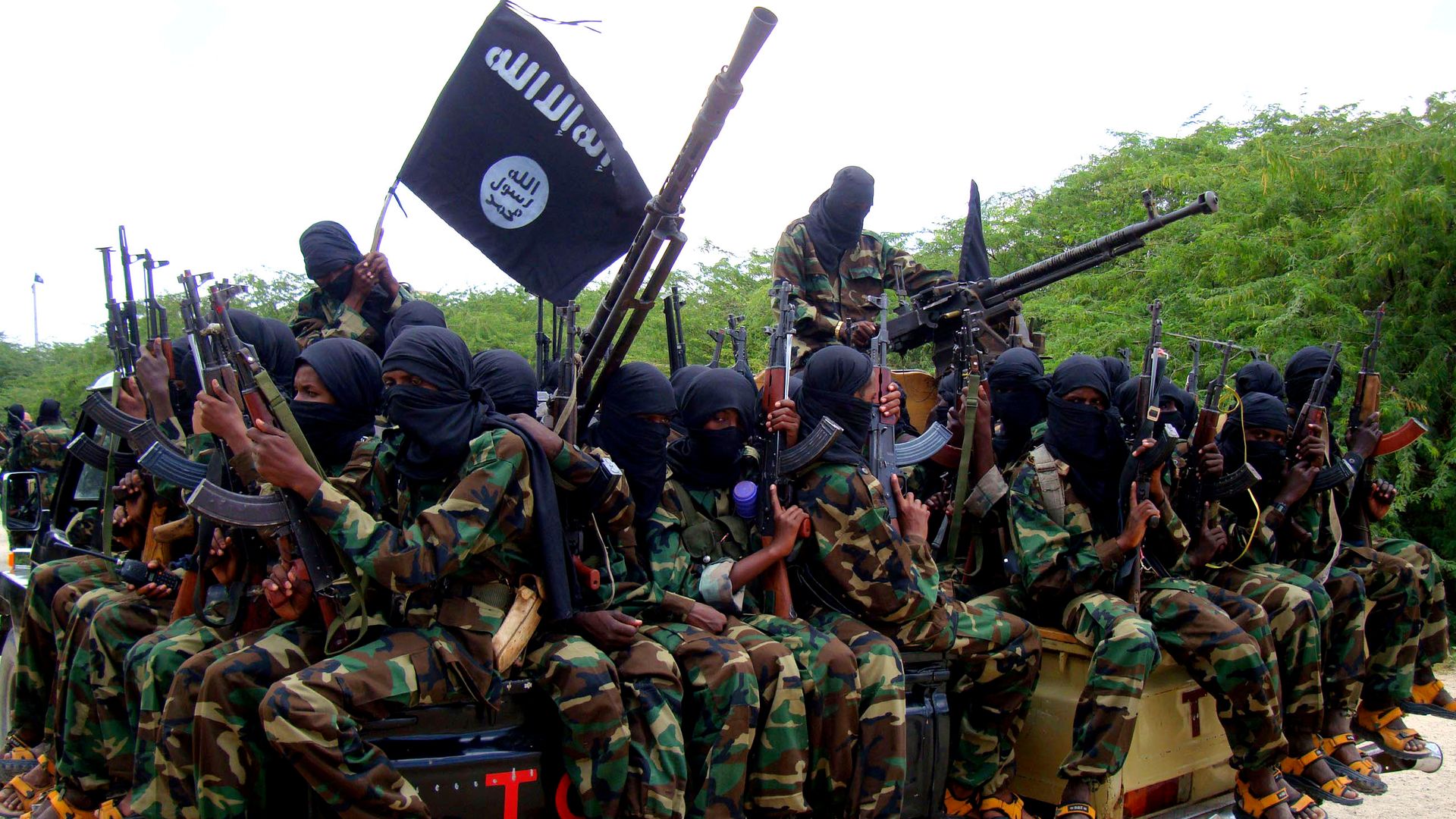
The primary threat to the current de-escalation is the breakdown of command-and-control hierarchies within Iran’s "Axis of Resistance." While Tehran provides the financial and technical architecture for regional militias, these groups possess varying degrees of operational autonomy. This creates a high-probability "accidental escalation" scenario where a local commander’s decision triggers a strategic response that neither Washington nor Tehran seeks.
The logic of proxy warfare dictates that for a deterrent to be credible, the patron (Iran) must be held accountable for the client’s (proxy) actions. However, the United States operates on a "Red Line" calculus where American casualties necessitate direct retaliation against the source of the munitions or the personnel. This creates a fundamental mismatch:
- Strategic Decoupling: Proxies may escalate to secure local relevance or internal political standing, disregarding Tehran’s broader diplomatic objectives.
- The Attribution Delay: The time required to definitively link a specific strike to a specific command chain creates a window of uncertainty. During this window, political pressure in the U.S. often forces a response before the "intent" of the patron is fully understood.
- The Retaliation Threshold: Iran’s doctrine of "strategic patience" assumes it can absorb small-scale strikes on its proxies, but direct strikes on Islamic Revolutionary Guard Corps (IRGC) assets within Iranian territory represent a terminal point for the ceasefire.
The Sanctions-Enrichment Feedback Loop
The economic and nuclear dimensions of this conflict function as a negative feedback loop. The U.S. utilizes secondary sanctions to restrict Iran’s oil revenue, while Iran utilizes nuclear enrichment levels as its primary counter-leverage. This creates a binary environment where neither side can offer a concession without appearing to surrender their only means of pressure.
The technical reality of Iran’s nuclear program has reached a point where "breakout time"—the duration required to produce enough weapons-grade uranium for a single device—is measured in days rather than months. This compressed timeline removes the "diplomatic buffer" that existed during the 2015 JCPOA era.
The Cost Function of Nuclear Hedging
Iran’s current strategy is one of "nuclear hedging." By maintaining high enrichment levels ($60%$), they signal a capability without crossing the $90%$ threshold that would likely trigger a kinetic strike by Israel or the U.S. The cost function for maintaining this status quo includes:
- Capital Flight: Persistent sanctions prevent the long-term foreign direct investment required to modernize Iran’s energy sector.
- Shadow Banking Dependency: To bypass the SWIFT system, Iran relies on a complex network of front companies and currency exchanges, which adds a "transaction tax" of $10%$ to $20%$ on all national trade.
- Monitoring Erosion: As tensions rise, Iran frequently restricts IAEA access to its facilities, increasing the risk that a technical misunderstanding is interpreted by Western intelligence as a dash for a weapon.
The Domestic Political Veto
A ceasefire is only as strong as the domestic support in both capitals. In the United States, the Iranian file is highly politicized, making any "informal" agreement vulnerable to legislative reversal or executive pivot following an election cycle. This lack of "policy durability" discourages Tehran from making irreversible concessions, such as exporting its enriched uranium stockpiles.
The Iranian leadership faces a parallel constraint. The hardline factions within the IRGC and the clerical establishment view de-escalation as a sign of weakness that could embolden domestic dissent. For the Supreme Leader, the ceasefire must be framed not as a peace treaty, but as a tactical maneuver to facilitate economic relief. If the economic relief does not materialize—or if the U.S. adds new sanctions for human rights or ballistic missile development—the internal justification for the ceasefire collapses.
The Mechanism of Attrition
The standoff is currently governed by a "War of Attrition" logic, where both parties seek to impose costs on the other below the threshold of total war. This includes:
- Cyber Operations: Constant probing of critical infrastructure, which carries the risk of unintended systemic failure.
- Maritime Interdiction: The targeting of commercial shipping in the Strait of Hormuz or the Red Sea to increase global insurance premiums and pressure Western economies.
- Asset Seizures: The legal and physical seizure of tankers, which serves as a tit-for-tat signaling mechanism.
The danger of this "gray zone" activity is its cumulative effect. While no single event triggers a war, the erosion of trust and the buildup of military assets in theater increase the likelihood of a "Sunk Cost" fallacy, where leaders feel they have invested too much in a specific posture to back down.
Strategic Divergence in Regional Interests
The ceasefire is further complicated by the divergent interests of regional stakeholders, specifically Israel and the Gulf monarchies. Israel views Iran’s "encirclement" strategy through Hezbollah and Hamas as an existential threat that a U.S.-Iran ceasefire does not address. Consequently, Israeli kinetic actions—such as assassinations of IRGC officers or sabotage of nuclear sites—can unilaterally terminate the ceasefire, regardless of Washington’s intent.
Conversely, the Gulf states (Saudi Arabia and the UAE) have moved toward a de-escalation path with Tehran (the Riyadh-Tehran normalization) to protect their Vision 2030 economic projects. They no longer provide a monolithic bloc of support for "maximum pressure," which weakens the U.S. diplomatic hand. This creates a fragmented regional security environment where some actors are pulling toward stability while others are incentivized toward disruption.
The Quantitative Thresholds of Collapse
To monitor the stability of the ceasefire, analysts must track three quantitative indicators that signal a transition from "shaky ground" to active conflict:
- Enrichment Velocity: Any movement of the $60%$ stockpile toward $90%$, or the installation of advanced IR-6 centrifuges at fortified sites like Fordow.
- Regional Strike Frequency: A move from sporadic rocket fire to "saturated" drone and missile attacks that overwhelm the Aegis or Iron Dome defense systems.
- The "Casualty Delta": The specific transition from property damage/proxy deaths to the death of American or Iranian national service members.
The current stability is a function of "negative peace"—the absence of active fighting—rather than "positive peace"—the resolution of underlying grievances. The U.S. remains committed to a policy of containment without a clear end-state, while Iran remains committed to a policy of resistance without the economic means to sustain it indefinitely.
The strategic play for the United States requires a move away from "ad-hoc" de-escalation toward a "Defined Deterrence" framework. This involves clearly communicating the specific technical and regional milestones that will trigger a kinetic response, while simultaneously decoupling nuclear negotiations from regional proxy activity. Failing to separate these issues ensures that a single mortar round in Baghdad can derail a multi-year nuclear non-proliferation effort. The U.S. must also formalize the "quiet for quiet" arrangement into a more transparent set of operational boundaries to reduce the "Miscalculation Coefficient" that currently defines the Persian Gulf. Maintaining the status quo is not a strategy; it is a delay of an inevitable recalibration.