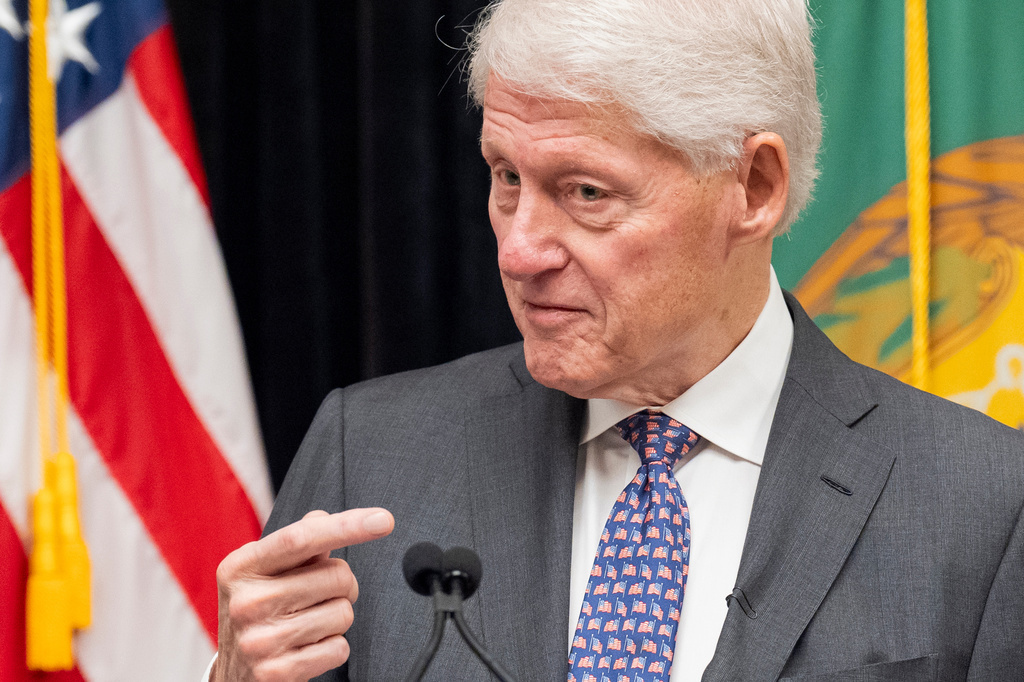
The re-emergence of an "ultimatum-based" foreign policy toward the Iranian leadership represents a shift from traditional diplomatic containment to a strategy of Escalation Dominance. This framework relies on the credible threat of overwhelming kinetic force to collapse the adversary's decision-making calculus. When Donald Trump issues a directive for Iranian officials to "lay down arms or face death," he is not merely employing rhetoric; he is defining a binary operational environment designed to bypass the protracted "tit-for-tat" cycles of hybrid warfare that have defined the last two decades.
The Logic of Binary Deterrence
Conventional deterrence functions on a sliding scale of costs. The current shift aims to truncate that scale into a zero-sum outcome. By removing the middle ground of negotiation, the strategy seeks to trigger a specific psychological and organizational failure within the Islamic Revolutionary Guard Corps (IRGC). This approach is built on three specific strategic pillars:
- Elimination of Strategic Ambiguity: Standard diplomacy utilizes "red lines" that are often intentionally blurry to allow for de-escalation. Binary deterrence replaces these with "tripwires." Crossing a tripwire triggers a pre-defined, non-negotiable kinetic response.
- Asymmetric Risk Assignment: The objective is to ensure that the cost of maintaining a militant posture exceeds the cost of regime concessions. In the Iranian context, this targets the personal survival of high-ranking officials rather than just national infrastructure.
- Command and Control Paralysis: By targeting "officials" specifically, the rhetoric aims to drive a wedge between the political leadership and the operational commanders, creating internal friction regarding who bears the ultimate risk of non-compliance.
The Cost Function of Persistent Resistance
Iranian regional strategy has long relied on Strategic Depth—the use of proxies in Iraq, Lebanon, Yemen, and Syria to fight wars far from Iranian soil. This creates a buffer that protects the clerical establishment from direct consequences. An ultimatum that ignores the proxies and targets the "officials" directly seeks to nullify this depth.
The economic and physical cost function for Iran under this pressure can be expressed as a trajectory of diminishing returns. As sanctions have already degraded the fiscal floor of the state, the addition of a high-probability kinetic threat forces the regime to allocate dwindling resources toward internal security and "decapitation" defenses. This creates an Opportunity Cost Vortex: every rial spent on protecting a General from a precision strike is a rial not spent on suppressing domestic unrest or funding the Hezbollah network.
Identifying the Bottleneck of Proximate Conflict
The primary friction point in this "lay down arms" strategy is the definition of "arms." For the United States, this likely encompasses:
- The ballistic missile program (the primary delivery mechanism for regional power projection).
- The enrichment of uranium beyond civilian-use thresholds.
- The maritime harassment capabilities in the Strait of Hormuz.
For the Iranian leadership, these assets are not just military tools; they are the regime's Life Insurance Policy. Giving them up is perceived as a precursor to inevitable regime change. This creates a "Security Dilemma" where the act of disarming to avoid death (the short-term threat) is seen as inviting death via domestic or foreign-backed revolution (the long-term threat).
The Three Pillars of Kinetic Credibility
For an ultimatum of this magnitude to function, the threat-actor must demonstrate Escalation Dominance across three distinct domains:
The Intelligence Domain
The threat is only credible if the adversary believes their movements are transparent. The 2020 elimination of Qasem Soleimani served as a technical demonstration of this capability. When a leader is told they face "death," the statement assumes a level of persistent surveillance that makes evasion impossible. The bottleneck here is the speed of the "kill chain"—the time it takes to move from identifying a target to delivering a payload.
The Conventional Overmatch
The deployment of carrier strike groups and B-52 wings acts as a visible weight on the scale. However, the true variable is the Threshold of Will. Iran's strategy has historically been to test the American public's appetite for a "forever war." By framing the choice as an immediate surrender or an immediate strike, the strategy attempts to bypass the prolonged conflict phase that usually drains political capital.
The Economic Chokepoint
While the ultimatum focuses on "arms," the underlying mechanism of pressure remains the "Maximum Pressure" 2.0 framework. If the military threat creates the fear, the economic sanctions create the exhaustion. The synergy between these two forces aims to bring the regime to a "Breaking Point of Governance," where the state can no longer provide basic services or pay its internal security forces.
Regional Ripple Effects and Proxy Degradation
The "lay down arms" directive has immediate implications for the "Axis of Resistance." If the IRGC perceives a genuine threat of direct decapitation, their support for regional proxies becomes a liability rather than an asset.
This creates a Contagion of Caution. When the primary financier and arms supplier is under a direct existential threat, the subordinates—Houthi rebels, Kata'ib Hezbollah, and Hamas—must re-evaluate their own risk profiles. The primary risk to the U.S. strategy is "Proxy Blowback," where these groups act independently to provoke a conflict that forces the U.S. into a ground war, thereby breaking the "binary" nature of the original ultimatum.
The Theoretical Failure Modes of Ultimate Pressure
No strategy is without a failure state. In the case of extreme coercion, there are two primary risks that must be mitigated:
- The Cornered Rat Paradox: If a regime believes that death is certain regardless of whether they lay down arms or not, they are incentivized to launch a "Pre-emptive Spasm." This could involve a massive strike on regional oil infrastructure or the closing of the Strait of Hormuz, intended to crash the global economy and force an international intervention to restrain the United States.
- The Martyrdom Incentive: Within the specific ideological framework of the IRGC, the threat of "death" does not always carry the same deterrent weight as it does in secular Western models. High-ranking officials may view a kinetic confrontation as a necessary ideological fulfillment, leading to a calculated refusal to de-escalate.
The Strategic Play: Forcing the Pivot
The objective is to move the Iranian leadership from a state of Active Defiance to Calculated Survival. To achieve this, the U.S. must maintain a "Closing Window of Opportunity." The ultimatum cannot be open-ended; it must be tied to a ticking clock.
Operational success requires the following tactical sequence:
- Identify a specific, high-value military asset (e.g., a missile production facility).
- Issue a time-bound demand for its decommissioning.
- Demonstrate the readiness of localized strike assets (UAVs, stealth platforms).
- Ensure a "Goldbridge" remains—a clear, albeit humiliating, path for the officials to step back without immediate loss of life, typically through a third-party intermediary like Oman or Qatar.
The shift toward this brutalist form of diplomacy suggests that the previous era of incrementalism is viewed as a failure. The new strategy bets everything on the belief that when faced with a choice between the end of the "Revolution" and the end of their own lives, the individuals within the Iranian power structure will prioritize personal and institutional preservation over ideological consistency.
The immediate tactical requirement is the hardening of regional assets against the "spasm" response. If the U.S. and its allies can demonstrate that an Iranian retaliatory strike will be 90% neutralized by missile defense (such as the Iron Dome, David's Sling, and Aegis systems), the "pre-emptive spasm" loses its value as a counter-threat. This forces the Iranian officials back to the original binary: disarm or be targeted. The strategy moves from a battle of words to a battle of technical and psychological endurance.
Strategic success will be measured not by a formal treaty, but by a measurable drawdown in IRGC regional activity and a cessation of high-level enrichment. If the Iranian leadership chooses to "wait out" the threat, the logic of the ultimatum dictates that the transition from rhetoric to kinetic action must be swift and decisive to maintain the integrity of the deterrence model.
The next operational step involves the deployment of "Targeted Sanctions 3.0," which move beyond state institutions to the private wealth and digital assets of the specific "officials" named in the ultimatum. By tightening the personal financial net alongside the military threat, the strategy attacks the two things the leadership values most: their power and their survival.
Maintain a state of high-readiness for a "Rapid Response" scenario. The credibility of a "face death" ultimatum is only as strong as the first 15 minutes of a conflict. Ensure that the detection-to-strike latency is minimized to the point where the adversary perceives no window for a counter-move. This is the only way to ensure the ultimatum results in a pivot rather than a catastrophe.
Would you like me to map the specific Iranian military assets that would likely be the primary targets of this "tripwire" strategy?