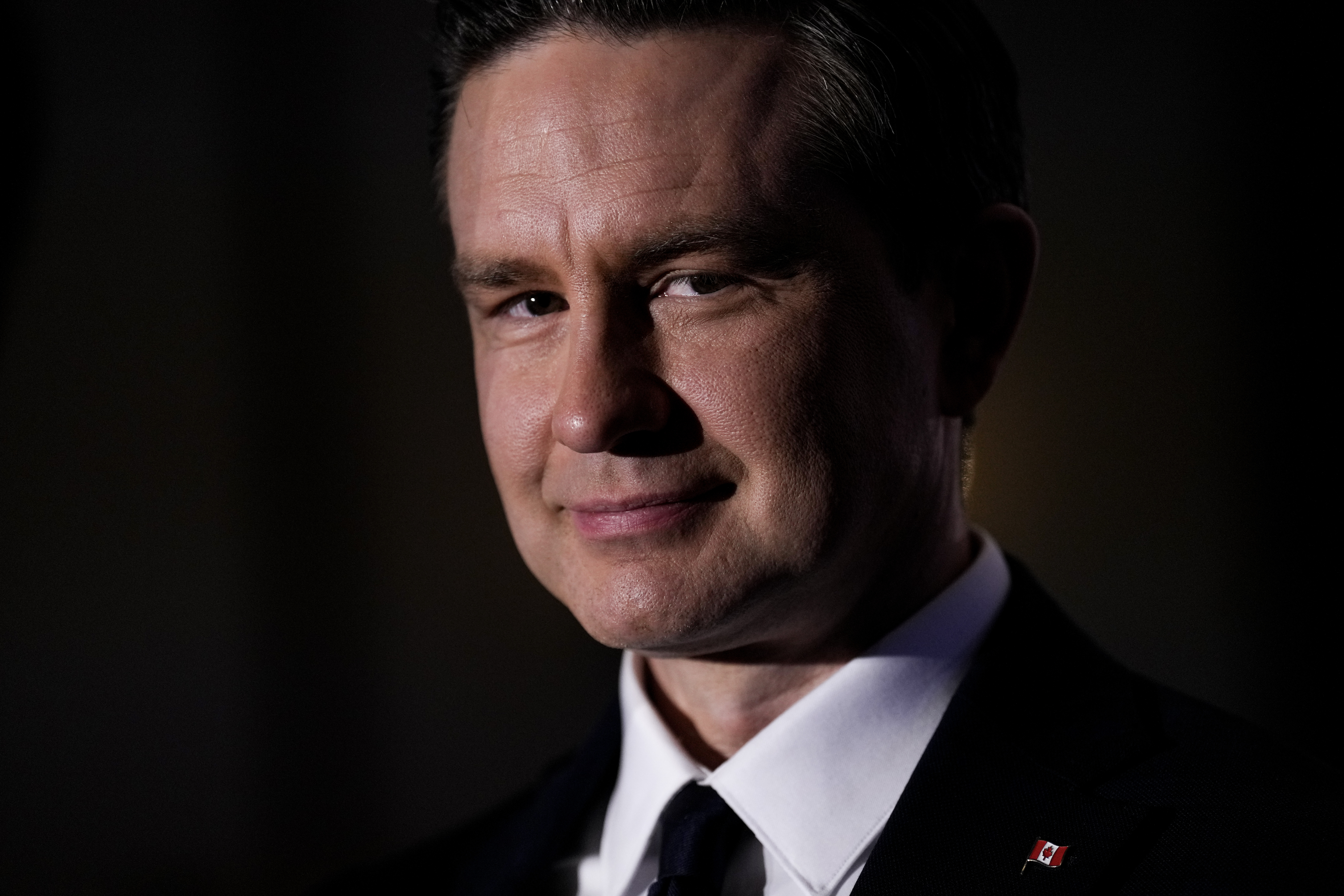
The studio is soundproofed, tucked away in an Austin industrial park where the Texas heat hums against the concrete. Inside, the air is still. There are no teleprompters. No makeup artists hovering with powder puffs. No producers whispering frantic time-codes into an earpiece. There is only a pair of heavy-duty headphones, a Shure SM7B microphone, and the prospect of three hours of unfiltered conversation.
Pierre Poilievre, the man who wants to be Canada’s next Prime Minister, is stepping into this silence.
For decades, the path to power in Ottawa ran through the brightly lit studios of the national broadcaster or the editorial boards of legacy newspapers. You sat in a chair, you gave your thirty-second clip, and you hoped the editor didn't slice away the heart of your message. But the architecture of influence has shifted. The gatekeepers are leaning against doors that no longer stay shut. By appearing on The Joe Rogan Experience, Poilievre isn't just doing an interview. He is acknowledging that the campfire where the world gathers to listen has moved.
Consider a mechanic in Red Deer, leaning over the hood of a truck while a podcast plays through a Bluetooth speaker. Or a university student in Halifax, riding the bus with noise-canceling headphones on. They aren't watching the evening news. They aren't reading the political columns. They are looking for something that feels less like a performance and more like a confession.
The Long Form Gamble
Political communication is usually an exercise in brevity. Consultants tell candidates to stay on message, to avoid "rabbit holes," and to never, ever let their guard down. The Rogan format is the antithesis of that strategy. It is an endurance test. Over the course of a hundred and eighty minutes, the "talking points" eventually run dry. The rehearsed cadence of a stump speech begins to grate. You have to be a person.
This is the invisible stake of the Thursday broadcast. If Poilievre succeeds, he bridges the gap between a partisan figure and a human being. If he fails, the sheer length of the format will expose every seam in his armor.
The typical political interview is a fencing match. The journalist lunges; the politician parries. It is fast, aggressive, and ultimately, often hollow. Rogan operates differently. He wanders. He asks about hobbies, about philosophy, about the strange quirks of human nature. For a politician whose brand is built on "Common Sense" and sharp, biting critiques of the status quo, this environment is a double-edged sword. It offers the chance to explain the why behind the what, but it also demands a level of vulnerability that most politicians find terrifying.
The Audience Beyond the Border
Why would a Canadian politician fly to Texas to talk to an American comedian? The answer lies in the data. Rogan’s reach in Canada is massive, often eclipsing the ratings of domestic talk shows. But it’s more than just raw numbers. It is about the kind of listener.
The Rogan audience is famously heterodox. They are skeptical of institutions. They are frustrated by what they perceive as "sanitized" reality. They are the same people who feel the sting of inflation at the grocery store and wonder why the housing market feels like a game of musical chairs where the music stopped years ago.
Poilievre’s core message—focused on housing affordability, fiscal discipline, and the "gatekeepers" holding back the working class—is a natural fit for this demographic. When he talks about the cost of a mortgage in a suburb of Toronto, he is speaking to a global anxiety about the disappearing middle class. Rogan provides a platform where these ideas can be explored without the frantic interruption of a commercial break every six minutes.
The Ghost in the Room
There is an emotional core to this meeting that goes beyond policy. It is the feeling of being "unheard." For many, the mainstream political discourse feels like a play written by people who don't know them. By stepping into the Rogan sphere, Poilievre is signaling that he is willing to go where the "unheard" live.
Imagine a young father who has given up on the dream of owning a home. He hears a politician talking on a podcast he trusts. Suddenly, the abstract concept of "monetary policy" becomes a story about his own life. The stakes are no longer about who wins a seat in the House of Commons; they are about whether that father believes the system is rigged against him or if there is a way out.
But the risk is real. Rogan is unpredictable. He might pivot from the carbon tax to UFOs, or from healthcare to the benefits of ice baths. A candidate who appears too stiff or too "political" in this setting can end up looking like a visitor from another planet. The audience can smell a script from a mile away.
The Sound of Change
The critics will say this is a move toward "populism" or an attempt to bypass the "rigorous" questioning of traditional media. They might be right. But that critique misses the fundamental shift in how humans build trust. Trust is no longer granted by a title or a platform; it is earned through time and transparency.
In a world of deepfakes and AI-generated scripts, there is a premium on the raw. We want to hear the hesitation in a voice. We want to hear the sound of a person thinking in real-time. We want to know if the person asking for our vote is someone we could actually sit with for three hours without wanting to walk out of the room.
As the sun sets over Austin and the "On Air" light glows red in the studio, the traditional rules of Canadian politics are being rewritten. The conversation isn't happening in a boardroom or a parliament. It’s happening in a pair of headphones.
The door closes. The headphones go on. The world waits to see if the man behind the podium can survive the man behind the mic.