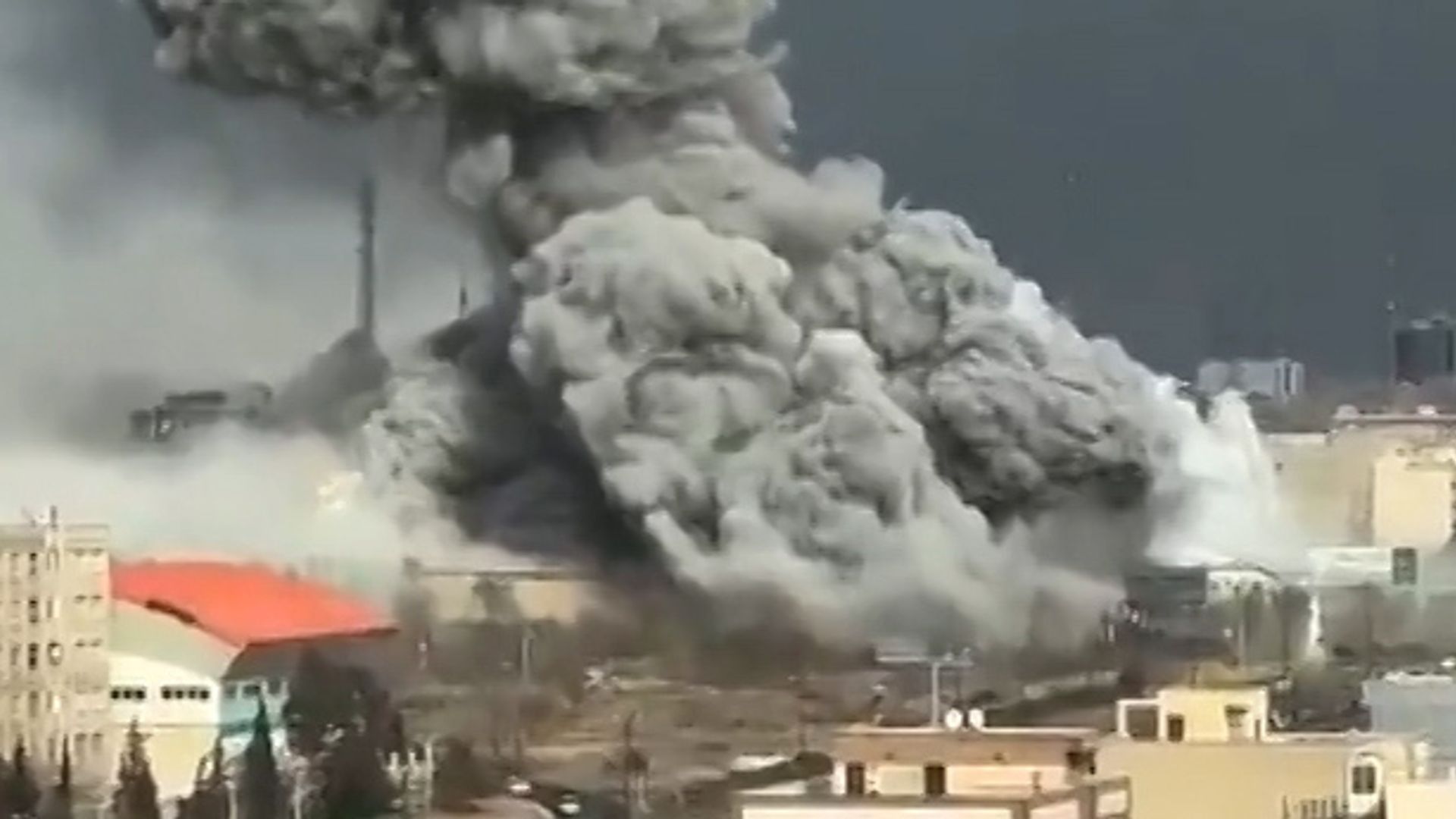
Images of pink-flowered walls reduced to grey rubble don't just disappear from the collective memory. On February 28, 2026, the Shajareh Tayyebeh girls' elementary school in Minab became the face of a conflict that's moving way too fast for international law to keep up. When a missile tears through a building full of children during a class change, the "collateral damage" excuse doesn't cut it anymore.
The UN is finally finding its voice, but for the families in southern Iran, the demand for an investigation feels like too little, too late. We're looking at a reported death toll of 165 to 180 people, most of them young girls between seven and 12 years old. This wasn't a midnight strike on a deserted warehouse. It happened around 10:00 a.m. on a Saturday—the start of the Iranian school week.
The chaos in Minab and the push for accountability
United Nations Human Rights Chief Volker Türk didn't mince words this week. He called the strike "horrific" and demanded a prompt, impartial inquiry. His spokesperson, Ravina Shamdasani, pointed out that the onus is on the forces that carried out the attack to explain themselves.
The political finger-pointing is already in high gear.
- Iran claims this was a deliberate US-Israeli strike on a civilian target.
- The US (via Secretary of State Marco Rubio) says they don't "deliberately" target schools and are looking into it.
- Israel says they're reviewing the circumstances but haven't confirmed involvement in that specific coordinate.
Here's the problem with "looking into it" while the bodies are still being identified. In a conflict this volatile, silence is a choice. If you're dropping high-precision munitions in a densely populated area, "oops" isn't a legal defense.
Why the location of the school complicates everything
If you look at the map of Minab, the Shajareh Tayyebeh school sat roughly 600 meters from the Sayyid al-Shuhada military complex. That's the headquarters for the IRGC Navy’s Asif Brigade.
In a perfect world, military bases wouldn't be near primary schools. But this isn't a perfect world. Reports have surfaced—including warnings from the Coordinating Council of Iranian Teachers' Trade Associations—that the site had previously been used for military storage.
This brings up a brutal reality of modern warfare. If a military uses a school as a shield, they’re violating international law. If an attacking force hits that school knowing children are inside, they’re also violating international law. The principle of proportionality says you don't blow up a hundred kids to take out a nearby radar array or a few officers.
The human cost behind the headlines
Statistics have a way of numbing us, so let's get specific. Shiva Amelirad, a teachers' union representative, told TIME that the gap between the school's emergency closure announcement and the actual impact was so short that parents hadn't even reached the gates yet.
Imagine being a parent in Minab. You hear the sirens, you run toward the school, and you find a crater where your daughter's classroom used to be. Iranian state media showed backpacks stained with blood and rows of body bags in a public square. This isn't just a "strike." It's a generational trauma.
UNESCO is calling this a "grave violation of humanitarian law," and they're right. Schools are supposed to be sacrosanct. When they become targets, the entire "rules-based order" we hear so much about starts to look like a polite fiction.
What an actual investigation would need to uncover
A real UN investigation can't just be a press release. It needs to answer three hard questions.
1. What was the specific munition used?
Weapon fragments tell a story. They can identify the origin of the missile and whether it was a guided strike or a "dumb" bomb that went off course. This is how you separate a "failed interception" claim from a direct hit.
2. Was there a military necessity?
Even if the IRGC was using the school as a "shield," did the tactical gain of the strike outweigh the predictable loss of 160 lives? Under the Geneva Conventions, the answer is almost always a hard "no."
3. Who gave the order?
Accountability isn't just about the pilot or the drone operator. It's about the chain of command that approved a strike 600 meters from an active elementary school during school hours.
Why you should care about the outcome
If this strike goes unpunished, it sets a precedent for the rest of the 2026 Iran conflict. We've already seen damage to hospitals like the Gandhi Hospital in Tehran and nuclear sites in Natanz. If the international community shrugs at the deaths of 160 schoolgirls, then every civilian structure in the region is officially on the table.
The UN's demand for the "forces responsible" to investigate themselves is a bit like asking a student to grade their own failed exam. For a shred of trust to be restored, we need independent observers on the ground in Hormozgan province.
Keep an eye on the official statements from the OHCHR over the next 48 hours. If they don't secure access to the site or the weapon debris, this investigation will likely stall into another "disputed" tragedy that gets buried by the next day's news cycle.
To help push for transparency, you can follow the updates from the Euro-Mediterranean Human Rights Monitor or UNESCO's dedicated conflict trackers. These organizations are currently the only ones pushing for a casualty list that isn't filtered through government propaganda.