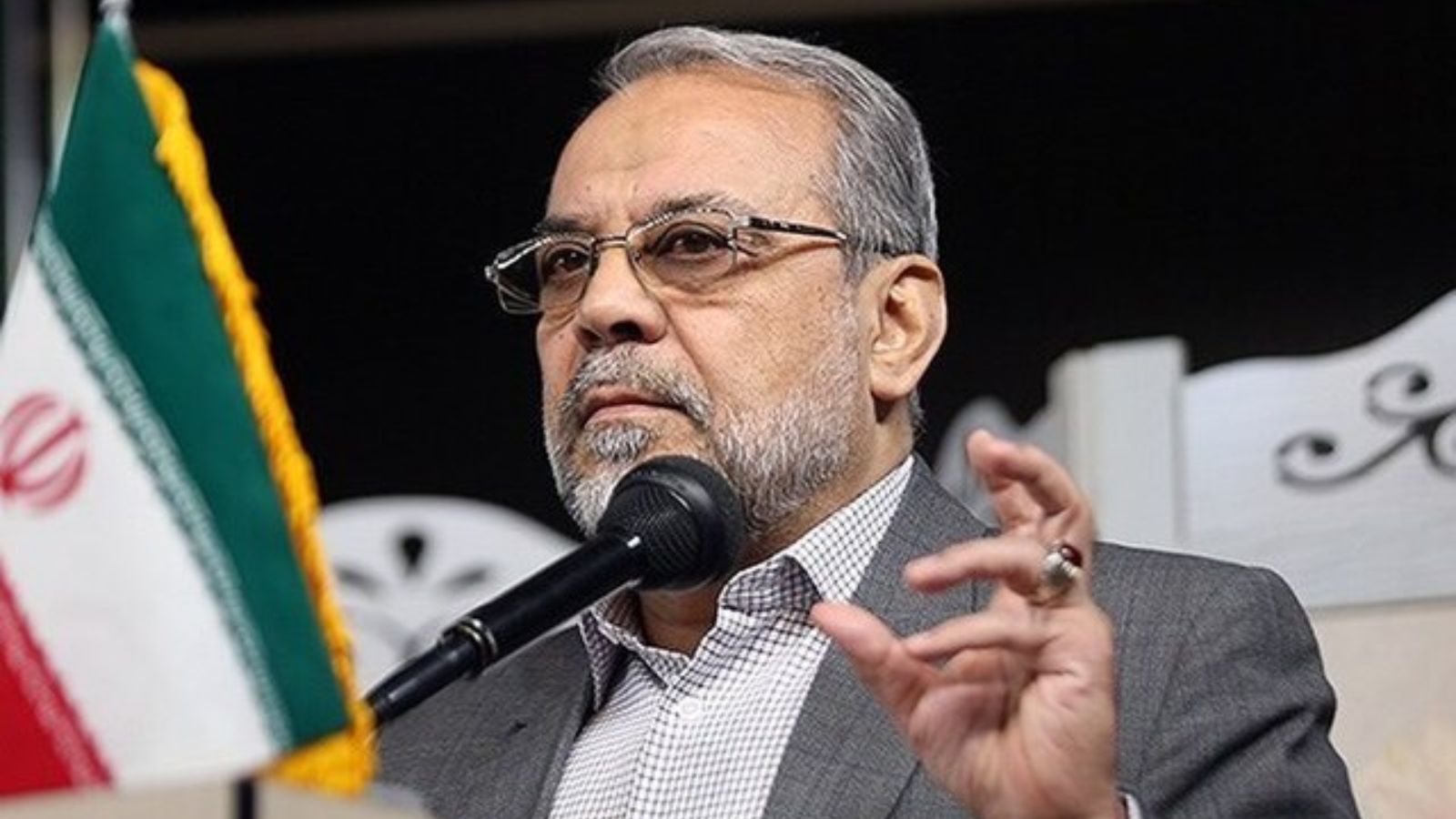
The smoke hadn't even cleared from the strike that killed Ali Larijani before Tehran signaled its next move. By appointing Mohammad Bagher Zolghadr as the new Secretary of the Supreme National Security Council (SNSC), Iran isn't just filling a vacancy. It's pivoting from the suave, pipe-smoking diplomacy of Larijani to the grit of a man who literally wrote the book on "Western Estrangement."
If you're looking for a moderate to bridge the gap with the West during this 2026 crisis, you're looking at the wrong guy. Zolghadr is a hardliner's hardliner. He's a veteran of the IRGC (Islamic Revolutionary Guard Corps) with a resume that reads like a history of Iran's most aggressive tactical shifts. His rise to the top security spot on March 24, 2026, tells us everything we need to know about where this war is headed.
The man who replaced a shadow leader
To understand why Zolghadr matters, you have to understand what he’s stepping into. Before his assassination on March 17, Ali Larijani wasn't just a security official. Many viewed him as the de facto leader of Iran following the death of Supreme Leader Ayatollah Ali Khamenei in late February. Larijani was a bridge-builder who could talk to both IRGC generals and Western diplomats.
Zolghadr is different. He doesn't do "bridge-building."
He’s a Brigadier General who earned his stripes in the Iran-Iraq War. He didn't spend his formative years in philosophy classrooms like Larijani; he spent them commanding the Ramazan Headquarters, the IRGC’s hub for irregular warfare. That’s a fancy way of saying he specializes in the kind of asymmetric, messy conflict that defines the current regional chaos.
From guerrilla roots to the inner circle
Zolghadr’s history with the West is deeply personal and historically bloody. Before the 1979 Revolution, he was a member of the Mansourun guerrilla group. This wasn't a book club. Reports have long linked him and Mohsen Rezaei to the 1978 killing of an American engineer and an oil company manager. While these claims remain unverified by international courts, they’re a permanent part of his legend within the IRGC.
He’s held almost every "tough guy" job in the Iranian establishment:
- Deputy Interior Minister for Security: Where he handled domestic dissent with an iron fist.
- Deputy Chief of the Judiciary: Serving under Sadeq Larijani (Ali’s brother), focusing on "strategic affairs."
- Secretary of the Expediency Council: A role that placed him at the heart of resolving the regime’s internal power struggles.
He isn't a bureaucrat. He’s a strategist who understands how to use the Basij—Iran’s paramilitary moral police and domestic enforcers—to keep a lid on a boiling population.
The Tale of Western Estrangement
If you want to know how Zolghadr thinks, look at his 2002 book, Qesse-ye Ghorbat-e Gharbi (The Tale of Western Estrangement). It isn't just a critique of the West; it’s a manifesto. He views Western culture not as a competitor, but as a corrosive force that must be purged.
In the current context of the 2026 Iran war, this ideological purity is a signal. While Larijani might have looked for a "grand bargain" or a diplomatic off-ramp, Zolghadr is likely to lean into the confrontation. He’s one of the founders of Ansar-e Hezbollah, a plainclothes vigilante group known for attacking reformers and protesters. This isn't a man who fears escalation; he’s a man who has spent 40 years preparing for it.
What this means for the 2026 conflict
The timing of this appointment is brutal. Israel and the US have successfully decapitated much of Iran’s traditional leadership. By putting Zolghadr in charge of the SNSC, the regime is effectively handing the keys to the IRGC's "old guard."
Expect three things to happen immediately. First, a harder line on the Strait of Hormuz. Trump has issued ultimatums to keep the waterway open, but Zolghadr’s specialty is irregular warfare. He doesn't need a conventional navy to cause problems. Second, expect a total shutdown of internal dissent. With the 2025-2026 protests still simmering, his experience in the Judiciary and Interior Ministry makes him the perfect candidate to oversee a domestic crackdown.
Third, forget the nuclear "thaw." Larijani was the architect of Iran’s previous nuclear diplomacy. Zolghadr, conversely, sees the nuclear program as a survival tool, not a bargaining chip.
The family ties that bind
Power in Tehran is often about who you know and who you’ve married. Zolghadr’s son-in-law is Kazem Gharibabadi, the man who represented Iran at the IAEA (International Atomic Energy Agency). This gives Zolghadr a direct line into the technical and diplomatic nuances of the nuclear standoff, even if his own instinct is to ignore the diplomats.
His wife, Sedigheh Begum Hejazi, has held high-ranking roles in women’s affairs, showing that the Zolghadr family is deeply embedded in the "soft power" side of the revolution as well. This isn't just one man; it’s a whole ecosystem of hardline loyalty.
Tehran is currently backed into a corner. The loss of Khamenei and Larijani left a massive power vacuum. By choosing Zolghadr, the regime is betting that ideological purity and military experience can replace diplomatic nuance. It’s a high-stakes gamble that suggests the 2026 war is about to get a lot more unpredictable.
If you’re tracking the movements in the Middle East, keep your eyes on the SNSC’s next communiqués. They won’t be written in the language of international law. They’ll be written in the language of the IRGC.
Watch the shipping insurance rates in the Gulf and the troop movements near the borders. Zolghadr doesn't believe in waiting for the next strike. He believes in making the other side regret theirs.