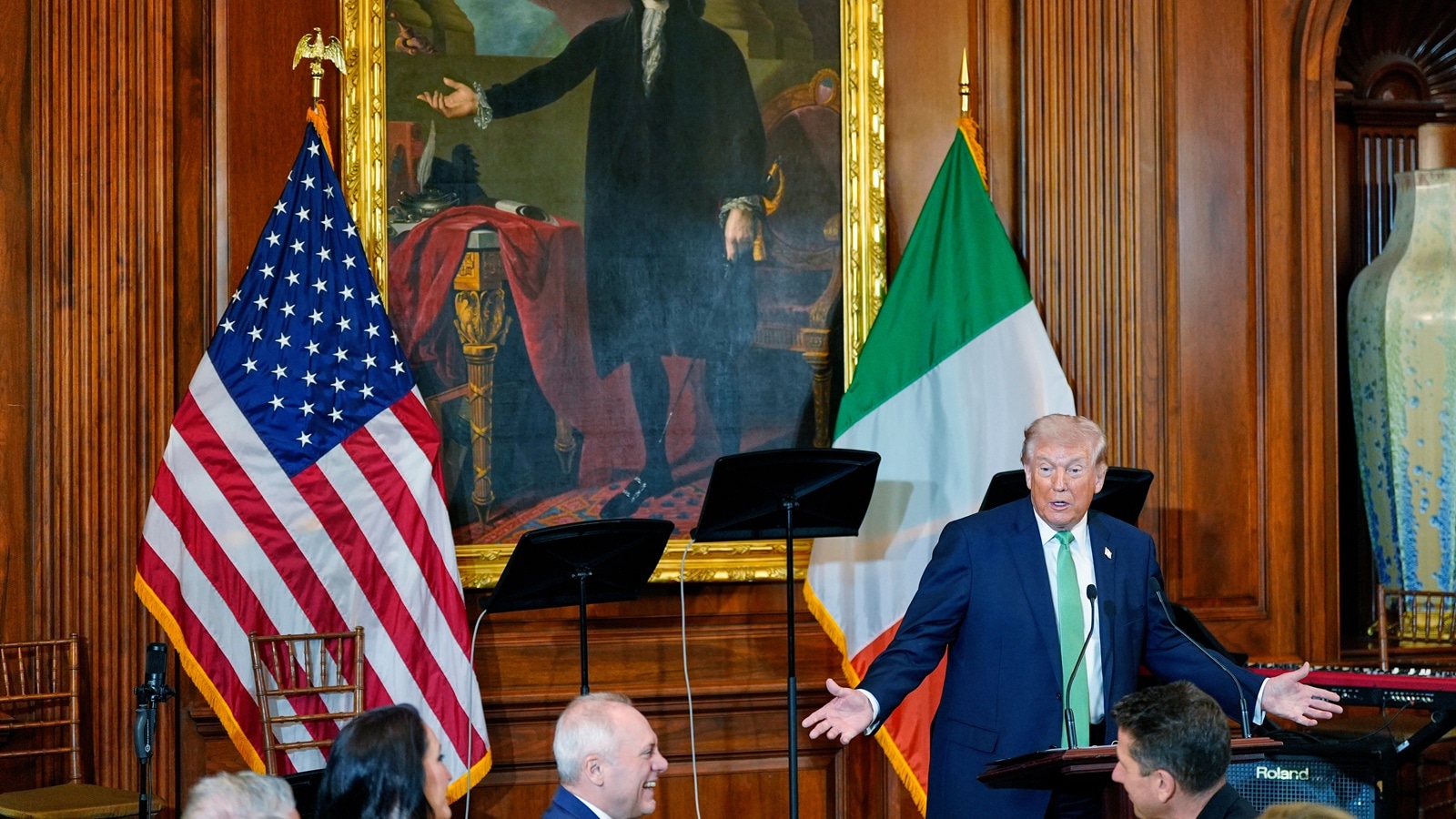
Donald Trump is done playing nice with Europe. After three weeks of a brutal, high-stakes military campaign against Iran, the President took to Truth Social on Tuesday to let the world know exactly what he thinks of his allies. It wasn't a thank-you note. It was a scorched-earth memo declaring that the United States is officially flying solo because, in his words, "WE DO NOT NEED THE HELP OF ANYONE!"
This isn't just another social media outburst. It’s the sound of the Atlantic alliance cracking in real-time under the pressure of a war that most of the world didn't see coming. While the U.S. and Israel continue their offensive—which has already claimed the life of Iran's Supreme Leader and decimated the country's conventional navy—the response from NATO has been a resounding "no thanks."
The Hormuz ultimatum
The friction started over the Strait of Hormuz. For those not tracking the global oil markets, that tiny strip of water is the world's jugular vein. Iran has effectively choked it off using mines, drones, and "swift boats," sending oil prices screaming toward $120 a barrel earlier this week. Trump wants a coalition to go in and kick the door open. He reached out to seven countries, specifically calling on NATO allies to police the waterway they benefit from most.
The response? Crickets. Or worse, polite rejection. Germany’s Defense Minister, Boris Pistorius, didn't even try to hide his disdain, stating bluntly, "This is not our war."
That didn't sit well in the Oval Office. Trump’s frustration boiled over when he reminded the press that the U.S. has been the "sweet" partner for decades, pouring billions into Ukraine—a conflict "thousands of miles away"—only to be left hanging when the Middle East catches fire.
Why the allies are backing away
You might wonder why the "special relationship" with the UK or the bond with France hasn't resulted in a few frigates in the Gulf. It's because the legal ground here is shaky at best. Most European leaders view the February 28 strikes as a violation of the UN Charter. They're terrified of being "dragged into" a regional conflict that lacks a clear exit strategy.
Keir Starmer and Emmanuel Macron are walking a tightrope. They’ve sent "defensive" assets to the region—mostly to protect their own bases and Cyprus—but they won't touch the offensive side of this war with a ten-foot pole. They want a diplomatic off-ramp. Trump, meanwhile, is already declaring victory, claiming the Iranian military is "decimated" and their leaders are "gone."
If the U.S. has already won, the Europeans are asking, why do you need our ships?
The one-way street
Trump’s "one-way street" comment isn't new, but the context is. He’s spent years pushing NATO members to hit 5% of their GDP on defense. He got that. But he’s finding out that even a well-funded ally isn't a puppet. The snub from Japan, Australia, and South Korea on the Hormuz issue particularly stung.
"I'm almost doing it in some cases, not because we need them, but because I want to find out how they react," Trump told reporters. It was a loyalty test. And most of the class failed.
Senator Lindsey Graham, usually a vocal supporter, described Trump as the angriest he’s ever seen him. The rift isn't just about ships; it's about the fundamental value of the alliance. If NATO doesn't show up when the global energy supply is at stake, Trump’s team is asking, what exactly is the point of it?
What this means for your wallet
Don't let the geopolitical drama distract you from the reality at the pump. Even though Trump says the war might be over in a few weeks, the Strait of Hormuz remains a graveyard of tankers.
- Energy costs: Every 10% jump in energy prices is pushing global inflation up by 0.5%.
- Supply chains: The Pentagon’s recent designation of firms like Anthropic as "supply chain risks" shows how the war is bleeding into the tech sector.
- Market volatility: Stock markets are twitchy. The U.S. might have the military "success," but the economic fallout is just getting started.
The U.S. is currently releasing 400 million barrels from emergency reserves to stop the bleeding, but that's a bandage, not a cure. Without a coalition to keep the shipping lanes open, we’re looking at a long, expensive summer.
The new American isolationism
We are witnessing a pivot. Trump is no longer asking; he's dismissing. By telling NATO "WE NEVER DID" need them, he’s setting the stage for a post-NATO foreign policy where the U.S. acts solely on its own interests without the pretense of a "team effort."
If you're looking for the next move, keep an eye on the upcoming summit with China. Trump is already threatening to delay it if Beijing doesn't help unblock the Strait. He’s using the war as a lever to reshape every global relationship he has.
For the average person, the takeaway is simple: the era of the "unlocked" global economy is on life support. If the world’s most powerful alliance can’t agree on how to protect a 21-mile wide channel of water, don't expect them to agree on much else.
Watch the oil futures and the Federal Reserve’s next move. If you were waiting for a return to "normal" diplomacy, it’s time to stop. The U.S. has decided it’s a solo act, and the rest of the world has to decide if they can afford to let that happen.
Monitor the daily updates from Central Command and the International Energy Agency. If the Strait doesn't open by April, the "success" Trump is touting won't matter much to the people paying $6 a gallon for gas.