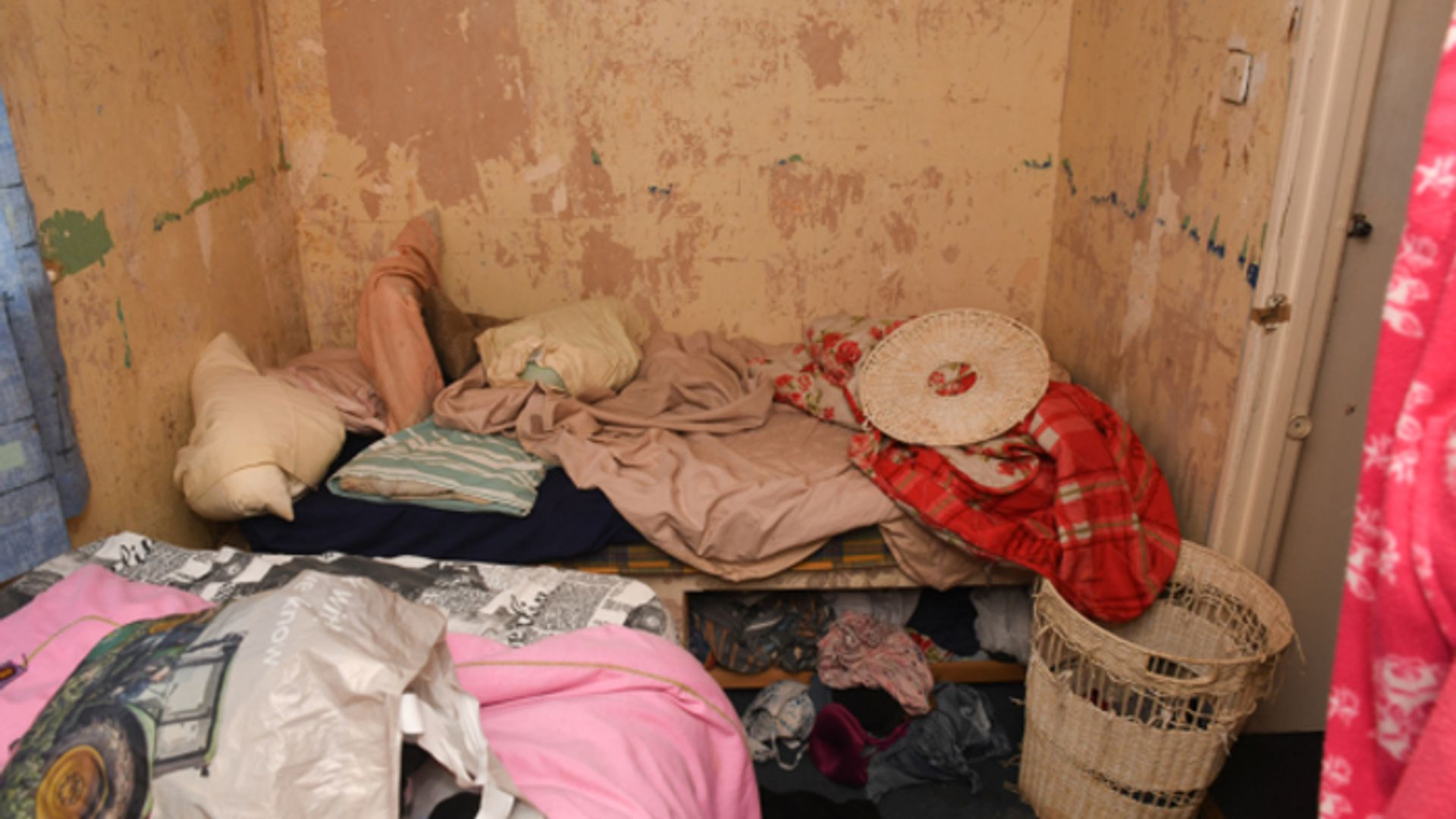
The curtains in the house on the quiet, unremarkable street in North London never seemed to twitch. Most neighbors assumed the woman living there, Vilelmini Dumont, was simply private. Maybe a bit eccentric. The suburbs are built on the polite agreement that we do not look too closely through the gaps in the venetian blinds. We see a manicured lawn, a sturdy front door, and a trash bin rolled out on the correct morning, and we conclude that life inside is as orderly as the exterior suggests.
We were wrong.
Behind that door, time had stopped in 1994. For over two decades, while the world transitioned from dial-up internet to smartphones, while prime ministers rose and fell, and while children in the neighborhood grew up and moved away, a woman lived in a state of living death. She was not a guest. She was not a relative. She was a slave.
The Architecture of a Secret
Slavery in the modern mind usually looks like a history textbook or a grainy news report from a distant conflict zone. We imagine chains. We imagine iron bars. But the most effective cages are built from psychological glass. They are reinforced by the steady, rhythmic erosion of a human being’s sense of self.
The victim, a woman who had come to the UK seeking a better life, found herself trapped in a domestic routine that was actually a slow-motion execution of her spirit. Her days were a blur of unpaid labor—scrubbing floors, cooking meals she wasn't allowed to enjoy, and catering to every whim of a woman who viewed her as a piece of property rather than a person. There was no paycheck. There were no days off. There was only the crushing, silent weight of "now."
Imagine waking up every morning for seven thousand days knowing that your only purpose is to serve the person who stole your freedom.
The physical violence was there, of course. It had to be. Fear is the mortar that holds the glass cage together. There were reports of assaults, of physical intimidation used to ensure the "help" stayed in line. But the deeper violence was the isolation. In a city of nine million people, she was effectively on a deserted island. She had no money. She had no phone. She had no grasp of the world outside the four walls of Dumont’s home because Dumont had meticulously dismantled her bridge to reality.
The Invisible Resident
How does a person disappear in plain sight?
It happens through the "Small Talk Barrier." You see a woman carrying groceries into a house. You see someone hanging laundry in a backyard. You nod. You say, "Morning." They might not respond, or they might offer a strained, practiced smile. You move on with your day because your own life is loud and demanding. You don't ask why she never leaves the house alone. You don't ask why she looks twenty years older than her actual age. You don't ask because, deep down, we are trained to mind our own business.
Dumont banked on that politeness. She used it as a shield.
Domestic servitude is the ghost in the machine of our modern economy. It exists in the shadows of affluent neighborhoods, tucked away in spare bedrooms and basement apartments. It thrives because it looks like something else. To the casual observer, it looks like a live-in nanny or a devoted housekeeper. To the law, until recently, it was often dismissed as a "civil matter" or a "family dispute."
But the law caught up. When the police finally breached that silence, they didn't just find a victim; they found a woman who had been erased. Her identity had been subsumed by Dumont’s requirements.
The Trial of a Shadow
When the case finally reached the courts, the details that emerged were not just shocking; they were an indictment of our collective blind spots. Vilelmini Dumont, now in her late 60s, sat in the dock. She wasn't a cartoon villain. She looked like anyone’s grandmother. That is the most terrifying part of these stories. Cruelty doesn't always wear a mask. Sometimes it wears a floral cardigan and lives next door.
The prosecution laid out a timeline of twenty years of stolen life. They spoke of the lack of medical care, the absence of any social contact, and the total control Dumont exerted over the victim’s movements.
The defense might try to paint a picture of "interdependency" or "cultural misunderstandings," but the jury saw through the fog. You do not keep a person for two decades without pay unless you believe, in your heart, that they are less than you. You do not threaten someone into silence unless you know that what you are doing is a crime against humanity.
The sentencing was a moment of rare, sharp clarity. The judge described the treatment as "degrading" and "cruel." Dumont was jailed for her crimes, a sentence that sent a ripple through the legal community. It was a signal that the "private" nature of the home is no longer a sanctuary for those who wish to enslave others.
The Cost of the Years
What is twenty years worth?
In 1994, the top song was "Stay" by Lisa Loeb. The Lion King was the biggest movie in theaters. If you had told the victim then that she wouldn't truly breathe free air again until 2024, she likely wouldn't have survived the night. We measure our lives in milestones—weddings, promotions, vacations, the deaths of loved ones we were able to mourn.
She has none of those. Her timeline is a flat, grey line of service and fear.
Recovery for a survivor of long-term domestic servitude isn't just about finding a job or a place to live. It is about learning how to be a person again. It is about realizing that you are allowed to have a preference for tea over coffee. It is about understanding that the person walking toward you on the sidewalk isn't a threat. It is the slow, agonizing process of reassembling a shattered mirror.
We often talk about "modern slavery" as if it’s a new phenomenon. It isn’t. It’s the oldest sin in the book, just rebranded for a world that likes to pretend it’s civilized. It’s the exploitation of the vulnerable by the entitled, happening in the gaps between our busy schedules.
The Noise in the Silence
This case isn't just a news story about a woman going to jail. It’s a call to look at the houses on our own streets with a more discerning eye. It’s a reminder that the most profound horrors don't always happen in dark alleys or midnight raids. They happen in the kitchen at 2:00 PM while the radio plays and the neighbors are at work.
The victim is now free, but she is an immigrant in time. She has stepped out of a house in 2024 with the mind and the trauma of a woman who was kidnapped in spirit decades ago. The world is louder, faster, and more digital than the one she left behind.
But for the first time in a generation, when she closes her eyes, she isn't listening for the sound of Vilelmini Dumont’s voice calling her name from the other room. She is listening to the silence. And in that silence, there is finally a choice.
The house stands there still, a structure of brick and mortar that held a secret for longer than some of its neighbors have been alive. The grass will grow. Someone else will eventually move in. They will paint the walls and replace the carpets, trying to scrub away the history of the place. But the air in that neighborhood feels different now. The blinders have been pulled back.
We know now that a closed door isn't always a sign of privacy. Sometimes, it’s a plea for help that no one was quiet enough to hear.
The sun sets over the London skyline, casting long, thin shadows over thousands of identical rooftops, each one hiding a life, and each one a potential fortress or a potential prison.