The year was 2003, and the internet smelled like ozone and desperation. If you were there, you remember the banner ads. They weren't the sophisticated, data-driven algorithms of today that whisper your own desires back to you. They were loud. They were frantic. They were digital carnival barkers screaming for a slice of your cognitive load.
Most of them promised you a free iPod or a cruise you’d never actually board. But one specific image burned itself into the collective retina of a generation: a frantically vibrating primate and a cursor that had been transformed into a boxing glove. Meanwhile, you can find other stories here: The Anthropic Pentagon Standoff is a PR Stunt for Moral Cowards.
"Punch the Monkey! Win $20!"
It was the ultimate digital siren song. It was crude, it was arguably a scam, and it was—to the chagrin of every IT professional trying to scrub spyware from a family desktop—utterly hypnotic. We didn't just see the monkey; we lived in the era of the monkey. Now, in a move that feels like a glitch in the matrix or a high-level nod to our shared digital trauma, Google has invited the ghost back into the machine. To understand the full picture, we recommend the excellent analysis by Gizmodo.
The Archaeology of a Click
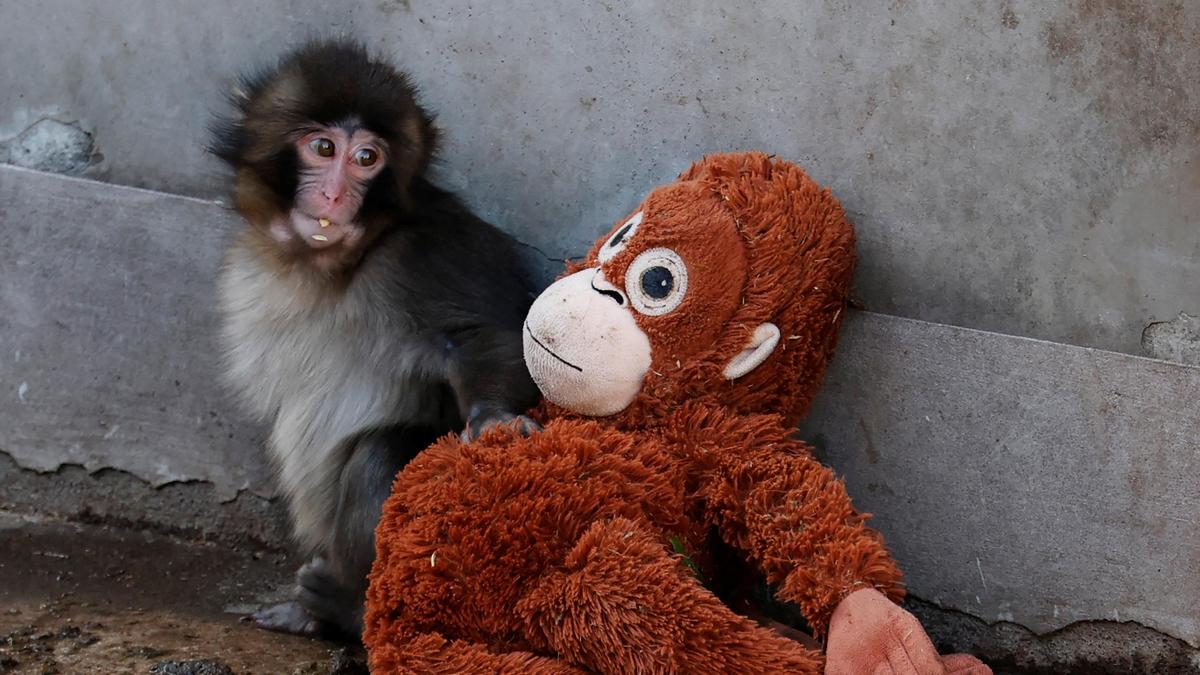
Google’s latest interactive search animation isn't just a gimmick. It is a piece of cultural archaeology. When you trigger the new "Punch the Monkey" Easter egg, a pixelated simian appears, darting across your high-resolution, liquid-retina display with the same erratic energy it possessed two decades ago.
Why does this matter? Because for many of us, that monkey was our first lesson in the nature of the internet. It taught us about the "Click-Through Rate" before we knew the term existed. It was a masterclass in the psychology of the "near miss." You’d swing, the monkey would dodge, and your dopamine receptors would fire a frantic signal: Almost. Just one more try.
Consider a hypothetical teenager in a suburban bedroom in 2004. Let’s call him Leo. Leo isn't trying to download a virus. He’s bored. He’s doing homework on a dial-up connection that sounds like a fax machine having a nervous breakdown. Suddenly, there it is. The monkey. Leo clicks. He doesn't win twenty dollars. Instead, he wins three hours of his father yelling because the computer now opens seventeen pop-up windows for offshore casinos every time it boots up.
The new Google animation strips away the malice but keeps the memory. It’s a sanitized version of our digital Wild West. By turning the search bar into a playground, the engineers at Mountain View are acknowledging that the internet isn't just a utility. It’s a cemetery of dead memes and old habits.
The Invisible Stakes of Nostalgia
We tend to think of technological progress as a straight line. We move from dial-up to fiber, from CRT monitors to augmented reality. But our brains don't upgrade as easily as our hardware. We are still the same creatures that were captivated by a blinking GIF of a dancing baby or a vibrating primate.
The "Punch the Monkey" tribute taps into a specific type of tech-nostalgia that is becoming increasingly valuable. In an age of sterile, AI-generated interfaces and "seamless" user experiences, there is a profound hunger for the jankiness of the past. We miss the noise. We miss the feeling that the internet was a weird, slightly dangerous place where anything could happen.
Google knows this.
The animation is triggered by specific keywords related to 2000s internet culture. When the monkey appears, your cursor becomes that iconic boxing glove. You click, the monkey reacts, and for a fleeting second, the billion-dollar search engine feels like a dusty corner of a Geocities page.
But there is a deeper layer here. This isn't just a fun distraction for people who remember the Bush administration. It’s a bridge. It bridges the gap between the "Information Superhighway" and the modern "Data Economy." The original monkey was about extraction—extracting your data, your attention, and your system's security. The new monkey is about retention. It keeps you on the page. It makes you smile. It humanizes an algorithm that otherwise feels cold and omniscient.
The Psychology of the Pixel
Why the monkey, specifically? Why not the "Dancing Baby" or the "Hamster Dance"?
There is something inherently human about the frustration of the chase. The "Punch the Monkey" ad was one of the first widespread examples of "gamified" advertising. It wasn't a static image; it was a challenge. It demanded participation. Even if you knew it was a trick, the lizard brain wanted to prove it was faster than the code.
Today, we see this everywhere. Every "Like" button, every "Pull to Refresh" haptic buzz, and every streak on a language-learning app is a direct descendant of that pixelated macaque. We are being constantly prodded to engage, to click, to react.
The Google tribute is a rare moment where the hunter becomes the hunted. The monkey is no longer trying to sell you something or infect your hard drive. It’s just there to be punched. There is a strange, cathartic release in finally being able to interact with this digital specter without the looming threat of a system crash.
A Ghost in the High-Speed Rail
Think about the sheer computing power required to render this "low-fi" joke.
In 2003, that monkey was a heavy file. It took seconds to load. It chugged. Today, it appears instantly, rendered by servers that can process trillions of operations per second. We are using a god-like infrastructure to simulate a 40-kilobyte scam.
This irony isn't lost on the developers. The animation is coded with an intentional stutter, a digital mimicry of the lag that defined the early millennium. It is a high-definition recreation of a low-definition memory.
But why do we care?
Perhaps it's because the modern internet feels too big to touch. It’s a cloud. It’s an "ecosystem." It’s a "landscape." It’s terrifyingly vast and increasingly invisible. The monkey, however, is tangible. It has edges. It has a clear goal. You know exactly what you’re supposed to do with it. In a world of complex privacy settings and shifting terms of service, the simplicity of "Punch the Monkey" feels like a homecoming.
The Loop That Never Ends
As you play with the search animation, clicking wildly as the monkey zips around your screen, you might find yourself wondering what happens next. Will we see a "Subservient Chicken" tribute next year? Will Google Home start playing the "Badger Badger Badger" song if you ask it the right question?
The internet is beginning to loop back on itself. We have reached a point where we are more interested in the history of the web than its future. We are archiving our memes with the same reverence once reserved for Renaissance paintings.
The monkey is back. But he’s different now. He’s a pet, a mascot, a digital ghost invited in for a cup of tea. He represents the era before the "Dead Internet Theory," before the algorithms became so smart they started hallucinating, and before we realized that every click was being tracked by a dozen different companies.
He is a reminder of a time when the internet was just a box on a desk that made funny noises.
You click one last time. The boxing glove connects. The monkey spins off-screen. For a second, you aren't a user, a consumer, or a data point. You’re just a person at a screen, winning a game that doesn't exist, chasing a prize that was never there.
The search bar returns to its pristine, white vacuum. The ghost is gone. But the itch to click—that primal, Pavlovian urge that the monkey helped build—remains.
It always remains.