The margin for error has disappeared. When the International Atomic Energy Agency (IAEA) warns about "nuclear safety risks" in the Middle East, they aren't just filing a routine bureaucratic report. They're staring at a map where military targets and nuclear infrastructure sit uncomfortably close to one another. You've probably seen the headlines about missiles and drones, but the real nightmare scenario isn't just a direct hit on a reactor. It's the cascading failure of the systems that keep those reactors from melting down.
We've entered an era where "restraint" is a polite word for survival. Rafael Grossi, the IAEA Director General, has been increasingly vocal because the old rules of engagement don't seem to apply anymore. If a stray missile hits a power grid or a cooling system, the resulting catastrophe won't care about borders or political alliances. Radioactive isotopes don't carry passports.
Why a Nuclear Incident Is Closer Than You Think
Most people assume a nuclear disaster requires a massive explosion at a plant. It doesn't. Nuclear safety depends on a very boring, very fragile thing: constant electricity. You need power to pump water. You need water to cool the core. If you lose that power—what experts call a "Total Loss of Offsite Power"—you're on a ticking clock.
In a region as volatile as the Middle East, the infrastructure supporting these plants is often more vulnerable than the plants themselves. Think about the transmission lines. Think about the diesel fuel supply for backup generators. If a regional conflict disrupts these logistics, a "safe" facility becomes a liability within hours. We saw the anxiety around the Zaporizhzhia plant in Ukraine; the same logic applies to the Gulf and the Levant.
The IAEA is pushing for a "no-go" zone around nuclear sites, but that's harder to enforce than it sounds. Modern warfare uses "deniable" assets like long-range drones and cyberattacks. A cyber strike on a cooling control system is just as dangerous as a physical bomb, yet it's much harder to trace and even harder to deter.
The Physical Reality of Nuclear Facilities in Conflict Zones
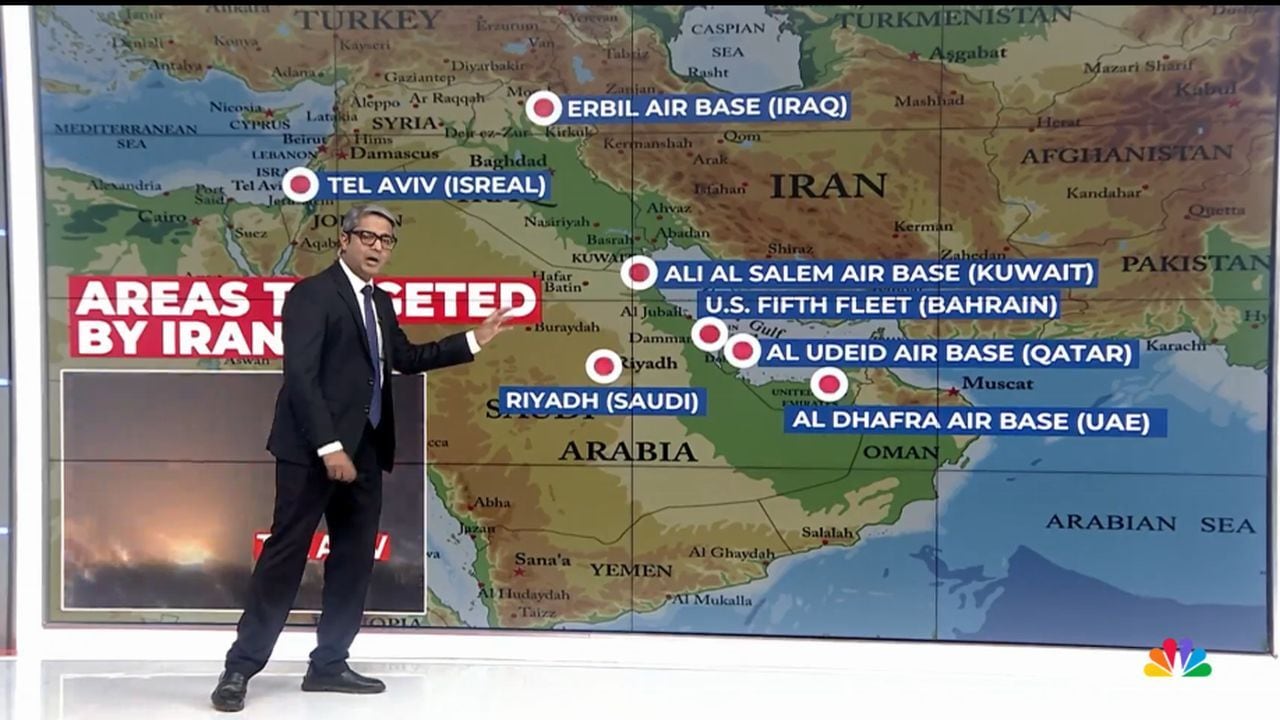
We have to look at the geography of these sites. Many of the region's nuclear interests, whether for energy or research, are located near strategic coastal areas or industrial hubs. This makes them accidental targets in a wider campaign. If a military commander targets a nearby port or an airbase, the margin of error for a GPS-guided missile—which can be jammed or spoofed—is terrifyingly small.
- Bushehr, Iran: A massive power reactor on the coast. It’s a focal point of international concern because of its scale.
- Dimona, Israel: An aging research facility that has been a point of contention for decades.
- Barakah, UAE: A modern, multi-unit plant that provides a huge chunk of the country’s electricity.
If any of these sites are compromised, the environmental impact would be felt from Riyadh to Baku. We’re talking about the potential for atmospheric release of Iodine-131 or Cesium-137. The former attacks the thyroid; the latter lingers in the soil for thirty years. This isn't fear-mongering. It's basic physics and biology.
The Problem with "Limited" Strikes
There’s a dangerous school of thought among some military strategists that you can "surgically" disable a nuclear program without causing a disaster. I've spent enough time looking at secondary data to tell you that "surgical" is a fantasy in a high-intensity conflict. When you strike a facility, you create debris. You create chaos. You prevent the technicians and engineers from doing their jobs.
If the people who know how to run the control room are hiding in a basement or can't get to work because the roads are cratered, the plant is at risk. A nuclear plant isn't a lightbulb you just turn off. It's a living, breathing heat-generator that requires active management every single second of the day.
The IAEA Role and the Limits of International Law
The IAEA is often criticized for being "toothless." That’s a misunderstanding of what they do. They are the world’s nuclear watchdog, but they aren't a police force. They rely on the "Seven Pillars" of nuclear safety, which include things like physical integrity, functional logistics, and reliable communication.
When Rafael Grossi calls for restraint, he's reminding the world that targeting nuclear sites is a violation of international law—specifically the protocols of the Geneva Convention. But let's be honest: in the heat of an existential conflict, international law often feels like a suggestion. The real pressure comes from the neighbors. No country in the Middle East wants a radioactive cloud drifting over their capital because their ally "miscalculated" a strike.
The IAEA’s presence in these countries is a tripwire. Their inspectors provide the only objective eyes on the ground. Without them, we’d be relying on satellite imagery and government propaganda, neither of which gives the full picture of whether a core is stable or a spent fuel pool is leaking.
What Happens if the Cooling Fails
Let’s get technical for a second. Even after a reactor is shut down, it produces "decay heat." This is heat from the radioactive decay of fission products. It’s not a lot compared to the full power of the reactor, but it’s enough to melt the fuel rods if it isn't carried away by water.
- Phase One: Power is lost. Backup generators kick in.
- Phase Two: If fuel for generators runs out or the generators are damaged, the water stops moving.
- Phase Three: The water in the reactor vessel boils away.
- Phase Four: The exposed fuel rods overheat, zirconium cladding reacts with steam to create hydrogen, and—boom—you have a hydrogen explosion like we saw at Fukushima.
In a desert environment, water is already a precious resource. Using it for emergency cooling while under fire is a logistical nightmare that nobody is truly prepared for.
The Silent Threat of Cyber Warfare
While missiles get the clicks, the silent threat to nuclear safety is digital. The Stuxnet incident years ago showed that nuclear infrastructure can be manipulated from a laptop thousands of miles away. In the current climate of Middle East tensions, the frequency of "probing" attacks on industrial control systems has spiked.
If an adversary can trick a sensor into thinking the temperature is normal when it's actually rising, the operators won't know they have a problem until it's too late. The IAEA has been pushing for better "cyber-hygiene" at these plants, but the reality is that as long as these facilities are connected to any kind of network—even an air-gapped one that can be bridged by a stray USB drive—they're at risk.
Immediate Steps to Protect the Public
So, what does this mean for the people living in these regions? Governments usually don't like to talk about evacuation plans because it causes panic. But if you live within a 50-mile radius of any nuclear facility, you need to understand the basics of "shelter in place."
Don't wait for a formal announcement that might come too late. Understand that the primary risk in the first few hours of a nuclear incident is the inhalation of radioactive particles. Keeping a supply of potassium iodide tablets is a standard precaution in many parts of the world, though they only protect the thyroid. The real strategy is distance, shielding, and time.
The IAEA is currently trying to establish "protected zones" that are recognized by all parties in the region. This is a diplomatic long shot, but it's the only way to decouple nuclear safety from political maneuvering.
If you're tracking these developments, stop looking for "victory" or "defeat" in the traditional sense. Start looking at the status of the power grids and the frequency of IAEA inspections. Those are the real indicators of whether we’re headed for a local conflict or a regional catastrophe. Keep an eye on the official IAEA board reports, which are often more detailed than the brief press releases you see on news sites. Staying informed through primary sources is the only way to cut through the noise of wartime rhetoric.