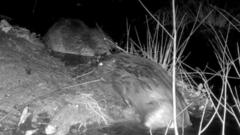
The headlines are dripping with sentimentality. A pair of beavers, released into the wild with the fanfare of a royal wedding, are "still together." We are invited to coo at the screen, celebrating a rodent romance as if it’s a victory for the planet.
It isn't. It’s a distraction.
This isn't conservation; it's a soap opera for people who prefer Disney movies to biology. While the general public swoons over the "loyalty" of a monogamous pair, they are missing the brutal, cold, and necessary reality of ecosystem engineering. We have traded ecological impact for a PR win, and in doing so, we are fundamentally misunderstanding what it takes to actually fix a broken landscape.
The Myth of the Romantic Rodent
The "still together" narrative relies on a humanized projection of fidelity. We love the idea of a bonded pair surviving against the odds. But from a biological standpoint, the emotional state of a beaver is irrelevant. What matters is the wattage of their impact.
Beavers are not pets. They are biological bulldozers. When we focus on their "relationship status," we ignore the metrics that actually count:
- Nitrate filtration rates
- Sediment retention volume
- Groundwater recharge cycles
I have sat in rooms with environmental consultants who spent more time discussing the "acclimatization stress" of a specific pair than the long-term hydrological viability of the release site. If those two beavers stay together but fail to build a dam that creates a legitimate wetland mosaic, the project is a failure. Period. Conversely, if they hated each other but managed to drop enough willow to flood three acres of unproductive scrubland, the project is a triumph.
The Survival Trap
The competitor's piece celebrates the fact that they survived. This is a remarkably low bar for success. Survival is the baseline; it shouldn't be the headline.
When you release captive-bred or relocated beavers, you are performing a high-stakes surgical intervention on the land. The "lazy consensus" suggests that as long as the animals don't die in the first six months, we are winning. This mindset ignores the Displacement Variable. Imagine a scenario where a pair stays "together" in a suboptimal stretch of river because they are too terrified or poorly adapted to explore the wider catchment. They survive, yes, but they underperform. They become a localized novelty rather than a systemic catalyst. We are patting ourselves on the back for a static outcome when we need a dynamic one.
Stop Treating Nature Like a Zoo
The current trend in rewilding has a massive transparency problem. It’s what I call the Instagrammable Ecology Crisis. We prioritize species that look good in a 30-second clip over the grimy, unappealing work of soil restoration and invertebrate recovery.
Beavers are the ultimate "charismatic megafauna" of the UK rewilding scene. They’re cute, they’re industrious, and they have flat tails. Because they are relatable, we coddle them in our reporting. We ignore the fact that reintroduction is often messy. It involves territorial disputes, failed dams, and, occasionally, animals wandering into places where they aren't wanted.
By sanitizing the story into a "love story," we fail to prepare the public for the reality of living with wild animals. If you think the most important thing about a beaver is its ability to keep a mate, you’re going to be very upset when that same beaver fells your favorite ornamental oak or floods a neighbor's basement.
The Real Metrics of Rewilding
If we want to be serious about restoration, we need to kill the "happy couple" narrative and start looking at the data.
- Hydraulic Roughness: This is the real goal. We want the river to slow down. We want complexity. If the beavers aren't increasing the Manning’s $n$ (the coefficient of roughness) of the channel, their presence is purely decorative.
- Invertebrate Biomass: A successful beaver release should be measured by the explosion of life in the stagnant pools they create. I want to see a 400% increase in dragonfly larvae, not a photo of two beavers touching noses.
- Connectivity: Are these animals creating a corridor, or are they an island?
I’ve seen projects where millions were spent on "monitoring" the health of individual animals while the surrounding habitat continued to degrade because the grazing pressure from deer was too high. We are obsessing over the actors while the stage is on fire.
The Cost of Sentimentality
Sentimentality is expensive. It dictates where the funding goes. Donors want to hear about "Beaver X and Beaver Y." They don't want to hear about the installation of flow devices or the complex legal battles over riparian rights.
This creates a perverse incentive for conservation charities to focus on the individual rather than the system. They spend their limited budgets on GPS collars and high-def cameras to track a single pair's "journey," when that money could have funded the relocation of ten more animals to a more critical site.
We are effectively paying for a reality TV show starring rodents.
How to Actually Fix the Landscape
If you want to support conservation, stop asking if the beavers are "still together." Start asking these questions:
- What is the catchment-scale plan? Two beavers are a drop in the bucket. We need hundreds of nodes across every major river system.
- Where is the conflict management fund? If we don't have a plan for when beavers inevitably frustrate farmers, the project will be shut down by political pressure within five years.
- Is the habitat actually ready? Releasing beavers into a river with no bankside cover is just providing a very expensive meal for a fox or a dog.
The "still together" narrative is a pacifier for a public that isn't ready for the raw, chaotic reality of a truly wild environment. Nature is not a partnership; it is a relentless competition for resources that occasionally results in a temporary equilibrium we call an ecosystem.
The Brutal Truth
The pair in the article might be "still together," but that is the least interesting thing about them. If they aren't causing a bit of trouble, if they aren't radically altering the topography of their home, and if they aren't triggering a cascade of "unintended" biological consequences, then they are just two oversized squirrels in a pond.
We need to stop rooting for the couple and start rooting for the flood. We need more downed trees, more silt, more blocked culverts, and more messy, unpredictable wilderness.
Stop looking for a love story in the mud. Start looking for the destruction that leads to life.
Stop checking the relationship status of the wildlife and start checking the health of the water.
Real conservation is not a romance. It is a war against ecological sterilely.
Pick a side.