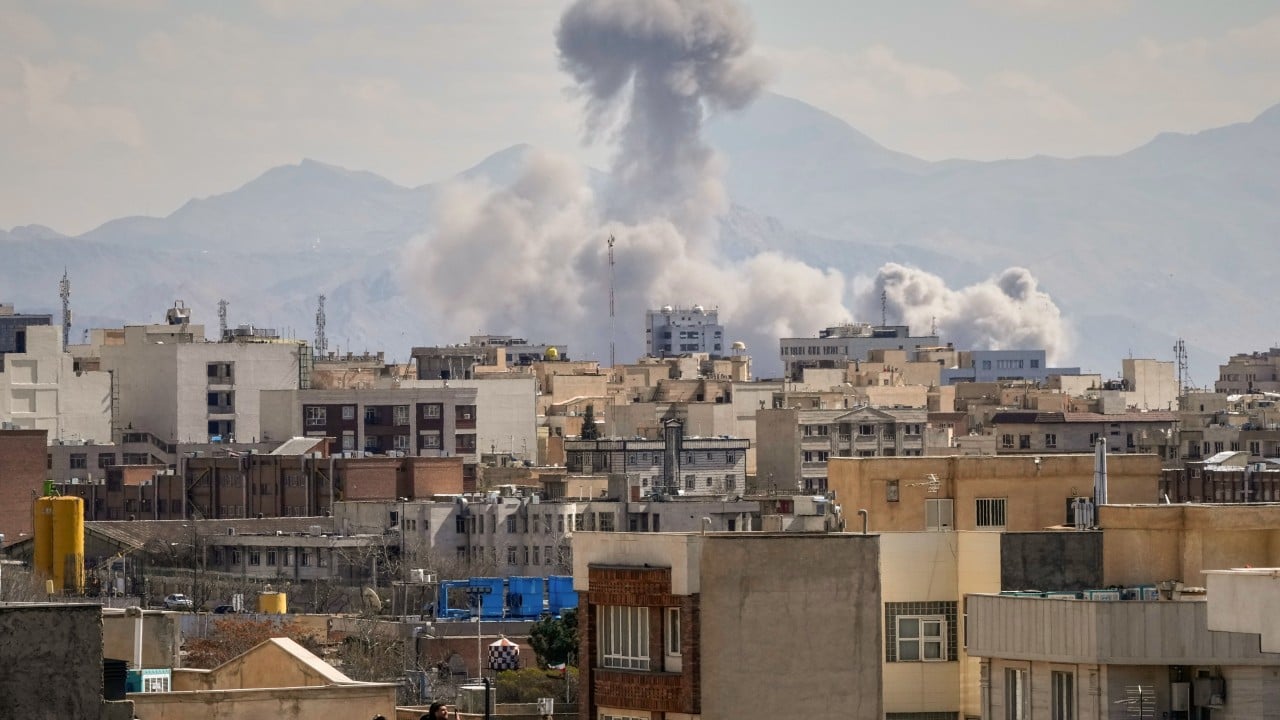
The vulnerability of a "mega-hub" airport is not merely a function of physical damage but a calculation of systemic throughput collapse. When a primary node like Dubai International (DXB) sustains a kinetic strike—resulting in reported injuries and infrastructure degradation—the immediate tactical concern is the four casualties. However, the strategic crisis lies in the cascading failure of global logistics and the exposure of the "Single Point of Failure" architecture inherent in ultra-centralized aviation models.
Dubai International operates on a high-utilization efficiency frontier. Its business model relies on the rapid turnaround of long-haul wide-body aircraft. Unlike regional airports with significant slack, DXB functions as a precision-timed engine where a 1% decrease in runway availability creates a non-linear increase in regional airspace congestion. To understand the gravity of the reported strike, one must look past the smoke and analyze the three specific vectors of disruption: Physical Integrity, Psychological Throughput, and Sovereign Risk Premiums.
The Triad of Hub Vulnerability
1. Physical Infrastructure and the Critical Path
A strike on an airport is rarely about total destruction; it is about intersecting the critical path of operations. Damage is categorized by its "Recovery Lead Time" (RLT).
- Runway and Taxiway Pavement: Low RLT. Modern engineering allows for "rapid runway repair" (RRR) involving quick-set resins and pre-cast slabs. These can be operational within hours.
- Aeronautical Ground Lighting (AGL): Medium RLT. If the strike destroys the precision approach lighting systems (PALS) or Category III ILS (Instrument Landing System) sensors, the airport’s capacity drops to zero during low visibility, regardless of whether the asphalt is intact.
- Human Capital: High RLT. The report of four injuries is a critical operational metric. Ground crews and specialized air traffic controllers represent a finite, highly trained resource. Injury to personnel induces immediate labor unions’ safety "stop-work" triggers and psychological friction that slows every manual touchpoint in the baggage and fueling chain.
2. The Logic of Airspace Saturation
The "ripple effect" in aviation is a mathematical certainty defined by queueing theory. When DXB halts operations for even sixty minutes, the following sequence is triggered:
- Inbound Stacking: Aircraft already in the air must enter holding patterns. This converts fuel into a "time-to-diversion" clock.
- Diversion Paradox: Neighboring airports—Al Maktoum (DWC), Sharjah (SHJ), and Abu Dhabi (AUH)—lack the gate capacity or specialized ground handling equipment for a sudden influx of 50+ diverted A380s. This creates "grounded capacity" where aircraft are safe but unusable for their next scheduled leg.
- The Network Gap: Because Emirates Airlines utilizes a "hub-and-spoke" model, a delay in Dubai is not isolated. A flight stuck in Dubai means the return leg from London Heathrow or New York JFK is canceled. The airline loses the ability to "re-fleet" its network, leading to a multi-day recovery period to reposition hulls and crews.
3. Kinetic Impact on Sovereign Risk and Insurance
The most profound damage from a strike is not to the concrete, but to the "War Risk" premium. Aviation insurance is bifurcated into standard hull/liability and war risk extensions.
- Premium Escalation: A confirmed strike reclassifies the destination. Insurance underwriters move from "passive" to "active" risk assessment, immediately increasing the cost per landing. For a high-frequency carrier, these micro-costs aggregate into millions in unexpected weekly overhead.
- The Perception of Safety: Tourism and transit-hub status are built on the illusion of total sanctuary. If the hub is perceived as within the "Kinetic Envelope" of regional adversaries, high-yield corporate travelers—the lifeblood of Emirates’ First and Business Class revenue—will pivot to alternative hubs like Doha (DOH) or Istanbul (IST).
Quantifying the "Friction Gradient"
The transition from a "Normal" state to a "Disrupted" state follows a friction gradient. In the first hour of a strike, the friction is purely mechanical (clearing debris). In hours two through six, the friction becomes logistical (re-routing crews). Beyond six hours, the friction becomes financial and reputational.
The reported injuries suggest the strike hit an area of high human density—likely a terminal apron or a maintenance hangar. This indicates a precision or a high-explosive yield that bypasses standard perimeter defenses. The failure of integrated air defense systems (IADS) to intercept such a threat suggests a shift in the "Cost-to-Kill" ratio. If a low-cost drone or missile can penetrate a multi-billion dollar defense umbrella, the economic viability of the hub is fundamentally challenged.
The Strategic Bottleneck of Centralization
The Dubai model is built on "Extreme Centralization." While this creates massive economies of scale, it also creates a catastrophic failure profile.
- The Single-Node Risk: 100% of Emirates' international operations funnel through a single geographic coordinate.
- Infrastructure Density: The proximity of fuel farms, terminal buildings, and the world’s largest catering facility means that any kinetic event has a high probability of collateral damage to secondary vital systems.
A strike that injures four people is a signal that the "Hardening" of the site is insufficient against modern asymmetrical threats. The mechanical response—fixing the hole in the ground—is the easy part. The harder task is recalibrating the risk-modeling for an asset that handles over 80 million passengers annually.
Operational Contingency and Defensive Posture
In the immediate aftermath, the aviation authority will likely implement a "Tiered Readiness" protocol. This involves:
- NOTAM Issuance: Notice to Air Missions (NOTAM) will likely restrict low-altitude flight paths or implement "Sterile Apron" procedures, slowing down turn-times by 15-20%.
- Electronic Warfare (EW) Deployment: Increased jamming and spoofing of GPS frequencies near the airport to deter loitering munitions. This, ironically, can interfere with older civilian avionics, creating a different type of operational delay.
- Labor Resilience: Implementing trauma-informed shift rotations to ensure that the "four hurt" does not lead to a "four hundred quitting" scenario due to perceived lack of workplace safety.
The event confirms that the era of "Safe Haven Hubs" in the Middle East is facing a period of intense volatility. The ability of DXB to absorb this shock and maintain its 24/7 "Gold Standard" of operation is the ultimate stress test of its structural engineering and its geopolitical standing.
The primary strategic move for stakeholders is to diversify the "Operational Footprint." Reliance on a single terminal or a single runway configuration is no longer viable under the current threat profile. The immediate acceleration of Al Maktoum International (DWC) as a fully redundant, "Hot-Standby" hub is no longer a long-term growth plan; it is a short-term survival necessity. Global carriers must now price "Conflict Contingency" into their ticket structures, and passengers must weigh the 90-minute connection efficiency against the rising probability of systemic grounding. Any further delay in activating full-scale redundancy at DWC will result in a permanent migration of transit traffic to the more insulated hubs of the northern hemisphere.