Media outlets are currently tripping over themselves to celebrate "firsts." The narrative is always the same: a skier from a tropical climate makes it to the slopes, everyone claps for the bravery, and the actual competitive nature of the event is buried under a mountain of saccharine metaphors about the human spirit.
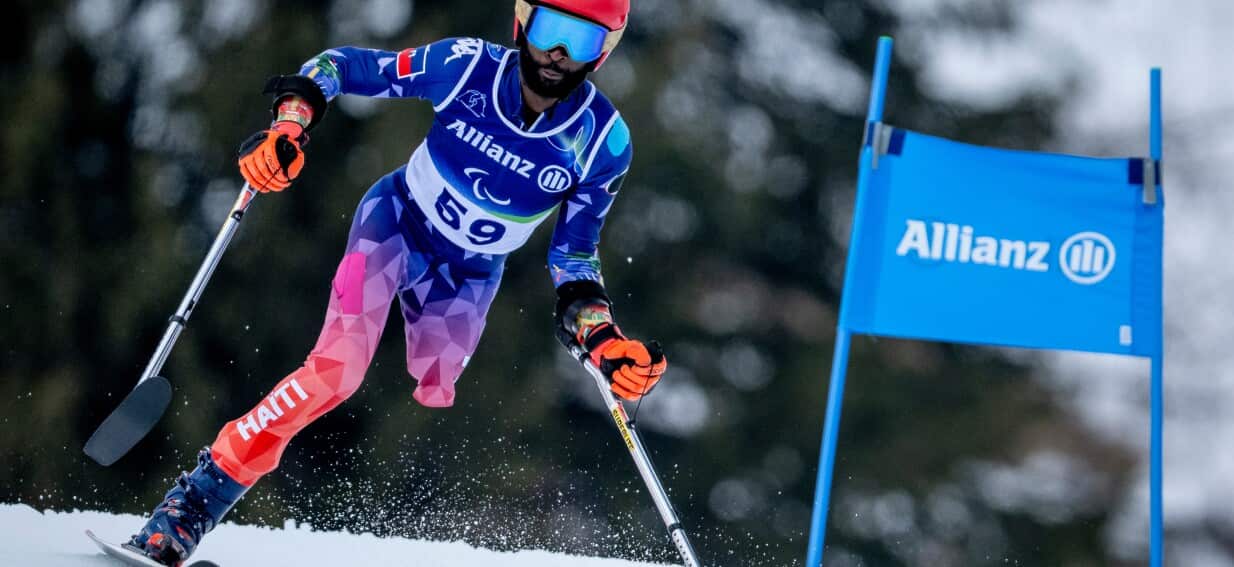
We saw it again with Haiti’s debut on the Paralympic slopes. We saw it alongside the clinical, high-performance bronze win by Australia’s Ben Tudhope. The press treats these two events as if they belong in the same sentence. They don’t. By conflating participation with performance, we aren't "elevating" the Paralympics; we are patronizing the athletes who have spent a lifetime turning their bodies into precision instruments.
If we want the Paralympics to be respected as an elite tier of human achievement, we have to stop treating it like a global talent show.
The Participation Trophy Industrial Complex
The "lazy consensus" among sports journalists is that diversity of flag representation is the primary metric for a successful Games. It’s a warm, fuzzy lie. When you prioritize "being there" over "winning there," you dilute the brand of elite sport.
Ben Tudhope didn't win a bronze medal because he has a great backstory. He won it because his training volume, equipment physics, and technical execution on the board are world-class. When the media spends 80% of its word count on the novelty of a Haitian skier and 20% on the mechanics of a podium finish, they are signaling that the Paralympics is a human-interest project, not a sporting competition.
True inclusion isn't about getting someone from every ZIP code to the starting line. It’s about building the infrastructure so that any athlete, anywhere, can actually compete for a gold medal. Showing up and finishing last by a minute isn't "breaking barriers." It’s a photo op.
Stop Treating Classification Like a Technicality
The general public—and most casual reporters—view Paralympic classification as a confusing hurdle. In reality, it is the most sophisticated system in professional sports. It is the $E=mc^2$ of the movement.
Classification determines the "Minimum Impairment Criteria." It ensures that the impact of an impairment on the sport is minimized so that athletic talent remains the deciding factor. When we focus on "inspiring" stories from underrepresented nations, we often ignore whether those athletes were properly classified or if they even had access to the high-performance pathways required to meet those criteria.
I’ve watched federations burn through six-figure grants to send a single athlete to a Games for the "optics," while local grassroots programs for disabled kids are starving for $5,000 to buy basic racing chairs. We are funding the peak of the pyramid while the base is rotting.
The Geography Fallacy
The "Tropical Skier" trope is the oldest trick in the book. It’s a recycled version of Cool Runnings that refuses to die.
Logic dictates that winter sports require snow. Pushing for "firsts" from nations without a single patch of ice is a logistical nightmare and a financial drain. Why are we obsessed with forcing athletes into sports that are geographically and economically impossible for them to sustain?
Imagine a scenario where we invested that same "Haiti on ice" money into developing a world-class Paralympic track and field hub in Port-au-Prince. You’d get sustainable, generational excellence instead of a one-off headline about a guy who learned to ski in the French Alps and happens to hold a specific passport.
The High Cost of Inspiration
Inspiration is cheap. Infrastructure is expensive.
The "feel-good" story is the enemy of the "do-good" policy. Every time a broadcaster leans into the "against all odds" narrative, they let the sporting bodies off the hook. If an athlete has to overcome "impossible" odds just to show up, it means the system failed.
The goal of the International Paralympic Committee (IPC) shouldn't be to find the most improbable athlete. It should be to make the path to the podium so standardized that the "odds" are no longer the story. Ben Tudhope is the blueprint. He started young, had access to the right coaching, and was treated as an athlete from day one—not a miracle.
The Meritocracy Mandate
We need to be brutally honest about what we want the Paralympics to be. Is it a festival of the human spirit, or is it the highest level of para-sport? If it’s the latter, then we have to stop grading on a curve.
When we celebrate a 40th-place finish as much as a podium, we insult the people on the podium. We imply that their victory was inevitable or that the struggle of the "novelty" athlete was somehow more profound. It wasn't. The struggle of a gold medalist is measured in 4:00 AM gym sessions, surgical recoveries, and a level of obsession that most people can't comprehend.
The Downside of My Stance
The risk of this "performance-first" mindset is that the Games become an exclusive club for wealthy G7 nations. Australia, the US, and China have the money to build the labs and pay the coaches. If we only value the podium, we risk silencing the rest of the world.
But the solution isn't to celebrate mediocre performance from developing nations. The solution is to move the high-performance centers to them. Stop flying athletes to Europe; build the facilities in their regions. Anything else is just "sporting tourism" dressed up as progress.
Dismantle the Narrative
Next time you see a headline about a "first" in the Paralympics, ask yourself these three questions:
- What was their time compared to the world record?
- Did they have access to a standardized high-performance pathway?
- Is the media focusing on their disability or their velocity?
If the answer to the third question is "disability," you aren't watching a sports report. You're watching a charity telethon.
Elite athletes don't want your pity, and they don't want your "participation" stickers. They want your respect, and respect is earned through data, split-seconds, and the cold, hard reality of the scoreboard.
Stop clapping for people who just showed up. Start analyzing the people who came to win. The Paralympics is not a Hallmark card; it is a war of attrition fought with carbon fiber and sheer willpower. Treat it like one.
Stop asking if it's "inspiring." Ask if it's fast.