The headlines are screaming about a "close to over" war in Iran. The pundits are already polishing their Nobel Peace Prize nominations. They want you to believe that a few surgical strikes, a couple of fiery speeches, and some backchannel handshakes have successfully defanged the longest-standing ideological rivalry in the modern world.
They are lying to you.
The idea that the conflict with Iran is "over" ignores the fundamental mechanics of how regional power operates. It treats war like a flickering light switch when it is actually a slow-burning chemical fire. What we are witnessing isn't the end of a conflict; it’s the transition into a much more dangerous, invisible phase of attrition that most observers aren't equipped to understand.
The Myth of the "Surgical Finish"
The common narrative suggests that once the missiles stop flying and the rhetoric cools, the danger dissipates. This is the "lazy consensus" of modern foreign policy. It assumes that state actors like Iran behave like corporate entities looking for a merger.
In reality, the Iranian state operates on a different temporal scale. While Western leaders look at four-year election cycles, the IRGC (Islamic Revolutionary Guard Corps) thinks in decades. To suggest the war is "over" because direct kinetic action has paused is like saying a forest fire is gone because you can no longer see the flames from your airplane window. The roots are still smoldering.
I have spent years analyzing how these power dynamics shift. I’ve seen analysts claim "mission accomplished" in Iraq, Libya, and Afghanistan, only to watch the vacuum fill with something far more toxic. Iran is not a problem to be solved; it is a condition to be managed.
Why the "Peace" is Actually an Escalation
When direct military confrontation pauses, the conflict simply migrates. We are moving from the "Kinetic Era" into the "Asymmetric Era." This isn't peace. It’s a diversification of the portfolio of violence.
- The Proxy Pivot: Iran doesn't need to fly its own planes to win. By moving resources into the "Axis of Resistance" (Hezbollah, Hamas, and the Houthis), they maintain a low-cost, high-impact threat level that no peace treaty can actually touch.
- Economic Sabotage: The real war is being fought in the Strait of Hormuz and via cyberattacks on global shipping infrastructure. A "peaceful" Iran can still sink your portfolio by making global logistics untenable.
- Nuclear Latency: The biggest misconception is that the "end" of war means the end of the nuclear program. On the contrary, a diplomatic thaw often provides the cover needed to achieve "breakout capability"—the state of being just weeks away from a bomb without actually crossing the finish line.
Dismantling the "Stability" Argument
People always ask: "Isn't any de-escalation a good thing for the markets?"
Usually, no. False stability is more dangerous than open conflict. Open conflict is priced in. Traders know how to hedge against a missile strike. What they cannot hedge against is "The Great Unknown"—a decade of subsurface tension that could explode at any moment.
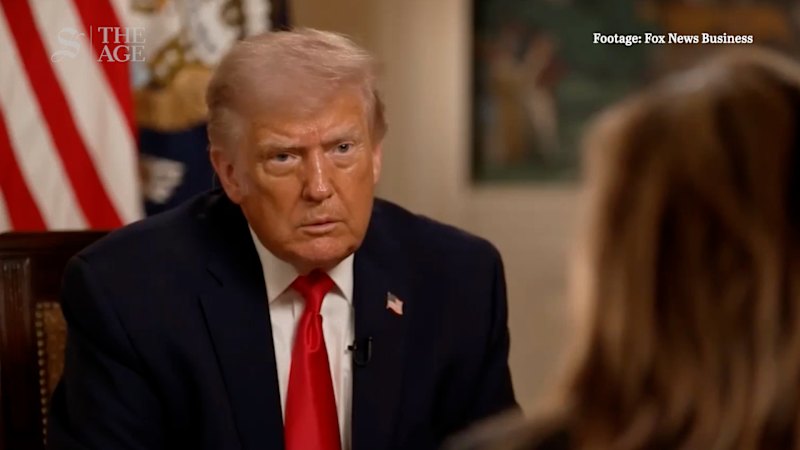
When Trump or any other leader claims a war is over, they are usually talking about their involvement in it. They aren't talking about the reality on the ground. The US may be "done" with Iran, but Iran is certainly not done with the regional order.
The Cost of Withdrawal
Let's run a thought experiment. Imagine a scenario where the US fully ignores the Iranian threat, declares total victory, and pivots entirely to domestic issues.
- Result A: Saudi Arabia and the UAE, feeling abandoned, begin their own nuclear programs to balance the scales.
- Result B: Israel, sensing an existential threat without a US buffer, takes unilateral action that drags the entire world back into a hot war.
- Result C: Russia and China move in to fill the security vacuum, securing long-term energy contracts that cut the West out of the loop for the next fifty years.
This isn't a peace dividend. It’s a massive geopolitical debt that our children will have to pay with interest.
The Intelligence Gap
The competitor piece relies on official statements. If you've been in this game long enough, you know that official statements are the least reliable source of truth. They are designed for domestic consumption.
To understand what is actually happening, you have to look at the flow of dark money and centrifuge counts.
- The Rial Reality: If the war were truly over, you would see a massive, sustained recovery of the Iranian Rial. You aren't seeing that. The internal economy of Iran is still on a war footing because the leadership knows the "peace" is a tactical pause, not a strategic shift.
- The Enrichment Truth: Check the IAEA reports. If enrichment levels remain at 60%, there is no peace. There is only a pause while the kitchen gets ready for the next course.
The Strategy of the Contrarian Insider
Stop looking for "The End." It doesn't exist in the Middle East. Instead, look for the pivot points.
If you are an investor or a policy wonk, the "war is over" narrative is your signal to buy volatility. History shows that these declarations are almost always followed by a "Black Swan" event—an unforeseen escalation that catches the "peace-mongers" off guard.
We saw this in the early 2000s, and we saw it with the JCPOA (Iran Nuclear Deal). Each time the West declared the "Iran Problem" settled, the internal pressures within the Iranian regime forced a new outward explosion of aggression. The regime survives on the concept of the "Eternal Enemy." Without a conflict to point to, the internal dissent from a young, tech-savvy population would tear the Mullahs apart. They need the war to continue, even if it’s just at a simmer.
Tactical Advice for the Skeptic
- Ignore the Presidential tweets: They are noise.
- Watch the Straits: Shipping insurance rates in the Persian Gulf are a better indicator of "peace" than any State Department briefing.
- Track the Proxies: If Hezbollah is digging tunnels while the President is talking about peace, believe the shovels, not the microphones.
The status quo isn't being disrupted by peace. It’s being disrupted by a sophisticated rebranding of conflict. Calling it "over" is a dangerous hallucination that leaves us vulnerable to the next strike.
Real peace requires a fundamental shift in the DNA of the Iranian regime. Until the IRGC is disbanded and the revolutionary ideology is scrapped, any "end to the war" is just a commercial break.
Pack your gear. The show isn't over. It’s just getting started.