The international press is currently salivating over Péter Magyar like he’s a political messiah sent to scrub the "illiberal" stain off Central Europe. The narrative is as predictable as it is lazy: an insider turns whistleblower, calls for the head of a pro-Orbán president, and suddenly, Hungary is on the verge of a democratic spring.
It is a fairy tale.
If you believe Magyar’s demand for President Tamás Sulyok’s resignation is a principled stand for the rule of law, you aren’t paying attention to the mechanics of Hungarian power. This isn’t a revolution; it’s a high-stakes rebranding exercise by a man who knows exactly where the bodies are buried because he helped dig the graves.
The Insider’s Grift
Magyar isn’t an outsider. He is a product of the very system he now claims to despise. For years, he occupied comfortable seats on the boards of state-owned companies, enjoying the spoils of the NER (Nemzeti Együttműködés Rendszere—the System of National Cooperation). His sudden "awakening" coincided perfectly with the political implosion of his ex-wife, former Justice Minister Judit Varga.
When the ship started taking on water after the presidential pardon scandal involving a pedophile’s accomplice, Magyar didn't just jump overboard. He grabbed a megaphone and claimed he was the only one who knew how to steer.
The media characterizes his attacks on President Sulyok as a bold strike against corruption. In reality, it’s a tactical distraction. By focusing on Sulyok—a figurehead with limited executive power—Magyar creates a spectacle of opposition while avoiding the structural reality: the Orbán machine doesn't rely on individuals; it relies on an interlocking web of law, capital, and media that one man cannot dismantle by screaming in a town square.
The Sulyok Smokescreen
Let’s look at the "dirt" Magyar is throwing. He accuses Sulyok of involvement in illegal land deals from decades ago. Whether true or not is almost secondary to the political function of the accusation.
The presidency in Hungary is largely ceremonial. By targeting Sulyok, Magyar picks a fight he can "win" in the court of public opinion without actually threatening the core legislative grip of Fidesz. It’s low-hanging fruit. It gives the disillusioned masses a villain to boo at while leaving the actual levers of power—the public procurement systems and the constitutional court—untouched.
The "lazy consensus" suggests that if Magyar topples Sulyok, the dominoes will fall. This is a fundamental misunderstanding of Hungarian constitutional law. Fidesz holds a two-thirds majority. If Sulyok goes, Orbán simply appoints another loyalist. The seat remains warm for the party. Magyar knows this. He isn’t trying to break the machine; he’s trying to audition for the role of its new operator.
Why the European Union is Getting It Wrong
Brussels is desperate for a win. They’ve spent a decade losing the rhetorical war against Budapest. When Magyar appeared, the EPP and European liberals started checking their watches, wondering when they could invite him to the table.
They are falling for the "Enemy of my Enemy" fallacy. Just because Magyar uses the vocabulary of transparency doesn't mean he shares the values of the European project. His rhetoric remains deeply nationalistic. He isn't promising to return Hungary to a pre-2010 liberal consensus. He is promising a "cleaner" version of the current nationalist path.
I have seen this movie before in Eastern Europe. You replace a "corrupt" strongman with a "charismatic" reformer, only to find out three years later that the reformer has merely redirected the flow of state funds to a different set of friends.
The Logistics of the "Tisza" Illusion
Magyar’s party, Tisza, has surged in the polls. To the casual observer, this looks like a grassroots movement. To an insider, it looks like a vacuum being filled.
The traditional Hungarian opposition—a fractured mess of socialists, greens, and former radicals—has failed so spectacularly over the last fourteen years that the electorate was ready to vote for a cardboard cutout if it meant a change of pace. Magyar provides that pace. He is fast, he is social-media-savvy, and he speaks the language of the Fidesz voter.
But look at the policy depth. It’s non-existent.
Magyar’s platform is a collection of grievances, not a blueprint for governance. When asked how he would actually dismantle the "Deep State" Fidesz has constructed, he pivots back to scandals. This is "Politics as Entertainment." It’s effective for winning a European Parliament seat, but it’s a disaster for actual reform.
The Problem with the Whistleblower Narrative
True whistleblowers bring receipts that change the system. Magyar brings recordings of private conversations with his wife.
- The Varga Tape: He released a recording where Judit Varga allegedly admitted to interference in a corruption case. The result? A few weeks of protests and a shrugged shoulder from the prosecutor’s office.
- The Land Deal Allegations: He targets Sulyok for 20-year-old paperwork.
If Magyar had the "nuclear" evidence he claims to possess—evidence that could actually sink the Prime Minister—he would have used it by now. Instead, he drips out just enough to stay in the headlines. This isn't the behavior of a man trying to save a country; it's the behavior of a man managing a brand.
The Brutal Reality of the 2026 Horizon
Everyone is looking at Magyar’s current polling and projecting a victory in the 2026 national elections. They are ignoring the math.
Hungary’s electoral map is gerrymandered to a degree that makes the US Congress look like a model of fairness. To win, an opposition party doesn't just need a majority of votes; they need a landslide in rural districts that have been economically tethered to Fidesz through work-fare programs and local patronage.
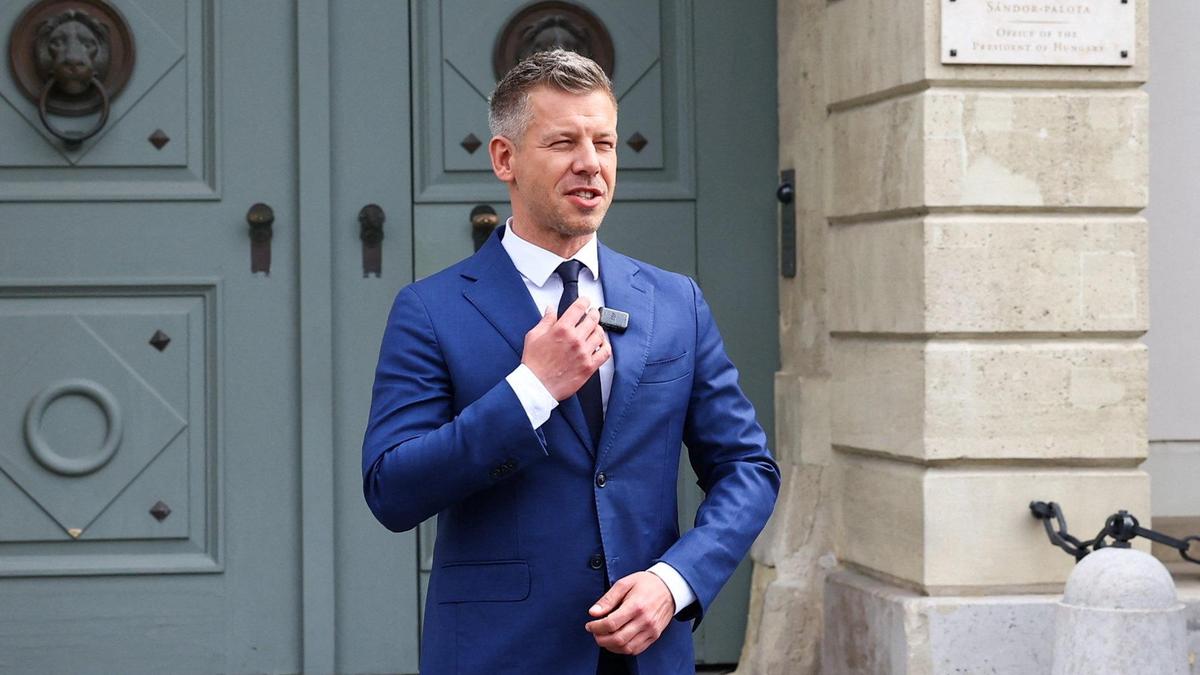
Magyar is a Budapest phenomenon. His slick suits and urban rallies don't play in the villages of the Great Plain, where the local mayor decides who gets coal for the winter. Unless Magyar can figure out how to break the feudal economic bonds of the Hungarian countryside, his movement will hit a brick wall the moment it leaves the capital.
The Risks Nobody Mentions
There is a dangerous downside to the Magyar craze. By sucking all the oxygen out of the room, he is killing off any chance for a genuine, policy-based opposition to emerge.
He has turned the fight against Orbán into a personality cult. If Magyar fails—if he is caught in a scandal of his own or if his ego eventually fractures his movement—he will take the hopes of millions of Hungarians down with him. He will have effectively vaccinated the Orbán regime against future challenges by proving that even the "best" alternative was just another flawed insider.
Stop Asking if He Can Win
The question isn't whether Péter Magyar can win an election. The question is: What happens the day after he wins?
If Magyar takes power without a radical, systemic overhaul of the Hungarian constitution—an overhaul that would require the very cooperation he is currently burning—he will simply be the new head of an old monster.
He wants Sulyok out? Fine. He wants the President gone? Great. But don't mistake a change in personnel for a change in the system. The "Pro-Orbán President" is a symptom. The "Pro-Magyar Reformer" might just be a different strain of the same virus.
The crowd in Budapest cheers because they are tired. They want a shortcut. But in geopolitics, shortcuts usually lead back to where you started, just with a different face on the posters. Magyar isn't breaking the mold; he's just trying to fit into it.