The sun over the Rann market in Borno State does not gently rise. It strikes. By mid-morning, the air usually carries the scent of dried fish, scorched earth, and the sharp, acidic tang of ripening tomatoes. It is a place of survival, where the currency is often as much about sweat as it is about naira. People don't go to Rann to debate politics or war. They go because their children are hungry.
Hawa (a name we will use to represent the many mothers present that day) likely spent her morning calculating the math of a meager life. She would have checked the soles of her feet, hardened by miles of dust, and counted the coins tucked into the knot of her wrapper. In a region choked by a decade of insurgency, a market day is more than a commercial event. It is a lifeline. It is the one day the world feels normal.
Then the sound came.
It wasn't the sound of a storm. It was the mechanical scream of a jet engine, a noise that belongs to the modern world, tearing through a setting that feels ancient. For those on the ground, there is no time for "situational awareness" or "strategic analysis." There is only the sudden, violent displacement of reality.
The Error in the Orbit
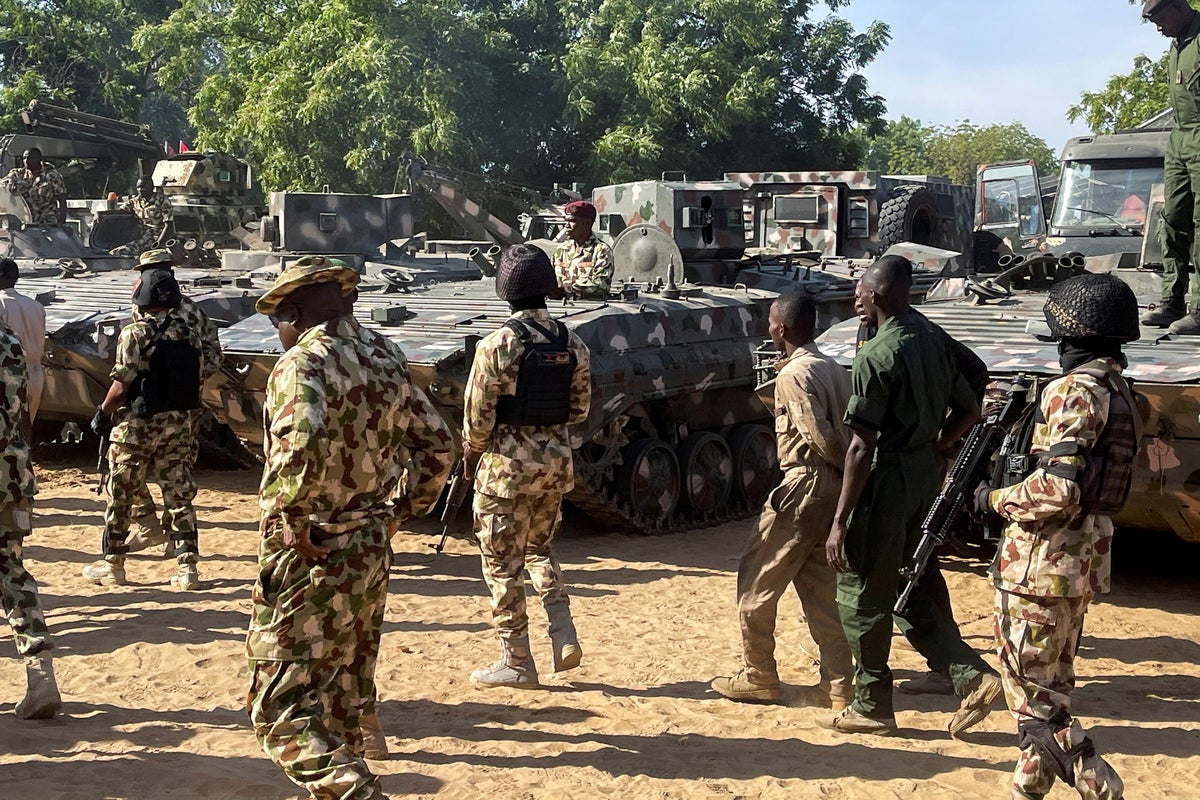
The Nigerian military later called it a mistake. A tragic accident. An intelligence failure. They were hunting Boko Haram insurgents, the shadows that have haunted the northeast for years. From thousands of feet in the air, through the grainy lens of a targeting pod, a crowd looks like a heat signature. A cluster of bodies looks like a camp. A gathering of civilians looks like a target.
But the cold optics of a drone or a fighter jet cannot see the distinction between a rifle and a shovel. It cannot hear the haggling over the price of grain.
When the first ordinance hit the center of the market, the world turned inside out. The statistics tell us that over 100 people died instantly, with hundreds more maimed. But statistics are a polite way of looking away from the carnage. Statistics don't describe the smell of burnt plastic and copper. They don't describe the silence that follows a blast, a ringing void where the screams haven't yet started because the lungs are still struggling to find air.
Consider the physics of an aerial bombardment on a crowded clearing. The pressure wave arrives first, faster than sound, collapsing eardrums and lungs. Then comes the heat. Finally, the shrapnel—shards of metal traveling at supersonic speeds, turning every everyday object into a potential blade. In Rann, the victims weren't just soldiers of a forgotten war; they were grandfathers sitting on plastic crates and children running between stalls.
The Invisible Stakes of a Collateral Label
We often use the term "collateral damage" to scrub the blood off the narrative. It is a sterile, bureaucratic phrase designed to suggest that these deaths were a necessary byproduct of a greater good. But for the families in Borno, there is no "greater good" that accounts for a missing limb or a buried child.
The real tragedy of the Rann airstrike, and others like it, lies in the erosion of trust. In this part of Nigeria, the population is caught in a horrific vice. On one side, they face the brutal, nihilistic violence of insurgents who burn schools and kidnap daughters. On the other, they look to the state for protection, only to find that the state’s "protection" can sometimes drop from the sky in the form of a 500-pound bomb.
When the protector becomes the predator—even by accident—the moral landscape shifts. It creates a vacuum of hope. If you cannot be safe at the market, where can you be safe? If the government cannot tell a terrorist from a trader, who is actually in charge?
The military's defense usually centers on the "fog of war." It is a real phenomenon. Coordination is difficult. Intelligence is often provided by local informants with their own agendas. The terrain is vast and unforgiving. Yet, as technology becomes more "precise," the margin for error should theoretically shrink. Instead, we see a recurring pattern where the rush for a tactical win overlooks the human cost of a strategic failure.
The Weight of the Aftermath
Healing in a war zone is a slow, agonizing process of subtraction. You subtract the breadwinner from the house. You subtract the leg from the young man who used to play football. You subtract the sense of security from an entire village.
In the days following the strike, the humanitarian workers—those who were actually there to provide food and medicine to the displaced—found themselves triaging the very people they were trying to save. Red Cross volunteers were among the dead. The irony is bitter enough to choke on. The very infrastructure meant to sustain life was decimated by the force meant to defend it.
We have to ask ourselves what we are willing to accept in the pursuit of security. If the goal is to defeat an insurgency, the primary weapon isn't a missile; it is the loyalty and safety of the people. Every "accidental" strike is a recruitment poster for the enemy. It turns grief into grievance. It turns a grieving mother into someone who has nothing left to lose.
The clouds of dust eventually settled over Rann. The international news cycle moved on to the next crisis, the next political scandal, the next trending outrage. But in the northeast, the earth is still stained.
The market will eventually reopen, because people have no choice but to eat. They will return to the same stalls. They will haggle over the same tomatoes. But they will do so with one eye fixed on the horizon, listening. Every time a plane passes overhead, the conversation will stop. The breath will catch. The heart will race.
They are waiting to see if the sky will fall again.
True security isn't measured by the number of enemies killed, but by the number of children who can walk to a market without looking up in terror. Until the state can guarantee that, the victory they seek will remain as a ghost, flickering just out of reach in the desert haze.
The price of those tomatoes in Rann just became too high for anyone to pay.