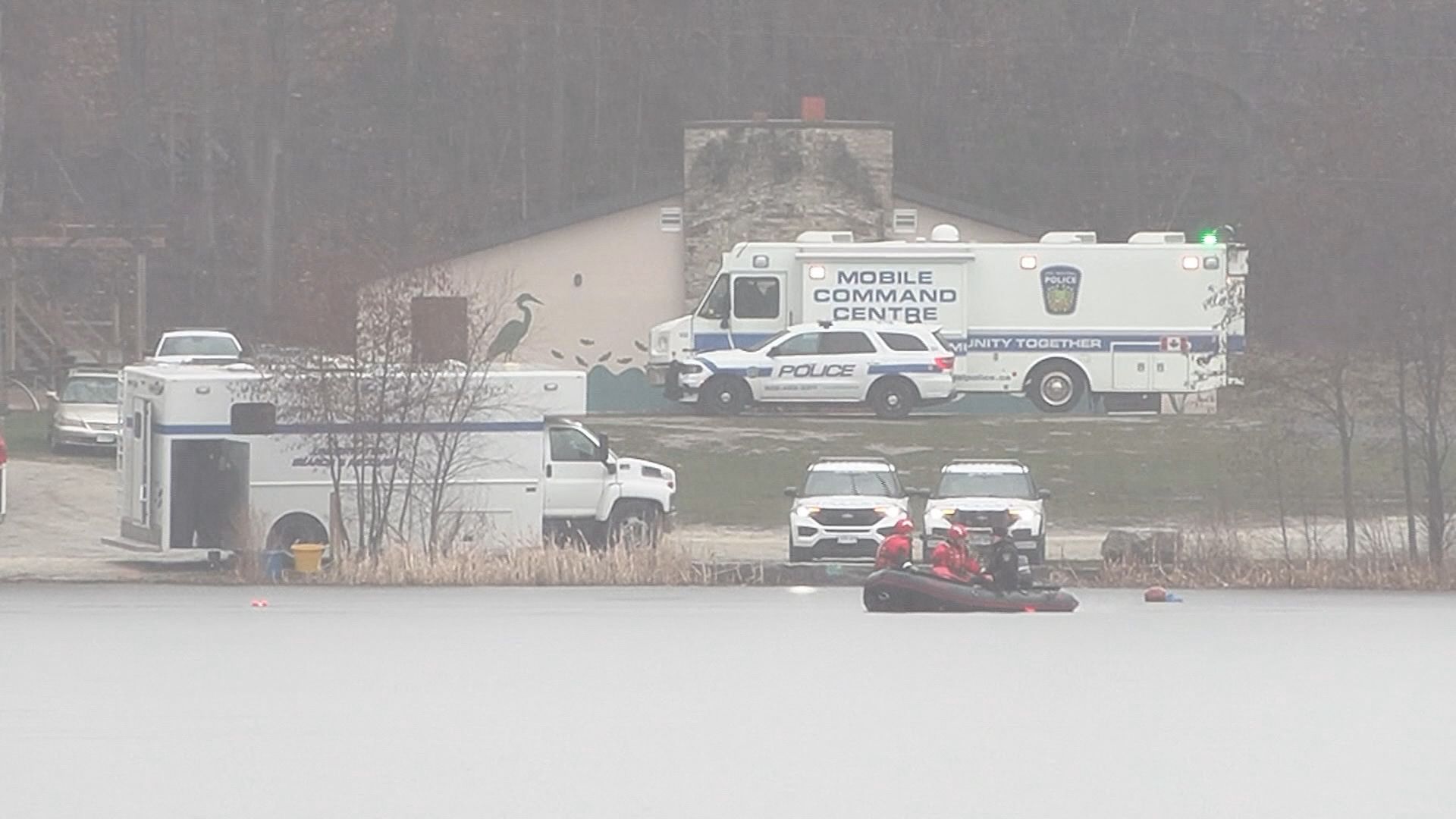
A peaceful afternoon on the water in Brampton ended in tragedy this week, adding another name to a grim ledger of preventable losses at Professor’s Lake. It took hours for dive teams to recover the body. For the family standing on the shore, those hours were an agonizing wait for a conclusion they already feared. For the city, it is a recurring nightmare that highlights a lethal gap between public perception of safety and the geological reality of these man-made waters.
The victim, whose identity remains withheld pending broader family notification, was aboard a small craft when they entered the water. Initial reports suggest a struggle, a brief disappearance, and then the silence that usually precedes a recovery operation. This isn't just an isolated "boating incident." It is a symptom of a larger, more systemic issue involving urban recreational safety, the deceptive nature of quarry-turned-lakes, and a persistent failure to communicate the physical risks of the Brampton waterfront.
The Quarry Trap
Professor’s Lake is not a natural body of water. It is a 65-acre spring-fed pond created from an old sand and gravel quarry. This history matters. Unlike a natural lake that slopes gradually toward the center, a quarry lake is a landscape of sudden, vertical extremes.
In many areas of Professor's Lake, the depth can plummet from three feet to twenty feet in a single step. For a boater who falls overboard—even a decent swimmer—the shock of hitting a cold, deep pocket of water can trigger the mammalian dive reflex or immediate panic. The water in these deep pockets stays significantly colder than the surface, even in the height of August. When a person hits that cold layer, the involuntary gasp reflex can lead to immediate water ingestion.
- Sudden Drop-offs: The "shelf" at Professor's Lake is notorious among local first responders.
- Cold Water Pockets: Sub-surface temperatures in deep quarry holes can cause muscle failure within minutes.
- Visibility Issues: Silt and sediment from the lake's industrial past often reduce visibility to near zero just a few feet down, making "bystander rescues" nearly impossible.
The Lifejacket Fallacy
Investigation into recent incidents across the GTA reveals a staggering consistency: the presence of lifejackets on the boat, but not on the person. In Brampton, the culture of "casual boating"—using paddleboards, canoes, or small aluminum boats—often leads to a relaxed attitude toward personal flotation devices (PFDs).
There is a common, dangerous assumption that if you are a strong swimmer and the shore is visible, a PFD is unnecessary. This logic fails to account for the incapacitation factor. If a boater is struck by the hull, entangled in gear, or simply shocked by the suddenness of the fall, their swimming ability becomes irrelevant. A lifejacket is not a piece of emergency equipment you "reach for" once you are in the water. By then, it is usually too late.
A Legacy of Drowning
To understand why this latest death feels so heavy, you have to look at the timeline. Professor’s Lake has a history of swallowing those who underestimate it. In 2015, the lake claimed two lives in a single summer—one, a father attempting to save his daughter who had slipped from a rock. Like this most recent victim, he was caught in an area where the depth changed without warning.
The city has attempted to mitigate these risks with signage and designated swimming zones, but the lake's perimeter remains a patchwork of "swim at your own risk" and "prohibited" areas. The reality is that people will always seek the water. The failure lies in the bridge between those two points: the lack of a proactive, aggressive safety culture that treats Professor’s Lake with the same respect as the open Great Lakes.
Beyond the Warning Signs
Critics argue that more signs aren't the answer. Brampton’s growth has outpaced its water safety education. We are seeing a demographic shift where many lake users are new to the region or have limited experience with the specific hazards of Canadian quarry lakes.
The city’s current approach relies on a reactive model. We wait for a distress call, dispatch the Peel Regional Police Marine Unit, and eventually, the divers. A shift toward a preventative maritime model is required. This would include:
- Mandatory On-Site PFD Rentals: Making it impossible to launch a craft without a fitted jacket on the person.
- Geological Mapping Displays: Large-scale 3D maps at entry points showing exactly where the drop-offs occur.
- Increased Shoreline Patrols: Not just during peak beach hours, but across the entire lake perimeter where "illegal" entries happen.
The Weight of the Silence
Every time a dive team enters Professor’s Lake, the community holds its breath. There is a specific kind of grief that comes with a drowning in a suburban park—a place where children play and families picnic just yards away from a recovery site.
The investigation into this week's fatality will likely conclude with "accidental drowning" as the cause. But that label is too clean. It ignores the mechanical reality of the lake and the human tendency to overestimate our control over the elements. This was a death of inches—the few inches between a boat's gunwale and the water, and the few feet between a shallow shelf and a deep, dark hole.
The water at Professor’s Lake is still today. The police tape is gone. But the shelf is still there, hidden under the surface, waiting for the next person who thinks they are safe because they can see the shore.