The survival of the Kim Jong Un administration depends on a singular, data-backed hypothesis: conventional military inferiority can be mitigated only through a credible, preemptive nuclear posture. While Western analysts often view North Korean provocations as isolated signaling, the escalation of the Iran-Israel conflict provides Pyongyang with a real-world laboratory to test the efficacy of "The Threshold of Deterrence." The current instability in the Middle East serves as a critical proof of concept for North Korean strategic planners, reinforcing the belief that without a nuclear umbrella, a state remains vulnerable to decapitation strikes and systemic collapse initiated by superior conventional powers.
The Triad of Validation Structural Lessons from the Levant
The North Korean leadership observes the Iran-Israel-U.S. dynamic through a lens of structural realism. Three specific pillars emerge that justify the continued expansion of the Hwasong-series Intercontinental Ballistic Missiles (ICBMs).
1. The Asymmetry of Conventional Interdiction
The April 2024 and October 2024 missile exchanges between Iran and Israel demonstrated that even with high-tier integrated air defense systems (IADS) like the Arrow-3 and Iron Dome, a saturation attack can achieve "leaking" results. For Pyongyang, this confirms that numerical superiority in delivery systems—even those utilizing older liquid-fuel technology—can overwhelm sophisticated Western-aligned defenses. If Iran, a non-nuclear state, can penetrate Israeli airspace, North Korea’s logic suggests that a nuclear-armed state with reentry vehicle (RV) capabilities possesses an absolute deterrent.
2. The Nuclear Threshold as a Geopolitical Buffer
The primary takeaway for Kim Jong Un is the restraint shown by Western powers when dealing with a state that sits on the nuclear threshold. Pyongyang interprets the cautious U.S. response to Iranian proxies as a direct result of Iran’s breakout capacity. To North Korea, the lesson is binary: If you possess the weapon, the cost-benefit analysis for an adversary’s "regime change" operation becomes prohibitively expensive. This reinforces the Nuclear Survival Function, where the probability of regime continuity ($P_s$) is positively correlated with the yield ($Y$) and delivery reliability ($D$) of the arsenal.
3. The Failure of International Sanctions as a Deterrent
North Korea has operated under a "Maximum Pressure" campaign for decades. Watching Iran continue to fund and execute complex regional operations despite being the most sanctioned nation on Earth (prior to the 2022 invasion of Ukraine) validates Pyongyang’s internal narrative. It proves that a "Resistance Economy" can sustain military modernization if the state maintains a monopoly on internal resource distribution.
Tactical Convergence The Iran-North Korea Proliferation Axis
The relationship between Tehran and Pyongyang is not merely ideological; it is a transactional procurement loop. This synergy creates a feedback mechanism where battlefield data from the Middle East directly informs North Korean engineering.
- Telemetry and Real-World Testing: When Iranian-designed drones or missiles (many of which share lineage with North Korean Nodong or Musudan designs) are deployed in combat, North Korean engineers receive "proxy data" on Western interception patterns.
- The Solid-Fuel Pivot: North Korea’s recent shift toward solid-fuel ICBMs, such as the Hwasong-18, mirrors the tactical necessity seen in Middle Eastern skirmishes—the need for rapid deployment to avoid pre-emption. Solid fuel allows for a "launch-on-warning" posture that liquid-fueled rockets, which require hours of visible preparation, cannot match.
- Diversification of Delivery: The use of "suicide drones" in the Middle East has likely accelerated North Korea’s own drone programs. By adding low-cost, low-altitude threats to its high-altitude nuclear threat, Pyongyang creates a multi-domain "Dilemma of Defense" for the South Korean and U.S. forces.
The Cost Function of Denuclearization
The strategic consultant must look at the "Ask Price" for North Korean denuclearization. Historically, the West has offered economic incentives for disarmament. However, the Middle East conflict has raised the "Opportunity Cost" of giving up the nuclear program to an infinite level.
In the North Korean view, the 2011 fall of Muammar Gaddafi in Libya remains the baseline case study. Gaddafi surrendered his nuclear ambitions for economic integration and was subsequently deposed during a NATO-backed uprising. The current pressure on Iran—and Iran’s subsequent survival through its "Forward Defense" strategy—suggests to Kim Jong Un that the only variable preventing a similar fate for him is the nuclear warhead.
Consequently, the Denuclearization Deficit grows:
- Security Asset Value: The perceived value of a nuclear weapon as a life insurance policy for the Kim dynasty.
- Diplomatic Leverage: The ability to force the U.S. President to the negotiating table as an equal nuclear power.
- Domestic Legitimacy: The "Byungjin" policy—simultaneous development of the economy and the nuclear force—is the foundational myth of the current regime.
Strategic Realignment The Russia-China-North Korea Triangle
The Middle East conflict does not exist in a vacuum. It has facilitated a tightening of the "Triple Entente" between Moscow, Beijing, and Pyongyang. As the U.S. is forced to pivot resources to the Mediterranean and the Persian Gulf, the "Security Vacuum" in the Indo-Pacific expands.
Russia’s dependence on North Korean munitions for the war in Ukraine has fundamentally altered the power dynamic. For the first time, North Korea is not a mere client state; it is a critical supplier. This provides Kim Jong Un with:
- Advanced Military Technology: Potential transfers of Russian satellite technology and submarine-launched ballistic missile (SLBM) expertise.
- Diplomatic Shielding: A guaranteed veto in the UN Security Council, rendering further international sanctions toothless.
- Economic Lifelines: Hard currency and fuel shipments that bypass the global financial system.
This "Axis of Convenience" ensures that North Korea can continue its nuclear expansion without the traditional fear of total economic collapse. The instability in the Middle East serves as a convenient distraction, stretching U.S. naval and intelligence assets across two hemispheres.
The Preemption Paradox
The most dangerous outcome of the Middle East conflict's influence on North Korea is the refinement of the Preemption Paradox. As North Korea observes the effectiveness of "first strikes" in regional conflicts, its own nuclear doctrine has become more aggressive.
The 2022 Law on Nuclear Forces Policy codified North Korea’s right to use nuclear weapons "automatically and immediately" if the leadership is threatened. This is a direct response to the "Kill Chain" strategy developed by South Korea. By observing the speed of modern kinetic warfare in the Middle East, Pyongyang has concluded that "Second Strike Capability" is not enough; they must possess a "First Strike Credibility."
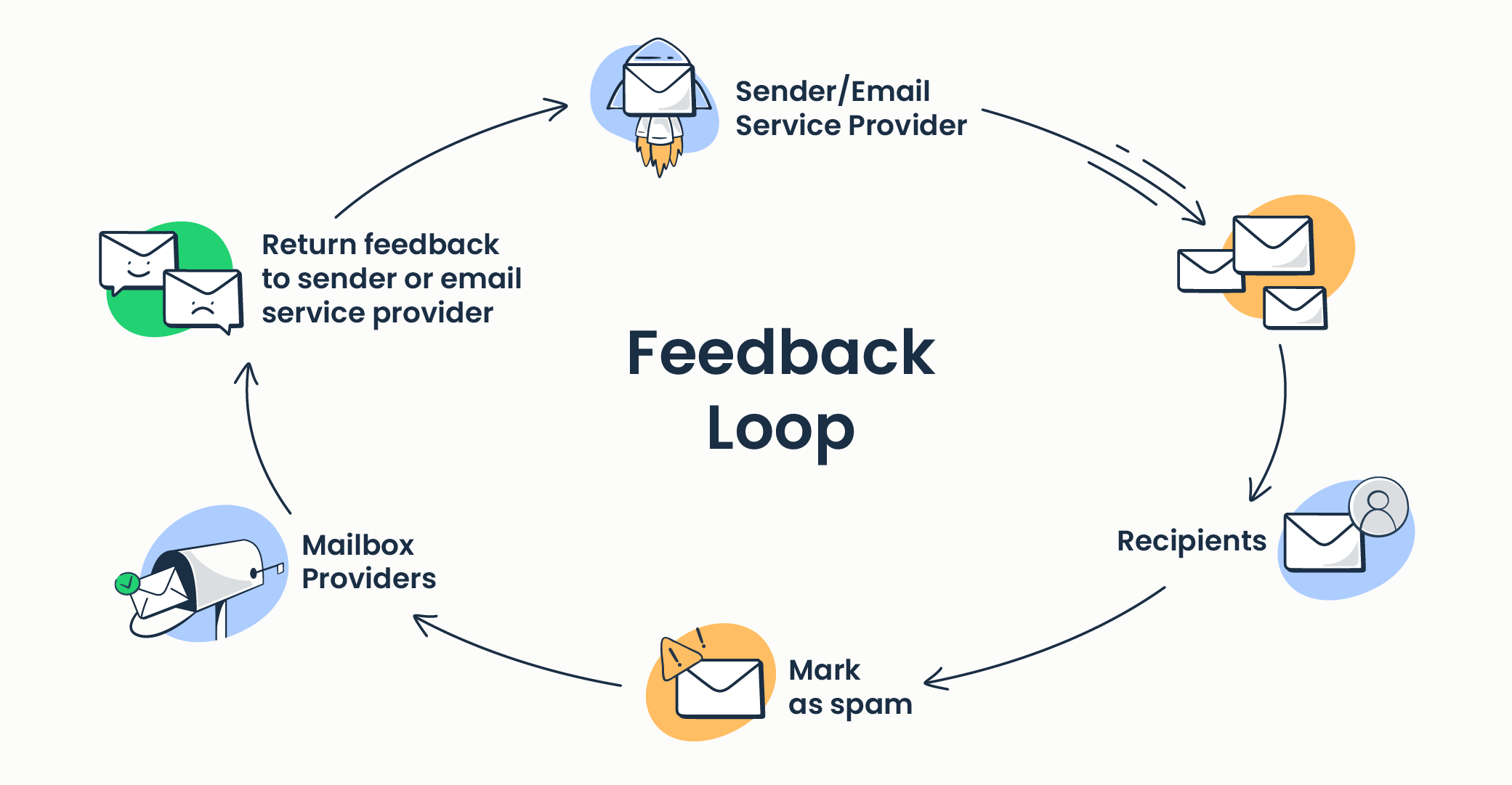
This leads to a destabilizing feedback loop:
- Step 1: North Korea observes successful missile strikes in the Middle East.
- Step 2: North Korea increases the readiness and "hair-trigger" status of its tactical nuclear weapons.
- Step 3: South Korea and the U.S. increase their own pre-emptive capabilities to counter the threat.
- Step 4: The window for diplomatic de-escalation narrows to near-zero.
Operational Constraints and Systemic Vulnerabilities
Despite the perceived "success" of this strategy, the North Korean model faces significant structural bottlenecks. High-intensity conflict in the Middle East may justify the arsenal, but it does not solve the underlying technical failures of the North Korean state.
- Intelligence Asymmetry: While North Korea can build missiles, its Command, Control, Communications, Computers, Intelligence, Surveillance, and Reconnaissance (C4ISR) capabilities remain primitive compared to the U.S.-ROK alliance. A nuclear weapon is only as effective as the targeting data behind it.
- Resource Exhaustion: The "Guns vs. Butter" trade-off is reaching a breaking point. While the elite in Pyongyang are insulated, the industrial base required to maintain a nuclear triad is immense. The reliance on Russian imports is a temporary fix for a systemic manufacturing deficit.
- The Single-Point-of-Failure: The North Korean system is hyper-centralized. Unlike Iran’s decentralized IRGC structure, the North Korean military is paralyzed without direct orders from the Kim family. This makes the regime uniquely vulnerable to "Left-of-Launch" cyber operations and decapitation strategies.
The Strategic Pivot for 2026
The West must abandon the "Strategic Patience" model, which has failed to account for the cross-pollination of conflict data between the Middle East and East Asia. The North Korean nuclear program is no longer a local issue; it is a node in a globalized hardware and strategy exchange.
The primary move is to decouple the North Korean threat from the broader "anti-Western" bloc by exploiting the friction points between Pyongyang and Beijing. China remains wary of a nuclear-armed North Korea that triggers a permanent U.S. military build-up on its doorstep. By emphasizing that the Kim-Putin alliance undermines Chinese regional hegemony, the West can create a "containment gap" that slows the transfer of sensitive technology.
Furthermore, the U.S. must shift from a "Denuclearization First" policy to a "Risk Reduction and Proliferation Management" framework. Acknowledging North Korea as a de facto nuclear power—while maintaining the legal fiction of non-recognition—allows for the establishment of "Hotlines" and crisis management protocols similar to those used during the Cold War. The goal is no longer the removal of the arsenal, but the prevention of its accidental or desperate use.
The final strategic play involves a massive investment in "Integrated Deterrence"—specifically, the acceleration of directed-energy weapons and hypersonic interceptors. If the "Leaker" logic from the Middle East is the primary justification for Kim Jong Un’s arsenal, the only way to break that logic is to demonstrate a technological capability that renders saturation attacks obsolete. The focus must shift from political negotiation to a technological "Offset Strategy" that resets the cost-benefit analysis for the Pyongyang regime.
Would you like me to analyze the specific technological transfers between the Iranian "Fattah" hypersonic program and North Korean missile development?