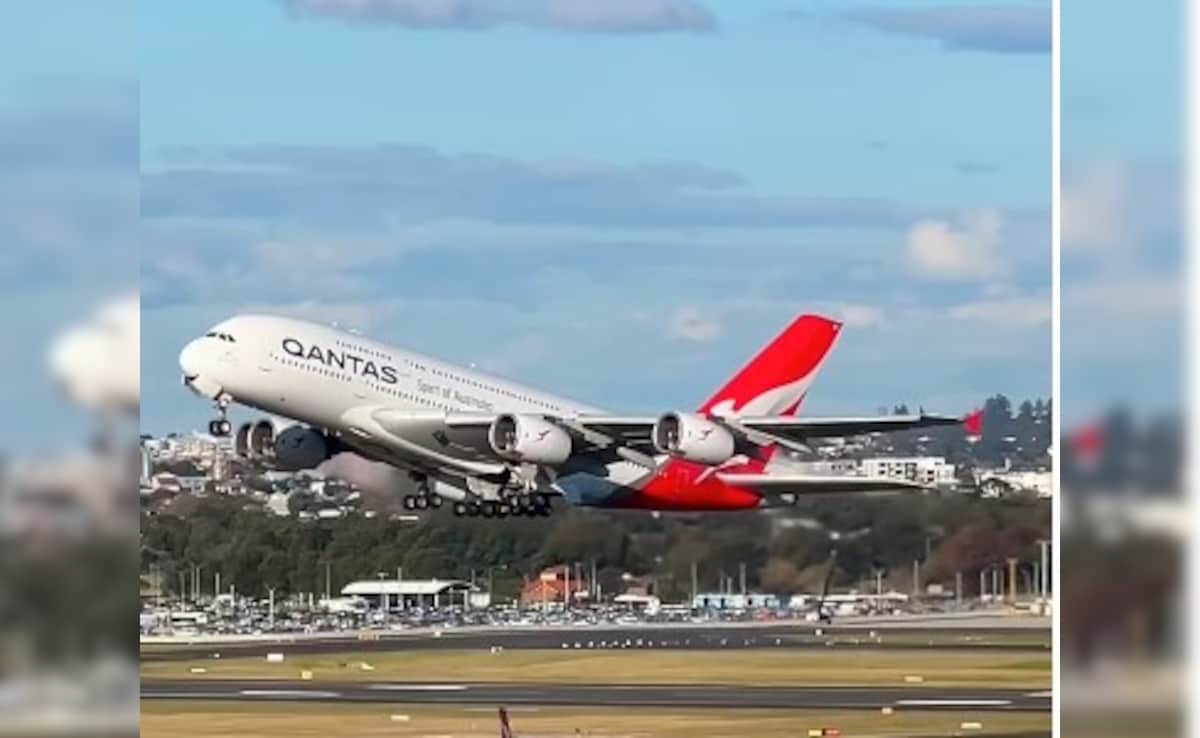
Qantas just "lost" $74 million to settle a class action over cancelled COVID-19 flights. The headlines are screaming about a victory for the little guy. The consumer advocates are taking victory laps. They think they’ve finally brought the Flying Kangaroo to its knees.
They are dead wrong.
What you are witnessing isn't a crushing defeat for a corporate giant. It is a calculated, dirt-cheap exit strategy that preserves billions in liquidity while the public cheers for pennies. If you think Qantas is licking its wounds, you haven't been paying attention to how airline finance actually functions. This wasn't a penalty; it was a bargain-basement interest rate on a four-year forced loan from the Australian public.
The Myth of the "Record" Settlement
The media loves the number $74 million because it sounds massive to someone checking their savings account. In the context of Qantas’s balance sheet, it is a rounding error.
To put this in perspective, Qantas reported an underlying profit before tax of $2.47 billion in the 2023 financial year. A $74 million settlement represents roughly 3% of a single year’s profit. More importantly, it represents a fraction of the $2 billion in "travel credits" and unrefunded fares the airline held onto during the height of the pandemic.
By dragging their feet for four years, Qantas effectively secured a multi-billion dollar interest-free loan from its own customers. While families were struggling with inflation and job losses in 2020 and 2021, Qantas was sitting on their cash.
The Time Value of Money Eviscerates This Victory
Let's look at the math the consumer groups ignore.
If Qantas had refunded that $74 million in 2020, they would have lost the opportunity to use that capital during the most volatile period in aviation history. By holding it until 2024-2025, they’ve paid back the principal in "inflation-adjusted" dollars that are worth significantly less than they were four years ago.
Imagine a scenario where a business takes $1,000 from you today, keeps it for four years while the cost of living spikes 20%, and then gives you back $1,050 after being "forced" by a court. You didn't win. You lost 15% of your purchasing power, and they got a free operating budget.
Ghost Flights and the Art of Strategic Friction
The core of the legal heat wasn't just about cancellations; it was about "Ghost Flights"—selling tickets for flights that had already been scrubbed from the schedule.
Critics call this fraud. In the cold world of yield management, it’s called managing the curve. By keeping those flights "live" in the system, Qantas maintained its grip on airport slots and market share. If they had cleared the decks and admitted the schedules were a fantasy, they would have invited competitors to move in.
The $74 million is the "fine" for keeping the competition out of the Australian sky. It is a regulatory fee masquerading as a settlement. Any CEO in the world would pay $74 million to protect a monopoly position worth billions.
Why Class Actions Are the Airline's Best Friend
There is a dirty secret in the legal world: airlines prefer class actions to individual refunds.
When a customer demands a refund through a bank chargeback or a small claims tribunal, the airline usually has to pay 100% of the fare immediately. When a class action starts, the airline can stop all individual payments and say, "We cannot comment or settle while the matter is before the courts."
The class action becomes a shield. It buys them years of delay. It creates a "settlement pot" that many eligible customers will never even claim.
- The Friction Factor: To get your slice of that $74 million, you have to find your old booking reference, fill out forms, and wait for a payout that might be $50 or $100.
- The Abandonment Rate: Historical data on class action payouts suggests that a significant percentage of eligible members never bother to claim.
- The Legal Cut: Before a single passenger sees a cent, the lawyers take their massive slice of the "victory."
Qantas isn't paying $74 million to customers. They are paying a lump sum to a fund, knowing full well that a chunk of it will sit unclaimed or be eaten by administrative overhead.
The ACCC is Playing a Different Game
The Australian Competition and Consumer Commission (ACCC) isn't stupid. They know this settlement is light. But they are also tasked with ensuring a "viable" national carrier.
If the ACCC actually applied the maximum theoretical fines for every "Ghost Flight" sold, they could have bankrupted the airline. But a bankrupt Qantas is a political nightmare for the government. The result is a choreographed dance: the regulator gets to look "tough," the airline gets to "apologize," and the underlying business model of treating customer cash as working capital remains untouched.
Stop Asking for a Refund and Start Demanding Interest
The "People Also Ask" sections of the internet are filled with "How do I get my Qantas refund?"
You’re asking the wrong question. The question should be: "Why am I not being paid 10% annual interest on the money Qantas illegally withheld?"
If you overpay your taxes, the government (eventually) pays you interest. If you have a credit card balance, the bank charges you 20% interest. But when an airline holds your money for 1,400 days because they failed to provide a service, they simply give you the nominal value back and expect a "Thank You" for their "generosity."
The "New Qantas" is the Same as the Old Qantas
Vanessa Hudson took over from Alan Joyce with a mandate to "fix the culture." This settlement is her first major move to clear the decks.
Don't mistake this for a change in heart. This is a balance sheet cleanup. By settling now, she removes the "litigation risk" from the annual report, which makes the stock more attractive to institutional investors.
The strategy is simple:
- Acknowledge the "mistakes" of the past.
- Pay a fee that looks large to the public but is negligible to the board.
- Continue the same high-margin, low-competition operations that made the credits necessary in the first place.
I’ve seen companies blow millions on rebranding exercises that do less for their reputation than this settlement will. By "paying back" the customers, they are buying back their brand equity at a massive discount.
The Dangerous Precedent of the "Travel Credit"
The most damaging part of this entire saga isn't the $74 million. It’s the normalization of the "Travel Credit."
Before 2020, if a service wasn't provided, you got your money back. Period. Qantas successfully shifted the global paradigm to one where the default is a "credit" that expires, has restrictive conditions, and keeps the cash in the airline's pocket.
Even with this settlement, the concept of the travel credit has been cemented as a legitimate business tool. They have successfully trained the consumer to accept a voucher for a broken contract.
This isn't a win for consumer rights. It's a funeral for them.
The Cold Reality of Aviation Economics
Airlines are essentially hedge funds with wings. They make money on fuel hedging, loyalty program points (which are a form of unregulated currency), and cash flow management. The actual flying of people from Point A to Point B is often the least profitable part of the business.
When you look at Qantas through this lens, the COVID cancellations weren't a "crisis" of service—they were a liquidity event. They managed that event perfectly. They kept the cash, avoided a government bailout that would have diluted shareholders, and are now paying a small "exit fee" to the ACCC to stop the noise.
If you are a Qantas shareholder, you should be applauding. They just settled a multi-billion dollar moral debt for the price of a few Airbus engines.
If you are a passenger, stop cheering. You just gave an interest-free loan to a multi-billion dollar corporation, and they’re giving you back the loose change they found in the couch cushions.
Next time an airline cancels your flight and offers a credit, remember this settlement. It’s not a sign that the system works. It’s proof that the system is designed to let them hold your money until it's worth less than the paper it's printed on.
The Kangaroo didn't get caught. It just hopped over a very small fence.
Stop celebrating your own exploitation.