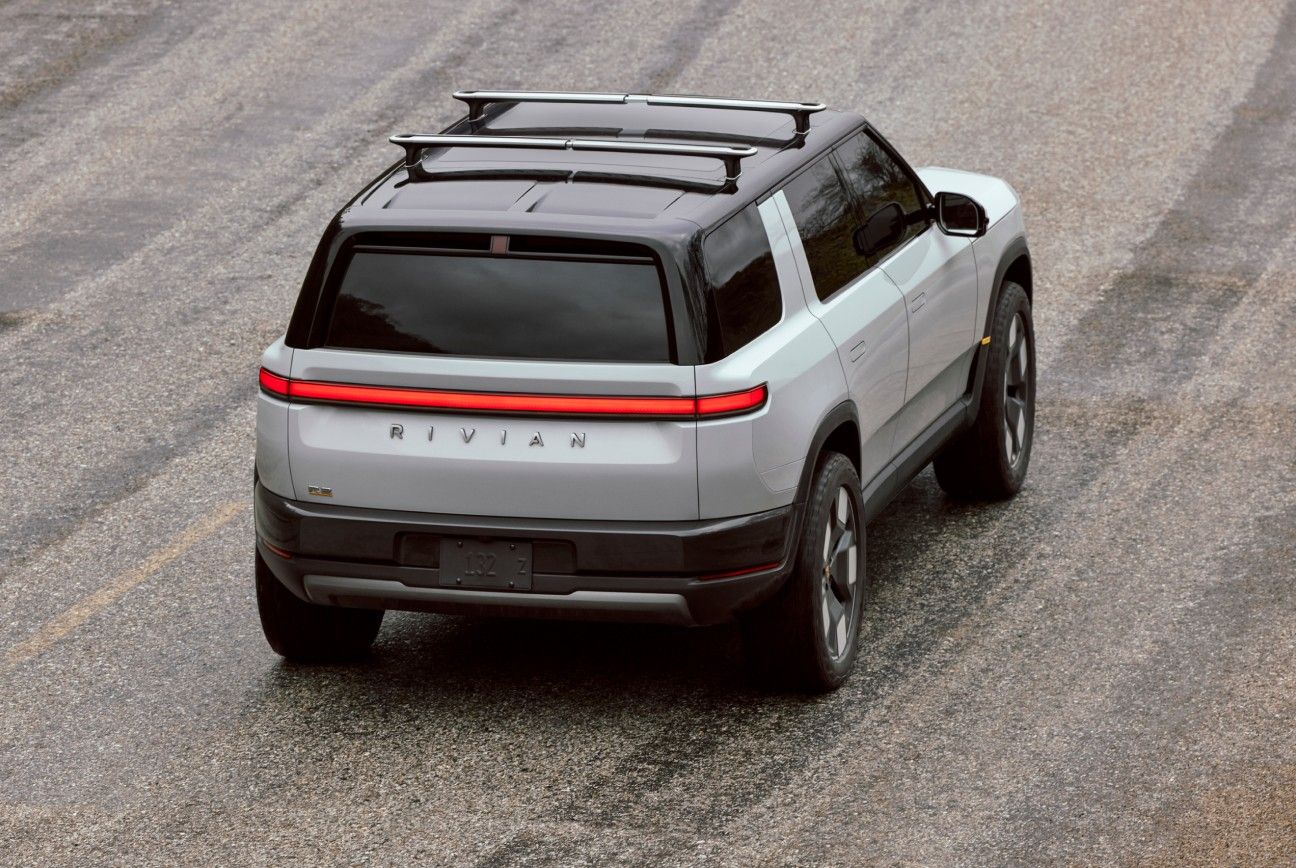
Rivian is finally pulling the curtain back on the R2. It's the electric SUV that is supposed to save the company and put a high-end EV in every suburban driveway. But if you were expecting to snag the entry-level model right out of the gate, you should probably sit down. The California-based automaker confirmed that the initial R2 launch this spring will lead with a $58,000 variant. That’s a far cry from the $45,000 "starting price" that’s been plastered across headlines and marketing materials for months.
It’s a classic move in the EV world. Tesla did it. Lucid did it. Now Rivian is doing it. They hook you with a mid-forty-thousand-dollar promise, then ship the high-margin, dual-motor versions first to keep the lights on. If you want the R2 as soon as humanly possible, you're paying a $13,000 premium for the privilege.
The $58,000 reality of the R2 launch
The strategy here is transparent. Rivian is burning cash. While the R1T and R1S are incredible machines, they’re expensive to build and expensive to buy. The R2 is the "mass market" play, but "mass market" in 2026 is a relative term. By starting with the $58,000 trim, Rivian ensures that the first wave of buyers consists of people with deeper pockets who are less likely to complain about early-production hiccups.
What do you actually get for that extra thirteen grand? You're likely looking at the Dual-Motor All-Wheel Drive configuration with the "Large" battery pack. We’re talking about a 0-60 mph sprint in under three seconds and a range that should comfortably clear 300 miles. It’s a lot of car. But it’s also a psychological barrier. When a company shouts $45,000 from the rooftops, seeing a $58,000 sticker price feels like a bait-and-switch, even if it’s standard industry practice.
Production hurdles at the Normal plant
Rivian isn't just fighting a price war. They're fighting a manufacturing war. The R2 will be built at their existing facility in Normal, Illinois. This is a shift from the original plan to build a massive new factory in Georgia. By sticking to Illinois, they're saving billions in upfront capital, which is smart. It’s also risky.
The Normal plant is already busy. Cramming a new, high-volume line into an existing footprint is like trying to remodel your kitchen while cooking Thanksgiving dinner for twenty people. If they miss their spring production targets, that $58,000 entry price won’t matter because nobody will be driving the car until 2027. Rivian has been notoriously conservative with their production estimates lately, likely because they’re tired of over-promising and under-delivering to Wall Street.
Comparing the R2 to the Tesla Model Y
You can't talk about the R2 without mentioning the elephant in the room. The Tesla Model Y is the best-selling vehicle on the planet for a reason. It’s efficient, the charging network is unbeatable, and the price fluctuates like a volatile tech stock.
If Rivian starts the R2 at $58,000, they are positioned directly against the Model Y Performance and the Long Range trims. They aren't undercutting Tesla. They’re trying to out-style them.
- Design: The R2 looks like a "real" SUV. It has the boxy, adventure-ready aesthetic that people love about the R1S. The Model Y looks like a swollen sedan.
- Utility: Rivian is leaning hard into the "adventure" niche. Expect fold-flat seats that turn the interior into a tent and accessory ports for bike racks and kitchens.
- The NACS Factor: Thankfully, Rivian is adopting the North American Charging Standard. This means R2 owners won't be stranded at broken third-party chargers; they’ll have access to the Tesla Supercharger network.
Honestly, the R2 is a much better-looking vehicle. It has soul. But soul is hard to justify when the competitor is $10,000 cheaper and available for delivery next Tuesday.
The long wait for the $45,000 base model
So, when does the actual $45,000 R2 arrive? Don't hold your breath. History suggests that the "base" model—the single-motor, standard-battery version—won't see the light of day until at least twelve to eighteen months after the initial launch.
Rivian needs to prove they can build this car profitably. If they sell the $45,000 version too early, they lose money on every unit. That’s a death sentence for a company that isn't yet profitable on a net basis. You’re essentially waiting for Rivian to optimize their supply chain. They need cheaper lithium, cheaper chips, and faster robots before they can afford to sell you a car for forty-five grand.
Why this launch is make or break
Rivian is in a precarious spot. Their cash reserves are dwindling, and the "EV slowdown" is a real phenomenon, even if it’s been slightly exaggerated by the media. Interest rates are still high. People are hesitant to drop sixty grand on a new brand when they could buy a Lexus or a BMW for the same price.
The R2 has to be perfect. If the first $58,000 models ship with software bugs or panel gaps, the brand's reputation will take a hit it might not recover from. They’ve spent years building an image of "premium ruggedness." The R2 is the test of whether that image scales down to a more affordable level.
Practical steps for potential buyers
If you’ve got a reservation or you’re thinking about hitting that "order" button this spring, you need to be realistic about the timeline and the cost.
- Check your tax credit eligibility: The R2 is expected to qualify for the $7,500 federal EV tax credit. However, there are income caps. If you’re buying a $58,000 SUV, make sure you don't earn too much to claim the credit, or that "affordable" EV just got significantly more expensive.
- Evaluate your charging setup: Don't rely on public infrastructure. If you're buying an R2, get a Level 2 charger installed in your garage now.
- Wait for the reviews: Rivian is great at hardware, but their software is a work in progress. Wait for independent range tests and build-quality deep dives before you finalize your financing.
The R2 is a beautiful piece of engineering. It might be the best-looking EV on the market. But don't let the marketing fool you into thinking it's a budget-friendly steal just yet. You're paying the "early adopter tax," and in this case, it’s about $13,000. Use that time to save up or wait for the inevitable price drops once production scales. Rivian is playing a long game, and you should too.