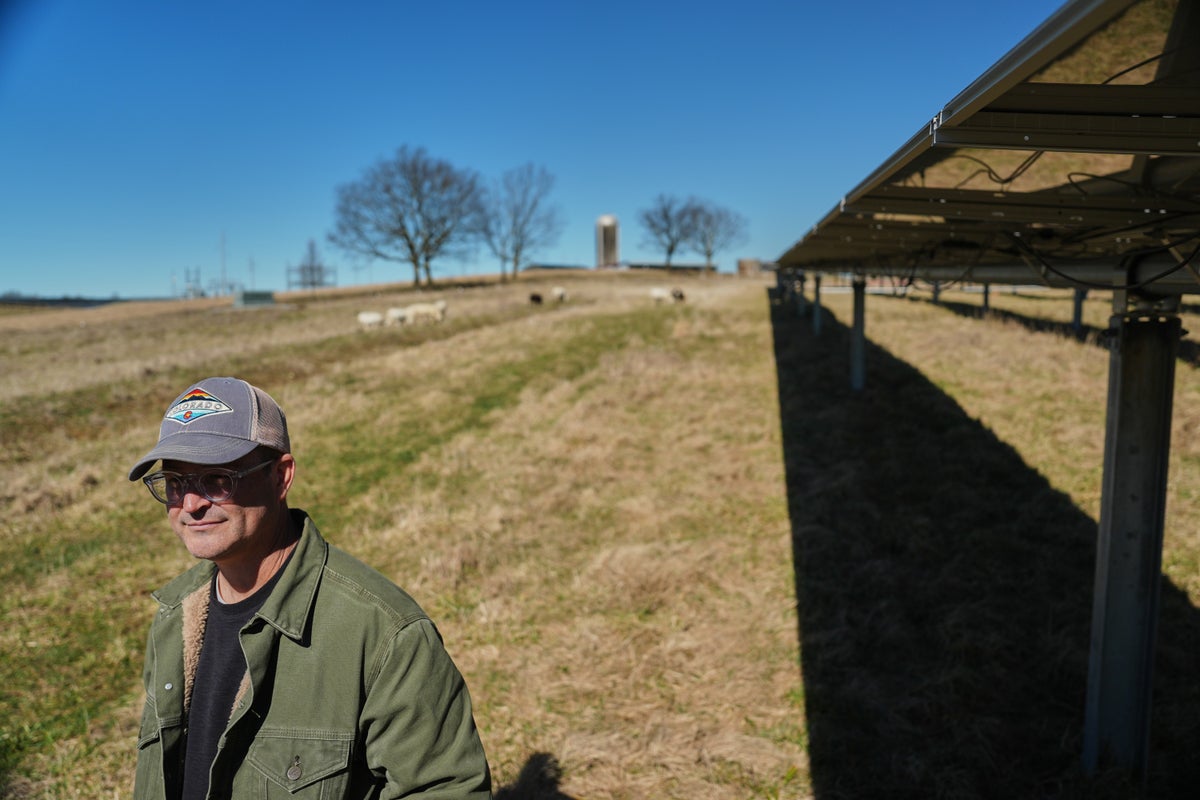
Washington is currently patting itself on the back for "investing" in rural America through the Rural Energy for America Program (REAP). The narrative pushed by mainstream reporting suggests that a wave of federal cash is finally bridging the gap between urban tech and rural grit. They want you to believe that a few solar panels on a chicken coop or a wind turbine in a cornfield represents a sustainable revolution.
It is a lie.
What we are witnessing isn't an energy transition; it’s a wealth transfer that prioritizes political optics over agricultural viability. I’ve sat in boardrooms where these grants are discussed as nothing more than tax-mitigation strategies for absentee landowners. We are loading up the American heartland with "stranded assets"—expensive hardware that will be obsolete or broken long before it pays for itself without the government's thumb on the scale.
The REAP Trap: Subsidy-Induced Stagnation
The common argument is that federal support lowers the barrier to entry for renewable tech. That sounds logical until you look at the distorted market it creates. When the government covers 50% of a project's cost, the equipment manufacturers do something predictable: they hike the prices.
In a free market, a solar array for a grain elevator would have to justify its existence through efficiency and ROI. In the REAP-subsidized world, the efficiency doesn't matter. The only thing that matters is the paperwork. I have seen farmers sold on digester systems that require more maintenance and technical expertise than the actual farming operation they were meant to support.
These aren't "investments." They are anchors.
The hidden cost is the maintenance debt. The federal government gives you the money to buy the shiny new toy, but it gives you zero dollars to fix it when the inverter fries in a Kansas heatwave three years later. We are creating a rural landscape littered with "green" junk because the economics only work on the day the check is signed.
Grid Independence Is a Myth
The reporting focuses heavily on "energy independence" for farmers. This is a fundamental misunderstanding of how the electrical grid functions.
Most rural renewable projects are grid-tied. They aren't designed to keep the lights on during a blackout; they are designed to sell power back to the utility at a mandated rate. This is a fragile house of cards. If the utility changes its net-metering policy—which is happening across the country as grids struggle with instability—the farmer's "investment" evaporates overnight.
If you want true independence, you need storage. But battery technology at scale is still prohibitively expensive and environmentally questionable for a single-family farm. The federal push for "renewables" without a massive, simultaneous push for "base-load reliability" is setting rural communities up for systemic failure.
Consider the physics of the power curve.
$$P = \frac{1}{2} \rho A v^3 C_p$$
In this equation for wind power, $v$ is wind velocity. Because the power produced is proportional to the cube of the wind speed, even slight fluctuations in weather mean the output is erratic. Without massive storage or a reliable gas-fired backup, a rural community relying on these "green" grants is one calm day away from a localized economic shutdown.
The Industrialization of the Pastoral
The most galling part of the current federal strategy is the quiet war on land use. We are told that putting solar farms on "marginal" land is a win-win.
There is no such thing as marginal land in a world with a growing population. Land that isn't prime for corn might be perfect for grazing, timber, or specialty crops. By incentivizing the "farming of photons" over the farming of food, the government is driving up land prices and pricing out the next generation of actual producers.
Investors from New York and San Francisco are using federal REAP funds to outbid local farmers for acreage. They don't care about the soil. They care about the 20-year Power Purchase Agreement (PPA) backed by the taxpayer. We are effectively subsidizing the destruction of the family farm under the guise of saving the planet.
The Efficiency Lie
"Renewable energy is now the cheapest form of power."
You've heard it a thousand times. It's a half-truth that ignores the "Levelized Cost of Energy" (LCOE) vs. the "Value-Adjusted Levelized Cost of Energy" (VALCOE).
- LCOE tells you how much it costs to build the plant.
- VALCOE tells you how much that power is actually worth to the grid when it's produced.
Solar power produced at noon on a Tuesday when no one is home is worth significantly less than power produced during a 6:00 PM peak. By flooding the rural grid with intermittent, low-value power, federal subsidies are actually making the overall grid more expensive to manage. Those costs get passed back to the rural consumer in the form of higher "delivery fees."
A Brutal Truth for the Rural Innovator
If you are a farmer looking at a REAP grant, you need to ask yourself one question: "Would I buy this if the government wasn't paying for half of it?"
If the answer is no, then the technology isn't ready. You are being used as a test subject for an industrial policy designed in a D.C. office building.
True innovation in rural energy won't come from a top-down federal mandate to stick a turbine on every hill. It will come from decentralized, small-scale nuclear (SMRs) or highly efficient, localized geothermal—technologies that actually provide 24/7 base-load power. But those aren't "trendy." They don't look good in a campaign ad.
Stop chasing the subsidy. The most "sustainable" thing a farm can do is remain profitable without a federal umbilical cord. Every time you accept a grant that forces you into a specific, inefficient technology, you are trading your long-term autonomy for a short-term accounting win.
The federal government isn't helping you compete; it's helping you become a ward of the state.
Get off the subsidy teat and build something that actually works when the sun goes down.