The dust in Janakpur doesn't just settle. It clings. It coats the rickshaws, the sweet shops selling milk-heavy pedas, and the ancient stone steps of the Janaki Temple in a fine, ochre grit. In January, when the wind kicks up from the plains of the Terai, that dust carries the scent of incense and ambition.
Balendra Shah, the man the world knows simply as Balen, stood in this haze to launch a campaign that felt less like a political tour and more like a pilgrimage. He didn't choose the sterile halls of a Kathmandu briefing room. He chose the dirt. He chose the place where, according to legend, Lord Ram wed Sita. This wasn't a coincidence of scheduling. It was a calculated reconstruction of the Nepali identity.
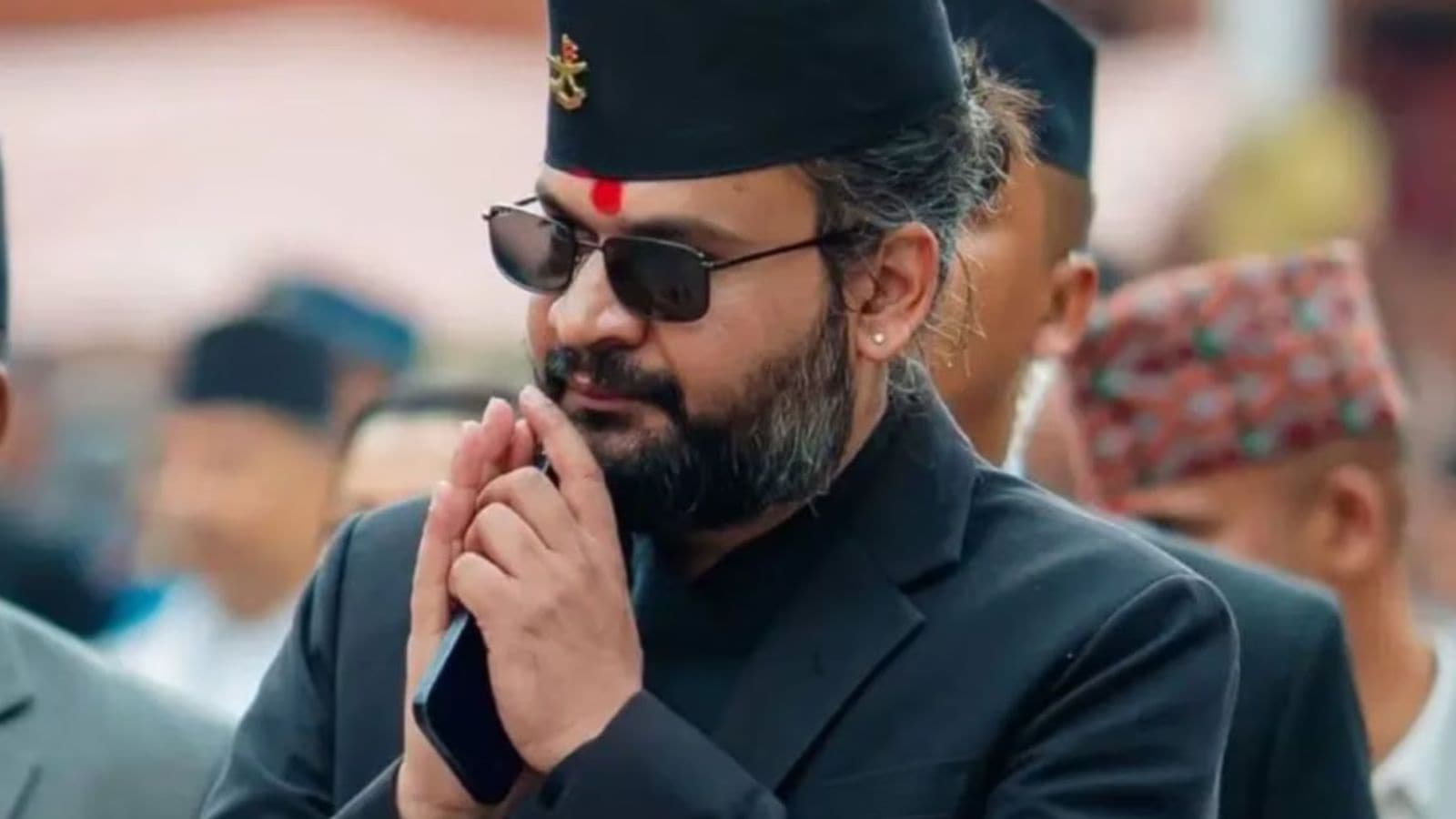
For decades, the path to power in Nepal ran through the smoke-filled backrooms of the "Old Guard"—men who fought revolutions in the jungles only to become the very bureaucrats they once despised. Then came a structural engineer with a rapper’s cadence and a penchant for aviator sunglasses. When Balen won the Kathmandu mayoralty as an independent, it was a tremor. Now, as he prepares to take the oath as Prime Minister on the lunar anniversary of Ram Navami, that tremor has become a tectonic shift.
The optics are heavy. They are intentional. They are a language spoken to a restless generation.
The Architect of the Sacred Square
To understand why a mayor is suddenly poised to seize the premiership, you have to look at the rubble of Kathmandu’s sidewalks. Under Balen’s direction, the city began to breathe again. He tore down illegal structures with a mechanical ruthlessness that terrified the elite and exhilarated the working class.
Consider a hypothetical shopkeeper in New Road. For twenty years, he paid "protection" to local party goons and ignored building codes because that was just how the gears turned. Then, a bulldozer arrived. No bribes worked. No phone calls to uncles in the Ministry stopped the steel blade. The shopkeeper lost his storefront, but the young man walking past him—a student who had given up on his country—saw something he hadn’t seen in his lifetime: the law, applied without a tremor of hesitation.
This is the "Balen Effect." It is the transition from the poetry of protest to the prose of governance. But prose alone doesn't win a national election in a country as spiritually soaked as Nepal. You need a myth.
By launching his campaign in Janakpur, Balen effectively bridged the Great Divide. Nepal is a country of hills and plains, of the Kathmandu valley and the Madhesh. Historically, these two worlds have looked at each other with deep-seated suspicion. By planting his flag in the heart of the Madhesh, Balen signaled that his "Independent" movement wasn't just a Kathmandu fad. He was claiming the whole map.
The Symphony of the Calendar
The choice of Ram Navami for his swearing-in ceremony is perhaps his most potent piece of theater yet. Ram Navami celebrates the birth of Rama, the seventh avatar of Vishnu, the embodiment of Dharma and the ideal king.
In a secular republic that spent centuries as the world’s only Hindu Kingdom, religious symbols are radioactive. Handle them wrong, and you're a fundamentalist; ignore them, and you're an outsider. Balen is doing neither. He is reclaiming the "Maryada Purushottam"—the Supreme Man—as a civic ideal.
He isn't campaigning for a return to the monarchy. Instead, he is suggesting that a modern Prime Minister can carry the moral weight of an ancient king. It is a brilliant, if dangerous, fusion of technocracy and tradition. He uses the tools of a structural engineer to fix the sewers, but he uses the calendar of the gods to fix the national soul.
The "Old Guard" politicians, the Maoists and the Congress leaders who spent their lives perfecting the art of the coalition deal, are baffled. They are used to fighting over ministries and ambassadorial appointments. They don't know how to fight a man who communicates in viral TikToks and Vedic symbolism.
The Invisible Stakes of the Terai
The walk through Janakpur was not merely about shaking hands. It was about addressing the "invisible" Nepal.
For years, the people of the Terai felt like second-class citizens, their loyalty questioned by the hill-dwelling elite. When Balen walked those streets, he wasn't just another politician from the capital coming to beg for votes. He was a symbol of the "Third Way."
The stakes are higher than a simple change in leadership. Nepal sits like a porcelain bowl between two grinding millstones: India and China. The traditional parties have long played a game of "balancing," often leaning toward whoever offered the biggest infrastructure loan or the most favorable trade terms.
Balen’s rise suggests a pivot toward a radical internal focus. His campaign emphasizes "Nepal First" in a way that feels visceral rather than academic. He talks about water rights, brain drain, and the indignity of Nepali youths flying to the Gulf in droves to build stadiums in the desert heat.
The emotional core of his message is simple: Why should we be a nation of laborers for others when we have the heritage of giants?
The Risk of the Pedestal
There is a hollow ring to every populist movement if you listen closely enough. The danger for Balen lies in the very gravity of the symbols he has chosen. When you take your oath on Ram Navami, you are not just a politician. You are inviting comparison to a god.
If the potholes remain, if the corruption merely changes its face, and if the economy continues to stagnate, the fall from a sacred pedestal is much harder than the fall from a wooden stump in a village square.
The youth of Nepal—the "Digital Madhesis" and the "Valley Techies"—have hitched their wagons to his star. They don't want another five-year plan. They want a metamorphosis. They want the efficiency of his bulldozers applied to the bureaucracy of the Singha Durbar.
But the machinery of the state is not a sidewalk in Kathmandu. It is a sprawling, tangled thicket of entrenched interests, foreign intelligence agencies, and a constitution that was designed to prevent any one person from having too much power. Balen is attempting to hack the system using the sheer force of public mandate.
The Scent of Change
As the sun sets over the ponds of Janakpur, the air grows cool. The bells of the evening Aarti begin to ring, a rhythmic, hypnotic clanging that drowns out the noise of the traffic.
Balen’s campaign launch was not the end of a journey, but the opening of a door. The optics are clear: he is presenting himself as the bridge between the ancient and the modern, the hills and the plains, the faith of the fathers and the fury of the sons.
Whether he can actually govern a nation as complex and fractured as Nepal remains the ultimate question. For now, however, he has succeeded in doing what no other politician in a generation has managed. He has made the people look up from the dust. He has made them believe that the timing of a vow matters as much as the vow itself.
The crowd in Janakpur didn't just see a candidate. They saw a reflection of what they hoped they could become—strong, unapologetic, and finally, masters of their own house. The aviator glasses stayed on even as the light faded. He was looking at a horizon that none of his rivals could see, or perhaps, one they were too afraid to acknowledge.
The grit of Janakpur is still there, coating the skin and the soul. But for the first time in a long time, the people aren't coughing. They are waiting. They are watching the calendar, counting the days until the moon reaches its mark and the engineer steps into the light to take a crown of thorns and gold.