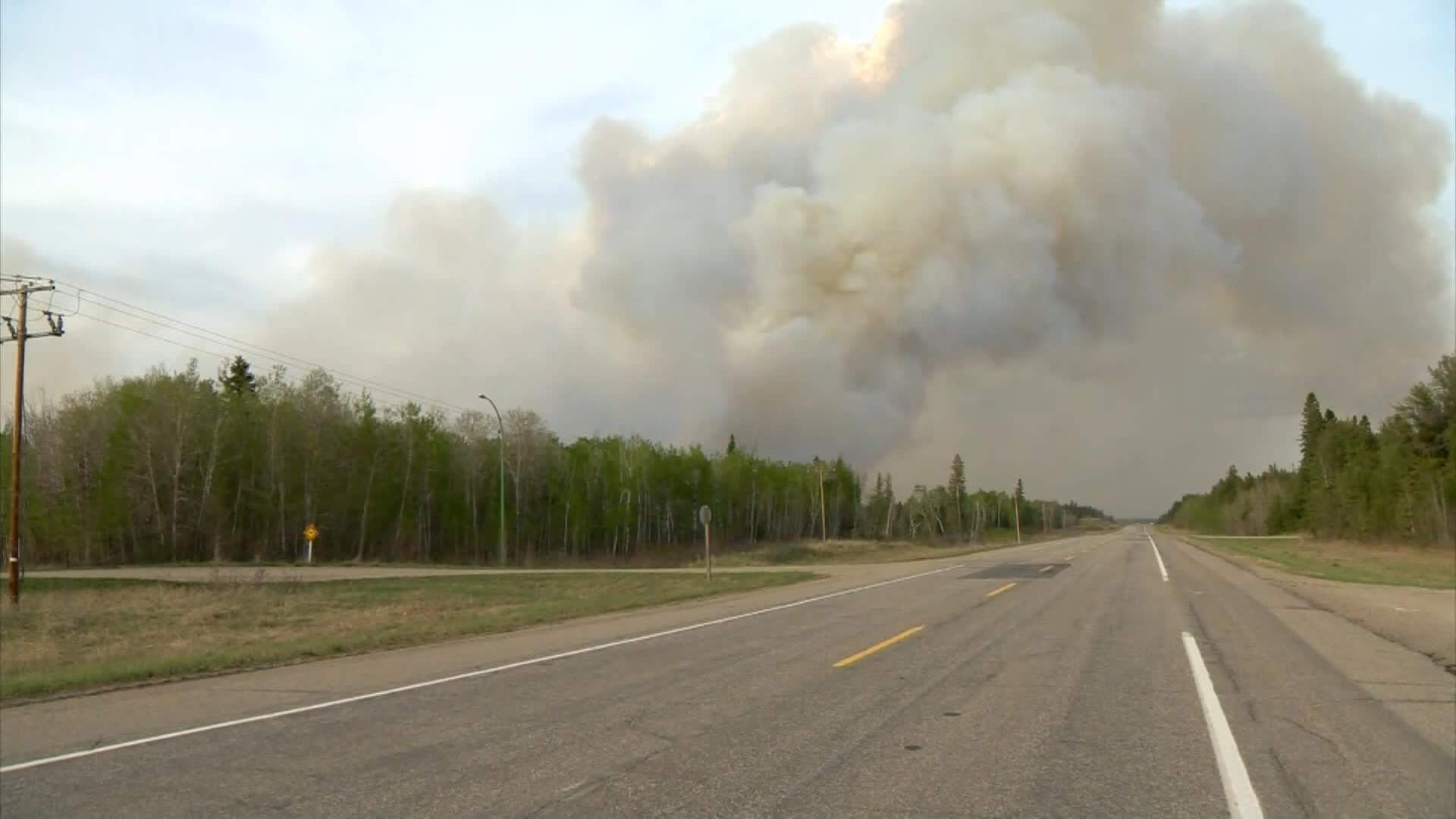
The Saskatchewan provincial budget treats wildfire management as a fluctuating operational expense rather than a capital-intensive risk mitigation system. When fire chiefs critique funding levels, they are not merely requesting more capital; they are identifying a systemic failure to account for the marginal cost of suppression in an era of lengthening burn windows. The current fiscal framework relies on a "base-plus-emergency" model that fails to address the three core pillars of modern wildfire resilience: tactical readiness, equipment modernization, and proactive fuel management.
The Mechanics of the Funding Gap
Wildfire budgeting in Canada generally follows a bifurcated structure. There is a "Base Budget" for permanent staff, overhead, and basic maintenance, and a "Supplementary Fund" or "Emergency Estimate" that is accessed once active fires exceed the base capacity. While this appears fiscally responsible on paper—avoiding large standing costs during wet years—it creates an operational bottleneck. Discover more on a similar topic: this related article.
The primary limitation of this model is the suppression cost curve. As a fire grows, the cost to contain it increases exponentially, not linearly.
- Initial Attack Efficiency: The most cost-effective way to manage a wildfire is to extinguish it within the first 24 hours. This requires high-density positioning of Type 1 crews and rapid-response aerial assets.
- The Resource Exhaustion Threshold: Once the base budget is exhausted and the province pivots to emergency funding, there is a lag in resource mobilization. Importing "blue-card" crews from other provinces or contracting private air tankers at surge prices is significantly more expensive than maintaining internal surge capacity.
- Asset Obsolescence: Relying on emergency funds for active suppression prevents the long-term amortization of modernized equipment. Older fleets require higher maintenance hours per flight hour, reducing the "up-time" during critical dry spells.
By underfunding the base budget, the province effectively bets against the climate. This creates a feedback loop where insufficient preparation leads to larger fires, which then necessitate massive, unplanned emergency expenditures that dwarf the original "savings" sought by budget committees. Additional reporting by Reuters delves into similar perspectives on the subject.
The Cost Function of Fire Management
To understand the fire chief's position, one must analyze the wildfire cost function ($C$). This can be modeled as:
$$C = F + S(t) + L$$
Where:
- $F$ represents Fixed Costs (training, permanent staff, base maintenance).
- $S(t)$ represents Suppression Costs as a function of time until containment.
- $L$ represents Total Economic Loss (timber value, infrastructure, health costs from smoke).
The strategic failure in the current Saskatchewan budget is the attempt to minimize $F$ without acknowledging its direct inverse relationship with $S$ and $L$. When $F$ is low, $t$ (time to containment) increases because response times are slower and resources are thinner. As $t$ increases, $S$ grows at an accelerating rate.
Furthermore, $L$ is often omitted from provincial budget discussions because it is an externalized cost. The Ministry of Finance sees the suppression bill, but it rarely quantifies the lost GDP from evacuated mines, destroyed timber harvests, or the long-term healthcare burden of respiratory issues caused by particulate matter. A data-driven analysis suggests that an increase in $F$ (Base Funding) yields a disproportionate reduction in $S + L$, creating a net positive return on investment for the taxpayer.
Tactical Readiness vs. Operational Reality
Saskatchewan's fire management strategy relies heavily on the "priority zone" system. Areas near human settlements and critical infrastructure receive immediate attention, while fires in the far north are often monitored rather than suppressed. While this is a logical triage method, it is currently being used to mask a lack of tactical depth.
The "Three Pillars of Tactical Readiness" are currently underfunded:
- Aviation Reliability: The transition from older piston-engine aircraft to modern turbine tankers is capital-intensive. The budget frequently fails to provide a clear multi-year procurement path, leaving the province dependent on an aging fleet that is increasingly difficult to service.
- Human Capital Retention: Wildfire fighting is shifting from a seasonal student job to a professionalized technical trade. Stagnant base funding leads to high turnover, meaning the province loses its "institutional memory"—the experienced crew leaders who understand local topography and fire behavior.
- Intelligence and Geospatial Analysis: Modern suppression requires real-time predictive modeling. Investing in satellite-linked ground sensors and AI-driven spread modeling is a fixed cost that can reduce suppression spend by identifying high-risk ignitions before they become "megafires."
The Strategic Value of Fuel Management
The most significant omission in standard wildfire budgeting is proactive fuel management. This includes prescribed burns, mechanical thinning of forests near communities, and the creation of strategic firebreaks. These activities are labor-intensive and require significant upfront investment, but they are the only way to fundamentally alter the fire environment.
Current funding structures favor "The War on Fire"—the high-drama, high-cost aerial bombardment of active flames. It is much harder for a government to take credit for a fire that didn't happen because of a prescribed burn conducted three years prior. This creates a political incentive for reactive spending over proactive mitigation.
Fuel management acts as a systemic dampener. By reducing the forest's fuel load, we lower the "Energy Release Component" (ERC) of a potential fire. A lower ERC means ground crews can safely engage the fire's edge, rather than being forced into a defensive retreat. If the budget does not explicitly carve out protected funds for fuel mitigation, the province remains in a perpetual cycle of crisis management.
Structural Barriers to Resilience
The friction between local fire chiefs and provincial planners often stems from a mismatch in "Risk Appetite." The province looks at 50-year averages to determine funding, while fire chiefs look at the "90th percentile" weather days.
In a regime of increasing climate volatility, the 50-year average is no longer a valid metric for risk. The "tail risk"—the probability of an extreme, uncontrollable event—is fattening. A budget that is "sufficient" for an average year is, by definition, a failure in a high-intensity year.
A more robust fiscal strategy would involve:
- Multi-year Rolling Envelopes: Allowing the Wildfire Management Branch to carry over unused funds from wet years to dry years, specifically for equipment upgrades.
- Infrastructure-Linked Funding: Tying wildfire protection budgets to the value of the assets they protect (e.g., power lines, highways, and telecommunications).
- Professionalization Incentives: Shifting the workforce from a 4-month seasonal model to an 8-month model where the "off-season" is spent on fuel management and community training.
The current budget's focus on short-term "savings" ignores the massive contingent liability on the provincial balance sheet. A single escaped fire in a high-value timber zone can cause hundreds of millions in damage, far exceeding the cost of the requested budget increases for staff and equipment.
The Strategic Play
The province must move away from viewing wildfire suppression as a discretionary service and start viewing it as a core component of public safety infrastructure. This requires a fundamental shift in the legislative framework:
- Audit the Suppression-to-Mitigation Ratio: The Ministry should be required to report the ratio of dollars spent on proactive fuel management versus reactive suppression. A healthy system should see this ratio move toward parity over the next decade.
- Establish a Provincial Equipment Reserve: Instead of waiting for a budget cycle to replace a crashed or aged tanker, a dedicated capital reserve should be established to ensure the aerial fleet remains at the cutting edge of capacity.
- Decentralize Decision-Making Power: Grant local fire chiefs more autonomy over "Initial Attack" spending. The delay caused by seeking provincial approval for additional air support in the first two hours of an ignition is often the difference between a 2-hectare spot fire and a 10,000-hectare conflagration.
The transition from a reactive "firefighting" mentality to a proactive "fire management" system is the only way to stabilize the escalating costs and risks associated with Saskatchewan's boreal forests. Anything less is a calculated gamble with the province’s environmental and economic security.
The final strategic move for the province is to integrate wildfire risk into the provincial credit rating and insurance frameworks. By formalizing the economic impact of wildfire risk, the government can unlock the political will to fund the "Base Budget" at levels that reflect the reality of the 21st-century landscape. This is not a matter of municipal preference; it is a requirement for long-term fiscal solvency.