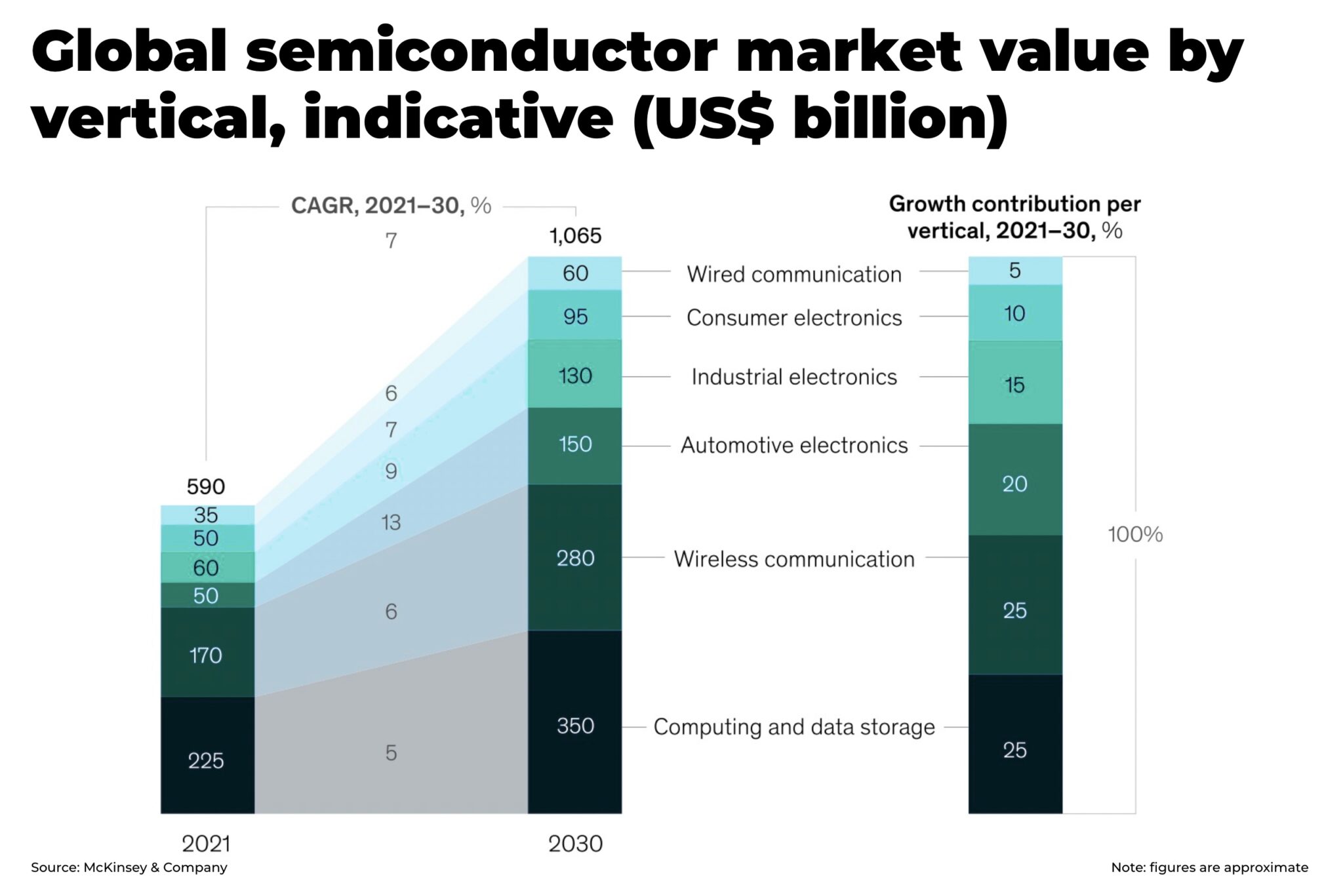
The current volatility in Asian equity markets is not a byproduct of broad regional economic shifts but a concentrated structural reaction to the valuation reset of a single American entity: Nvidia. When the cornerstone of the global artificial intelligence compute layer experiences a sharp pullback, the resulting tremors do not follow a linear path of simple "market sentiment." Instead, they propagate through a specific three-tier transmission mechanism involving supply chain interdependence, regional currency fluctuations, and the forced rebalancing of institutional thematic ETFs. Understanding this contagion requires moving past the "mixed trade" narrative to examine the precise mechanical failures in the semiconductor value chain that dictate whether a Nikkei 225 or a Kospi index rises or falls in the wake of a Wall Street slump.
The Architecture of Downstream Sensitivity
The relationship between a Nasdaq-listed hardware designer and Asian exchanges is best understood through the Input-Output Model of Capital Flow. Nvidia serves as the primary "Demand Signal" for the entire high-end silicon ecosystem. When Nvidia’s market capitalization undergoes a correction, it creates a predictive lag in the revenue expectations for three specific sub-sectors located primarily in Taiwan, South Korea, and Japan.
1. The Foundry Constraint (Taiwan)
Taiwanese markets, specifically the TAIEX, function as a direct proxy for Nvidia’s physical throughput. Because Nvidia is a fabless designer, its valuation is a reflection of its ability to secure advanced packaging and 3nm/5nm wafer capacity.
- The TSMC Beta: Taiwan Semiconductor Manufacturing Company (TSMC) maintains a high correlation coefficient with Nvidia. A slump in the latter suggests a potential peak in the capital expenditure (CapEx) cycle of hyperscalers (Microsoft, AWS, Google), which directly translates to fewer orders for the foundries.
- The Valuation Cap: Investors in Taipei react to Nvidia’s pullback not because of shared sentiment, but because of a "Value Compression" effect. If the lead customer’s P/E ratio shrinks, the supplier’s P/E ratio must adjust downward to maintain the historical risk premium.
2. The Memory Bottleneck (South Korea)
The Kospi's performance is currently tethered to the High Bandwidth Memory (HBM) cycle. Nvidia’s H100 and B200 chips are useless without the massive memory stacks provided by SK Hynix and Samsung Electronics.
- Inventory Overhang Risk: A pullback in Nvidia signals to the Korean markets that the "Scarcity Premium" for HBM might be eroding.
- The Lead-Time Trap: Korean manufacturers have shifted massive production capacity away from consumer DRAM toward AI-specific HBM. If Nvidia’s growth trajectory flattens, these firms face a specialized inventory overhang that cannot be easily diverted to other sectors, creating a sharp downward pressure on their stock price that outweighs general economic data.
3. The Lithography and Tooling Layer (Japan)
Japan’s Nikkei 225 reacts through the lens of specialized manufacturing equipment. Companies like Tokyo Electron and Advantest provide the "picks and shovels" for the AI gold rush.
- The CapEx Feedback Loop: When US tech stocks slump, the first variable institutional analysts adjust is the projected Capital Expenditure of the semiconductor industry.
- The Precision Lag: Unlike the foundries, which see immediate impact, Japanese equipment providers operate on long-lead orders. A sell-off here represents a "Forward-Looking Discount," where investors are pricing in a reduction in fab expansions eighteen months into the future.
Currency Mechanics and the Carry Trade Divergence
The "mixed" nature of Asian market trading during these periods is often a result of the friction between semiconductor correlation and the USD/JPY Carry Trade dynamics. While the tech sector might be dragging the Nikkei down, currency fluctuations can provide a counter-balancing or compounding force.
Japanese markets frequently decouple from the rest of Asia because of the Yen’s role as a funding currency. When Wall Street pulls back, a "Risk-Off" environment usually triggers a repatriation of Yen. This strengthens the JPY against the USD.
- The Exporter’s Dilemma: A stronger Yen is toxic for Japanese heavyweights (Toyota, Sony, FANUC) as it makes their exports more expensive and shrinks their repatriated earnings.
- The Resulting Dislocation: You often see the Nikkei falling further than the Hang Seng or the ASX 200 during an Nvidia slump because Japan is being hit by a "Double Mean Reversion"—tech valuations are falling at the same time the Yen is strengthening.
The Structural Failure of Passive Indexing
A significant driver of the synchronized pullbacks in Asian markets is the rise of Thematic Concentration. Global investors rarely pick individual stocks in Asia; they buy "Emerging Market" or "Asia-Ex-Japan" ETFs.
Most of these indices are heavily weighted toward the semiconductor sector.
- Forced Liquidation: When a major US tech sell-off triggers a margin call or a predefined "Value-at-Risk" (VaR) threshold for a global fund, the manager does not just sell Nvidia. They sell the entire "AI Basket."
- Liquidity Cascades: Because the US market closes before Asian markets open, the Asian exchanges act as a "Price Discovery Vent." Traders use the opening bell in Tokyo and Seoul to hedge positions they couldn't exit in New York. This creates an artificial downward pressure on Asian stocks that may have fundamentally strong local earnings but are being used as liquidity proxies for US-based losses.
Identifying the Delta: Why Some Markets Resist
To understand why markets trade "mixed" rather than in a total freefall, one must identify the Sectoral Insulation present in specific regions.
- The Australian Model (ASX 200): Australia often trades flat or green during a tech slump because its index is dominated by Miners and Banks. These sectors operate on a different macro cycle—one driven by China’s infrastructure demand and domestic interest rates rather than the GPU supply chain.
- The Southeast Asian Buffer (SET, PSEi, STI): Markets in Thailand, the Philippines, and Singapore have lower "Tech-Beta." Their indices are weighted toward tourism, telecommunications, and real estate. When capital flees the high-growth, high-volatility semiconductor sector in North Asia (Taiwan/Korea/Japan), it sometimes seeks "Defensive Alpha" in these "Old Economy" markets.
The Margin of Safety in the Current Cycle
The primary risk for an analyst is misinterpreting a "Valuation Correction" for a "Fundamental Demand Collapse."
The current data indicates that while stock prices are fluctuating, the Utilization Rates at foundries like TSMC remain near 100%. The "Nvidia Slump" is largely a function of the Expectation Gap—the distance between "Extremely High Growth" and "Impossible Growth."
If Nvidia’s pullback is driven by supply-side constraints (the inability to make enough chips), the impact on Asian suppliers is actually positive in the long term, as it ensures a persistent backlog of orders. However, if the pullback is driven by demand-side fatigue (software companies failing to monetize AI), the Asian markets are facing a structural "Cycle Peak" that will require a complete re-rating of the regional industrial base.
Strategic Execution Framework
Asset allocators looking to navigate this volatility must abandon broad regional ETFs in favor of a Value-Chain Segregation Strategy.
- De-link from the Foundry: If the US tech pullback is driven by high interest rates (discount rate risk), reduce exposure to TSMC and SK Hynix, as their heavy R&D spend makes them sensitive to the cost of capital.
- Exploit the Equipment Lag: Use the dip in Japanese equipment manufacturers (Tokyo Electron) to build positions. Their order books are typically locked in 12–24 months in advance, making their short-term price volatility an irrational departure from their cash-flow reality.
- Monitor the HBM/DRAM Spread: Watch the price delta between HBM3E (AI chips) and standard DDR5 memory. If the spread narrows, it indicates the AI-specific premium is evaporating, signaling a permanent exit from the Korean tech heavyweights is necessary.
The "mixed" trade in Asia is the sound of the market trying to price a singular technological revolution through a fragmented, multi-currency geographic lens. The winning play is to stop watching the indices and start measuring the lead times on CoWoS (Chip on Wafer on Substrate) packaging. That is the only metric that truly dictates the direction of the Pacific rim.
Check the weekly lead-time reports from ASE Technology and Amkor Technology to determine if the Nvidia slump is a liquidity event or a structural peak.