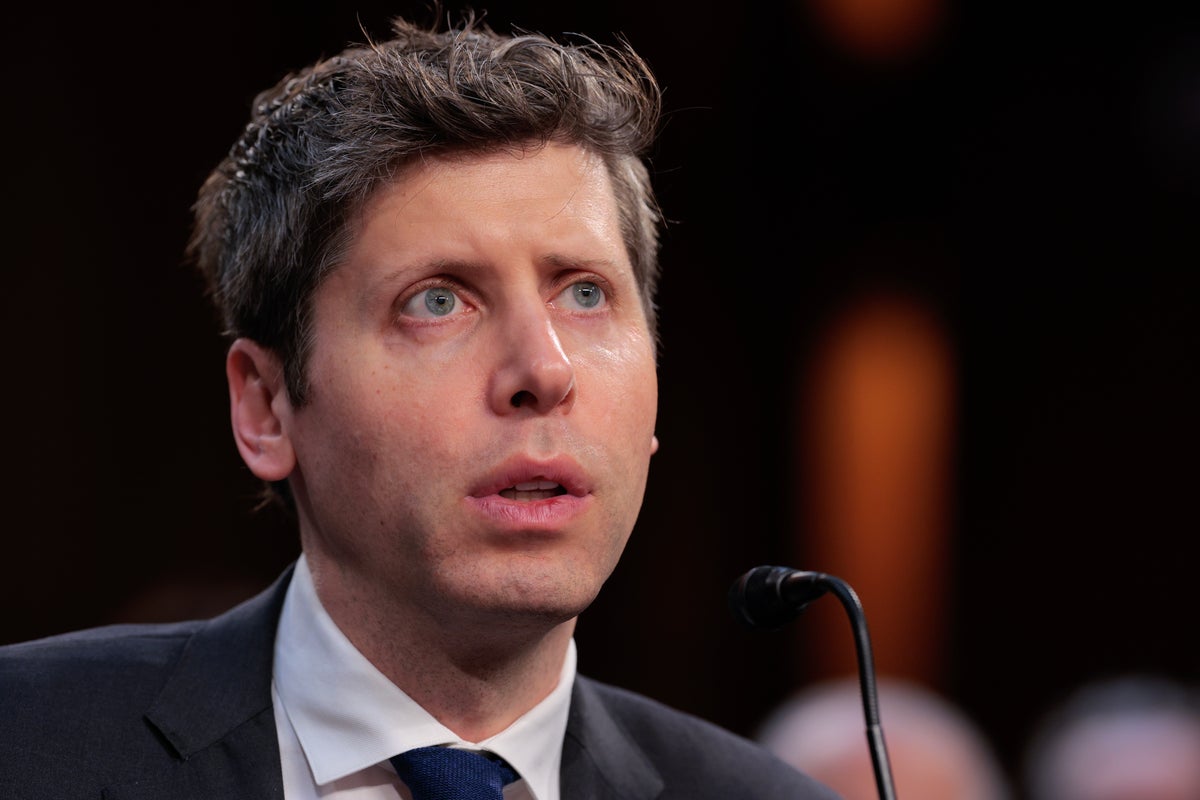
The quiet, fog-drenched streets of San Francisco’s most exclusive enclaves have become the front lines of a chaotic cultural war. When reports surfaced that shots were fired at the residence of OpenAI CEO Sam Altman—just days after a Molotov cocktail was hurled at the same property—the tech industry hit a grim milestone. This is no longer about online discourse or philosophical disagreements over code. It is about physical violence targeting the architects of the next industrial revolution.
Public records and local law enforcement briefings confirm a pattern of escalating aggression. The attacks represent a terrifying shift from digital vitriol to domestic terrorism. While Altman remains uninjured, the message sent to the elite of the generative AI world is unmistakable. They are being hunted by those who view their work not as progress, but as an existential threat to the human experience.
Security Perimeters Shattered by Radicalized Anxiety
For years, tech executives lived in a bubble of perceived invincibility. They moved through private lounges and secure campuses, protected by the sheer anonymity of their wealth. That bubble has burst. The recent violence at the Altman residence highlights a massive failure in the traditional security apparatus of high-net-worth individuals in the tech sector.
Standard executive protection usually accounts for stalkers or disgruntled former employees. It rarely accounts for a decentralized, ideologically driven movement that views a CEO as a "destroyer of worlds." The perpetrator of the Molotov cocktail attack, identified in court documents as Minh Nguyen, reportedly believed he was preventing a global catastrophe. This isn’t a simple burglary gone wrong. It is a targeted strike rooted in deep-seated fear.
The "why" behind these attacks is found in the volatile intersection of job displacement anxiety and science-fiction-fueled doomsday scenarios. When people hear that their livelihoods might vanish by the end of the decade, a small, unstable percentage will not wait for a legislative solution. They will go to the source.
The Breakdown of Personal Safety
The logistics of these attacks are as haunting as the intent. A home is a sanctuary, but for a public figure like Altman, it has become a target. The transition from a firebombing to gunfire suggests a rapid escalation in the attacker’s commitment.
- Proximity: The attacker managed to breach the perimeter of a high-security neighborhood.
- Duration: The multi-day nature of the assault indicates a lack of immediate deterrence.
- Weaponry: Moving from improvised incendiary devices to firearms signals a shift from symbolic protest to lethal intent.
This pattern suggests that the current "defensive" posture of tech leaders is insufficient against modern threats. We are seeing the birth of a new kind of "luddite" movement—one that uses the very tools of the digital age to track, dox, and strike at those they blame for a changing world.
The Weight of the God Object
Sam Altman isn't just a businessman. He has become the face of a technology that many believe will eventually surpass human intelligence. Within the industry, this is often discussed in hushed, reverent tones as AGI, or Artificial General Intelligence. Outside the industry, it is often viewed with pure, unadulterated terror.
When you position yourself as the gatekeeper of a "God Object," you inherit the resentment of everyone who feels excluded from that power. Altman’s public persona—a mix of messianic optimism and calculated warnings about "existential risk"—has inadvertently painted a target on his back. By admitting that AI could go horribly wrong, he has validated the fears of the very people now standing on his lawn with weapons.
A Culture of Radical Transparency Backfires
OpenAI started as a non-profit dedicated to "safe" AI. That branding was effective for recruitment, but it created a moral obligation that the company has struggled to maintain as it moved toward a multi-billion-dollar partnership with Microsoft.
Critics argue that by hyping the dangers of AI to secure regulatory moats, Altman and his peers have whipped the public into a frenzy. They played with the fire of "existential risk" to sound profound at Davos, and now that fire is literally being thrown at their windows. You cannot spend three years telling the world that your product might end civilization and then act surprised when people believe you.
The New Security Industrial Complex
Following these events, we are witnessing an immediate and aggressive overhaul of how Silicon Valley operates. The days of the "accessible CEO" are dead. We are moving into an era of fortified compounds and private militias.
The cost of protecting a top-tier AI executive is skyrocketing. Estimates suggest that security budgets for figures like Altman, Mark Zuckerberg, and Elon Musk now rival the GDP of small nations. This isn't just about bodyguards. It includes:
- Counter-Surveillance Teams: Specialized units designed to identify "scouts" before an attack occurs.
- Digital Decoys: Efforts to scrub residential data and real-time location tracking from the internet.
- Hardened Infrastructure: Turning residential properties into "safe rooms" capable of withstanding ballistic and incendiary attacks.
This creates a dangerous feedback loop. As these leaders retreat behind higher walls, they become further detached from the reality of the people their technology is displacing. The more "protected" they are, the more they look like the untouchable villains of the dystopian futures they claim to be trying to prevent.
The Legal Void of Modern Stalking
Our legal system is woefully unprepared for this brand of ideological stalking. Most protective orders are reactive. They require a specific, documented threat before law enforcement can intervene effectively. But in the case of Nguyen and others like him, the "threat" is perceived as a global duty.
District attorneys are struggling to categorize these crimes. Is it a hate crime? Is it political terrorism? Is it a mental health crisis? It is likely all three, fused into a single, violent impulse by the algorithmic echo chambers of the internet.
Beyond Sam Altman: An Industry Under Fire
While Altman is the most prominent target, he is not the only one. Reports of increased security presence at Anthropic, Google DeepMind, and NVIDIA suggest a quiet but frantic mobilization. Employees at these firms are being advised to scrub their social media profiles and avoid wearing company-branded apparel in public.
The fear is palpable. Rank-and-file engineers who once felt like the rock stars of the economy now feel like pariahs. They are the ones building the models that "stole" the artists' work and "replaced" the copywriters. The violence at the top is merely the most visible symptom of a deep, systemic resentment that is boiling over at every level of society.
The Myth of the Clean Transition
Economists like to talk about "creative destruction." They suggest that while old jobs vanish, new and better jobs will appear. This is a comforting lie told by people who have never lost their livelihood to a line of code.
The violence in San Francisco is a physical manifestation of the friction in that transition. People do not experience "creative destruction" as a graph on a slide deck. They experience it as an eviction notice. They experience it as a loss of identity. When you take away someone's future, you shouldn't be surprised when they show up at your door to ask why.
The High Cost of Disruption
We have spent twenty years lionizing "disruption" without ever considering what is actually being disrupted. It isn't just industries. It is lives. It is the social contract.
The attacks on Altman’s home are a signal that the grace period for the "move fast and break things" era is over. The things being broken are now breathing, feeling human beings, and they are starting to break back. This isn't a problem that can be solved with a better firewall or a more advanced encryption key.
Silicon Valley has a choice. It can continue to build its fortresses and wait for the next Molotov cocktail, or it can start taking the human cost of its creations as seriously as it takes its quarterly earnings. Security guards can stop a bullet, but they cannot stop a movement fueled by the fear of obsolescence.
If the architects of the future want to live in that future, they must ensure it is a place where everyone has a stake, not just a place where they are the only ones left with a key to the gate.
The violence won't stop until the fear does.
Actionable Insight for the Industry: Invest as much in social safety nets and displacement mitigation as you do in GPU clusters. If the "AI dividend" doesn't reach the people currently throwing bricks, the bricks will keep coming.