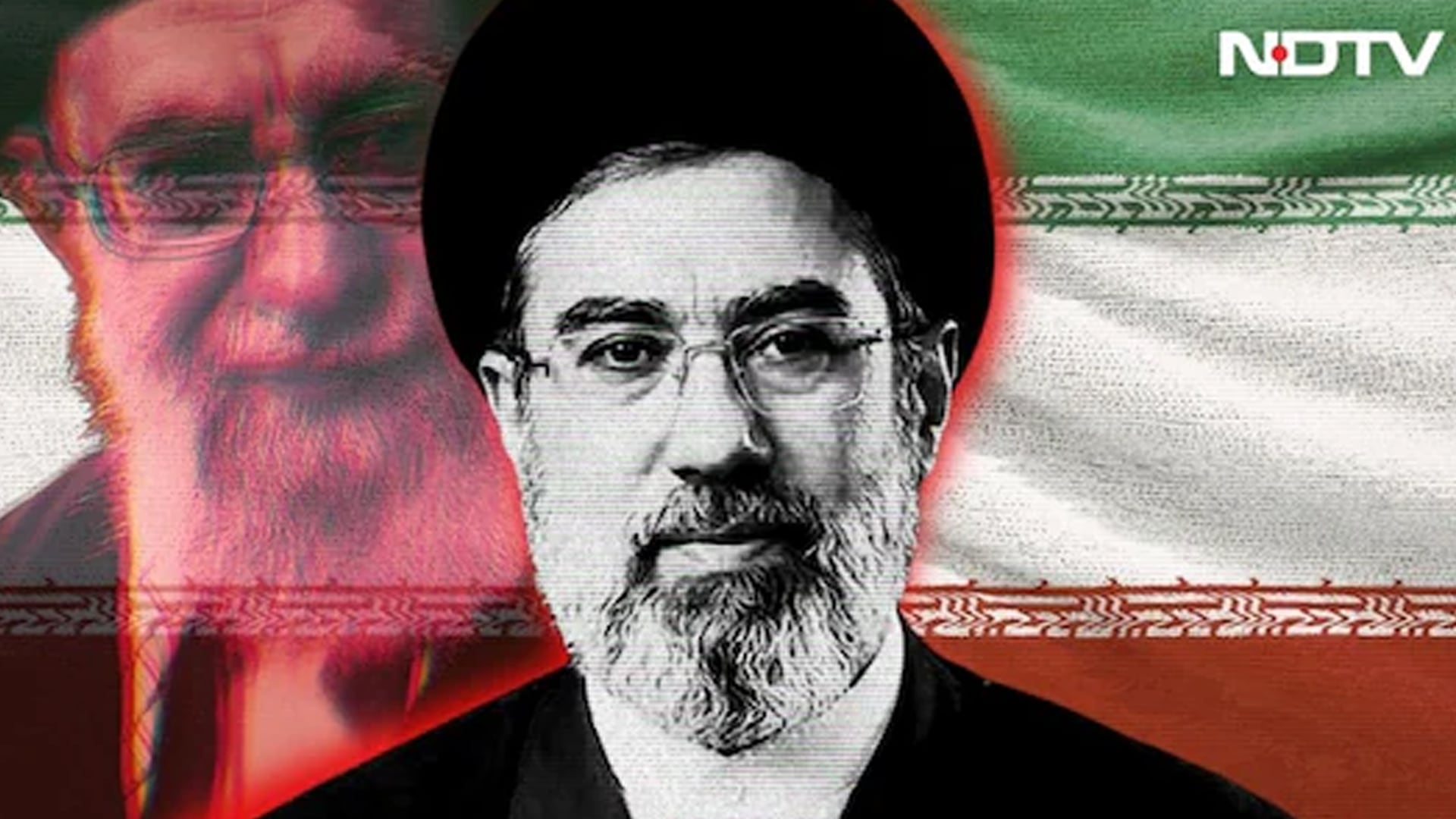
The intelligence apparatuses of the United States and Israel operate on a foundational premise: the physical state of Ali Khamenei is the primary variable in the Middle East’s geopolitical risk equation. Tracking the "unseen" leader is not an exercise in voyeurism but a rigorous quantification of biological and political latency. When a centralized autocracy relies on a singular point of failure, the transition of power creates a vacuum of command that can be measured through signal density, human intelligence (HUMINT) patterns, and the logistical movements of the Islamic Revolutionary Guard Corps (IRGC). The objective is to identify the exact moment the Supreme Leader’s "Effective Command" shifts to "Nominal Command," signaling an imminent transition or internal coup.
The Three Vectors of Remote Health Assessment
Intelligence agencies utilize a triangulation strategy to bypass the lack of direct physical access to the Supreme Leader. This methodology relies on the intersection of biological indicators, environmental modifications, and communication protocols.
1. The Logistical Footprint of Medical Intervention
A leader’s health is reflected in the movement of specific high-value assets. Analysts track the location and activity of the "Bonyad-e Barakat" medical elites and specific specialists from the Baqiyatallah University of Medical Sciences. An increase in the frequency of unscheduled visits to the leader’s residence (the Beit-e Rahbari) by these individuals serves as a high-fidelity indicator of a health crisis. This is quantified by monitoring the security cordons required for such movements, which produce a distinct electromagnetic signature and physical traffic pattern that differs from routine administrative meetings.
2. Signal Attenuation and Information Flow
The flow of directives from the Supreme Leader’s office follows a rigid hierarchy. In a healthy state, the output is consistent in volume and tone. A decline in health introduces a "Command Latency"—a measurable delay between external events and the official response from the Office of the Supreme Leader. This latency suggests that a committee of advisors or family members (such as Mojtaba Khamenei) is vetting or drafting responses, indicating that the leader is no longer the primary decision-maker.
3. Visual and Acoustic Forensics
Every public appearance is subjected to frame-by-frame analysis. Intelligence analysts measure:
- Micro-tremors and Motor Control: Assessing neurological stability through hand movements and gait.
- Vocal Frequency Analysis: Tracking changes in pitch, breath support, and cognitive pacing during televised speeches to detect degenerative conditions.
- The Environment Proxy: Changes in the set design—such as the introduction of hidden medical equipment, oxygen concentrators masked by furniture, or ergonomic adjustments—provide physical evidence of declining stamina.
The IRGC Command Architecture and Post-Khamenei Contingencies
The IRGC does not view the Supreme Leader’s health as a mere political concern; it is an existential risk to their economic and military hegemony. The IRGC’s "Continuity of Government" (COG) protocols are triggered by specific bio-indicators.
The Power Custodian Framework
The IRGC’s strategy revolves around managing the Assembly of Experts, the body constitutionally tasked with selecting the successor. Intelligence tracking focuses on the "Alignment Metric" between the IRGC leadership and potential candidates like Mojtaba Khamenei or Alireza A'rafi. If the IRGC perceives a threat to their interests, they may shift from a constitutional transition to a "Pragmatic Regency," where the successor is a figurehead while the IRGC Council of Commanders exercises de facto control over the strategic nuclear file and regional proxies.
Signal Surveillance of the Inner Circle
The Mossad and CIA prioritize the "Inner Ring"—the small group of advisors and family members who have direct physical access to the Leader. This includes:
- Vahid Haghanian: Known as the Leader’s "right hand," his movements often precede major policy shifts.
- Mojtaba Khamenei: His rising influence is tracked through the appointment of loyalists within the IRGC Intelligence Organization (SAS).
The coordination between these actors creates a "Transition Signature." An unusual density of encrypted communications between the Beit-e Rahbari and the IRGC headquarters in the Sarallah Base signals that the transition is no longer a hypothetical scenario but an active operational phase.
The Cost Function of Miscalculation
The risk for Western intelligence lies in "The False Positive Problem." Iran is aware of the surveillance and employs tactical deception (Maskirovka) to project strength or mask weakness.
Strategic Deception and Body Doubles
The use of pre-recorded footage and digital editing to maintain the illusion of health is a known counter-intelligence tactic. Analysts must distinguish between "Live-to-Tape" broadcasts and genuine live appearances. The absence of interaction with a live audience or the use of static camera angles increases the probability of digital manipulation.
The Impact on Regional Proxies
The "Axis of Resistance"—comprising Hezbollah, the Houthis, and various militias in Iraq—functions on the assumption of a stable center of gravity in Tehran. Any perceived weakness in the Supreme Leader’s command causes a fragmentation of this network. Intelligence agencies monitor the "Proxy Feedback Loop":
- Funding Fluctuations: A sudden redirection of funds from regional operations to domestic security indicates a regime in "Hunker Down" mode.
- Communication Silencing: Proxies moving to autonomous decision-making suggests a breakdown in the central command-and-control (C2) link to Tehran.
The Succession Matrix: Quantitative Risk Profiles
Transitioning from the current leadership to a successor involves three primary risk paths. Each path is assigned a probability based on current signal intelligence and political alignment.
| Path | Primary Driver | Risk to West | Indicator |
|---|---|---|---|
| Constitutional Succession | Assembly of Experts | Moderate/Predictable | Formal meetings of the 88 members. |
| Dynastic Consolidation | Mojtaba Khamenei + IRGC | High/Aggressive | Purges of the "Old Guard" within the Ministry of Intelligence. |
| Military Regency | IRGC Direct Control | Maximum/Volatile | Movement of the 10th Sayyed-al-Shohada Division into Tehran. |
The most critical bottleneck in these scenarios is the "Validation Period"—the window of time between the death of the Leader and the announcement of a successor. During this window, the risk of miscalculation by external actors (pre-emptive strikes) or internal factions (coup attempts) reaches its peak.
Mapping the Electromagnetic Perimeter of the Beit-e Rahbari
The physical security of the Supreme Leader’s compound is a masterclass in signal discipline. However, the requirement for modern medical care creates vulnerabilities. The introduction of high-end medical imaging or specialized monitoring systems requires specific power loads and data backbones that are difficult to hide from sophisticated overhead and cyber-surveillance.
The "Thermal Signature" of the compound is a constant data point. An increase in the heat output of specific wings of the residence, correlating with the arrival of medical personnel, provides a real-time heat map of the leader’s physical location and the intensity of care being provided.
Strategic Play: Exploiting the Transition Window
The intelligence community’s objective is not merely to watch, but to prepare for the "Point of No Return." As the bio-indicators suggest a terminal decline, the strategic emphasis must shift from observation to proactive disruption of the IRGC’s consolidation efforts.
The primary move is the "Information Insertion" strategy: flooding internal Iranian communication channels with conflicting reports of succession choices. This forces the IRGC into a reactive posture, compelling them to use more detectable, less secure communication methods to restore order. By creating a friction-rich environment for the IRGC, the West can delay the consolidation of a hardline successor, providing a window for internal dissent or diplomatic leverage.
The focus must remain on the IRGC's "Communication Nodes." If the transition appears to favor a military regency, the tactical priority shifts to isolating the IRGC command from their regional proxies via cyber-interdiction, effectively decapitating the Axis of Resistance during the period of domestic instability.