The asphalt of a Florida highway in the late afternoon doesn't just hold heat; it radiates a shimmering, oppressive haze that makes everything feel slightly distorted. For Deputy Ralph "RJ" Hernandez, it was supposed to be a routine stretch of patrol. The radio hummed with the usual static of a shift winding down. Then, the world broke.
A silver SUV didn't just pull over; it lurched to the shoulder in a spray of gravel and panic. When the door flung open, the sound that emerged wasn't a scream. It was a jagged, breathless sob from a mother holding a small, limp bundle.
Her three-month-old son, Kingston, had stopped breathing.
In the medical world, they talk about the "Golden Hour." In the world of an infant airway, you don't get an hour. You barely get a minute. When a baby’s airway is obstructed, the brain begins its countdown. Oxygen levels plummet. The heart rate, usually a frantic, healthy drumbeat, begins to stutter. Silence, in this context, is the most terrifying sound a parent will ever hear.
Hernandez didn't wait for backup. He didn't consult a manual. He ran.
The Anatomy of a Crisis
To understand the stakes of that moment, you have to understand the terrifying fragility of an infant. A baby’s windpipe is roughly the width of a drinking straw. Their tongues are proportionally larger than an adult's, and their neck muscles are still learning how to hold the world upright. When a piece of food, a stray object, or even a sudden bout of congestion blocks that tiny passage, the body’s panic response is immediate and devastating.
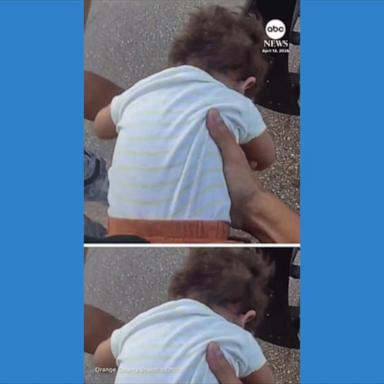
The mother was paralyzed by the kind of fear that robs you of your motor skills. It is a biological shutdown. Hernandez, however, relied on the muscle memory of his training. He took the child. He flipped him over his forearm, angled the head toward the scorched Florida pavement, and began the rhythmic, measured strikes to the back.
One. Two. Three.
Each blow is a calculated risk. Too soft, and the obstruction remains. Too hard, and you risk internal injury. But in the vacuum of a roadside emergency, "too hard" is a secondary concern to the void of a non-responsive lungs.
The officer’s chest camera captured the raw, unedited reality of the intervention. You can see the steady hands of a man who has likely seen the worst the world has to offer, now narrowed down to a single, tiny objective. The mother’s cries in the background provide a haunting soundtrack to the physical labor of saving a life. She is screaming for a miracle. Hernandez is working for one.
The Psychology of the First Responder
We often treat police officers as walking sets of statistics or political symbols. We forget the heavy, quiet burden of the uniform: the expectation that they must be the calmest person in the room when everyone else is falling apart.
There is a specific type of tunnel vision that occurs in these moments. The traffic zipping by at seventy miles per hour fades into a blur. The heat becomes irrelevant. The only thing that exists is the sensation of a tiny ribcage under your palm and the desperate hope for a gasp of air.
It is a lonely place to be. If the baby doesn't wake up, that officer carries that silence home. He carries it to his own dinner table. He carries it when he tucks in his own children. The stakes aren't just professional; they are deeply, painfully personal.
After several sets of back blows, the miracle arrived. It started as a faint, wet cough. Then, the most beautiful noise in the history of the Florida Highway Patrol: a loud, indignant, healthy cry.
The Fragility of the Everyday
Kingston’s face flushed from a terrifying blue-grey back to a vibrant, living pink. The relief on the scene was so thick it was palpable even through the grainy lens of a body camera. Hernandez handed the breathing child back to his mother, but he didn't leave. He stayed until the paramedics arrived, his hand resting on his knees, his own breath finally returning to a normal rhythm.
This wasn't a high-speed chase. There were no villains to handcuff. Yet, this is the core of the social contract we rarely discuss. We live our lives under the assumption that if the unthinkable happens—if our world stops breathing on the side of a busy road—someone will be there who knows what to do.
We often overlook how thin the line is between a normal Tuesday and a life-altering tragedy. We buy car seats with five-point harnesses and obsess over the temperature of the nursery, but we rarely think about the stranger in the tan uniform who might be the only thing standing between our family and a catastrophe.
Beyond the Badge
When the video of the rescue went viral, the internet did what it does: it labeled Hernandez a hero. He deflected the praise, citing his training and the grace of the moment. But the word "hero" often feels too distant, too cinematic.
What we saw on that highway wasn't a superhero. It was a man who refused to let a mother lose her world. It was a demonstration of the fact that, despite the chaos of our modern era, the most fundamental human instinct is still to protect the vulnerable.
Kingston will grow up. He will likely have no memory of the hot asphalt or the man with the silver badge who saved him. He will only know that the world is a place where, when you can't breathe, someone will reach out and catch you.
The SUV eventually drove away, the gravel settled, and the Florida heat reclaimed the shoulder of the road. Hernandez went back to his patrol car, adjusted his mirror, and checked back into the radio. The silence was gone, replaced by the mundane, beautiful noise of a world that kept on turning.
The air in Florida is heavy, but for one family, it has never tasted sweeter.