The night sky over the Red Sea does not scream. It hisses. It is the sound of a propulsion system cutting through salt air, a mechanical predator guided by coordinates typed into a console thousands of miles away. When the flash finally comes, it is a jagged tear in the darkness, a violent punctuation mark at the end of a long, tense sentence.
In Washington and London, the rhetoric follows the thunder. There is a specific kind of practiced steel in the voices of generals and prime ministers when they speak of "targeted strikes" and "proportional response." They stand at podiums, backed by flags, framing the intervention as a unified front of Western resolve. But if you look closely at the map of the coalition, the ink starts to fade as you move across the English Channel.
The silence from Paris, Rome, and Madrid is not an accident. It is a choice. A heavy, calculated, and deeply nervous choice.
The Ghost at the Table
Consider a hypothetical diplomat named Elena. She sits in a high-ceilinged office in Brussels, the kind of room where the heating never quite reaches the corners and the coffee is always slightly burnt. On her monitor, a map of the Middle East glows with heat maps of shipping lanes and missile trajectories. Her phone is buzzing with messages from her American counterparts. They want a signature. They want a logo on the joint statement. They want the world to see a phalanx of Western power.
Elena looks at the map, but she doesn't see "assets" or "targets." She sees the delicate, fraying threads of energy prices, migration routes, and the terrifyingly short distance between a drone strike in Yemen and a retaliatory spark in a Mediterranean port.
She says no. Or, more accurately, she says nothing at all.
This isn't a lack of courage. It is the byproduct of a continent that has spent centuries being the world's battlefield and has finally decided it prefers being its museum. For European leaders, the memory of 2003—the year the word "coalition" became a synonym for a generational mistake—is not a history lesson. It is a scar that still itches when the wind changes.
The Geometry of Hesitation
The logistics of a missile strike are governed by physics, but the logistics of an alliance are governed by anxiety.
When the United States and the United Kingdom launched their strikes against Houthi positions in Yemen, they did so under the banner of protecting global trade. It is a logical argument. The Bab el-Mandeb Strait is the jugular vein of the global economy. When it constricts, the price of a liter of milk in a Berlin supermarket eventually ticks upward.
Yet, the Mediterranean powers—France, Italy, and Spain—declined to put their names on the masthead. Their reasons vary by degree, but they share a common root: the fear of the "widening circle."
For France, it is a matter of strategic autonomy. Paris has long harbored a quiet, simmering resentment toward being treated as a junior partner in an Anglo-American enterprise. They have their own ships in the region. They are conducting their own patrols. But they will not be seen taking orders from a central command that they believe prioritizes force over diplomacy.
Italy, meanwhile, looks at the situation through the lens of a merchant. Their ports are the gateways for Red Sea traffic. If the conflict escalates, those ports go quiet. For Rome, the priority isn't just stopping the missiles; it's ensuring that the missiles don't start falling closer to home, or that the political fallout doesn't destabilize their delicate energy deals with North Africa.
Then there is Spain. Madrid’s refusal was perhaps the most blunt. They didn't just decline to participate; they made sure everyone knew they were declining. In a world of diplomatic nuances, it was the equivalent of slamming a door in a quiet hallway.
The Invisible Stakes of a Single Drone
We often talk about war in the language of hardware. We discuss the $2 million price tag of an Interceptor missile used to down a $20,000 drone. It is a mathematical absurdity, a lopsided exchange that seems unsustainable. But the real cost isn't measured in currency. It’s measured in the erosion of a shared reality.
To the American eye, the Red Sea strikes are a necessary police action. To many European eyes, they are a gamble where the house always wins and the neighbors pay the bill.
Imagine a small business owner in Marseille. He doesn't follow the movements of the USS Dwight D. Eisenhower. He doesn't know the difference between a cruise missile and a guided bomb. But he knows that when the Middle East catches fire, the cost of his shipping containers triples. He knows that political instability leads to waves of people crossing the sea in rubber rafts, desperate and dying. He knows that his city, with its complex, beautiful, and sometimes volatile mix of cultures, feels the tremors of every explosion in the Levant.
When his government refuses to join a strike, they aren't just protecting a budget. They are trying to keep the temperature in his neighborhood from reaching a boiling point.
The Myth of the Unified West
There is a comforting fiction we tell ourselves about the "West." We imagine it as a monolithic block, a single shield held against the chaos of the world. But the Red Sea crisis has stripped away the lacquer to reveal the grain of the wood underneath.
The Atlantic is wider than it looks on a map.
The United States is protected by two vast oceans and a domestic energy supply that makes it largely insulated from the immediate shocks of a regional war. It can afford to be the hammer. Europe, huddled on the edge of the Eurasian landmass, is the glass house.
Every time a Western missile hits a target in Yemen, the shockwaves travel through the gas pipelines that feed German factories. They vibrate through the diplomatic channels that keep the peace in Lebanon. They echo in the mosques and cathedrals of cities where the ghosts of colonial history still whisper in the shadows.
This is why the refusal to join the strikes isn't a "split" in the way pundits describe it. It's a different set of survival instincts. The Americans are playing a game of chess, focused on the board. The Europeans are looking at the table, wondering if it’s about to collapse.
The Language of the Uninvolved
There is a specific vocabulary used by the allies who stayed home. They talk about "de-escalation." They emphasize "maritime awareness." They use words that feel soft, like wool, designed to muffle the sound of the explosions happening elsewhere.
But beneath the soft words is a hard truth: They don't trust the plan.
They see a strategy that addresses the symptoms—the drones, the missiles, the hijacked tankers—without touching the disease. They look at the simmering conflict in Gaza and see the fuel for the fire in the Red Sea. For France and Spain, you cannot solve the latter without addressing the former. To join the strikes would be to validate a military-first approach that they believe is a dead end.
So they wait. They watch the horizon. They keep their ships in the area, but they keep their flags separate. It is a lonely kind of middle ground.
The Ghost of 2003
To understand why a modern European leader hesitates, you have to understand the haunting power of a mistake.
In the early 2000s, the "Coalition of the Willing" was the phrase of the day. It was a promise of a new world order, led by a unified front. We all know how that story ended. It ended in decades of instability, the rise of new insurgencies, and a profound loss of faith in the institutions that were supposed to keep us safe.
The leaders in Paris and Madrid were junior officials or rising politicians when the Iraq War began. They saw the intelligence that wasn't intelligent. They saw the "mission accomplished" banners that preceded years of slaughter. They learned that once you start pulling on the thread of a military intervention, you don't get to choose when the sweater stops unravelling.
That memory is the invisible hand on the shoulder of every European president today. It makes them slow. It makes them cautious. It makes them, in the eyes of some in Washington, unreliable.
But from their perspective, it makes them sane.
The Cost of Stepping Back
There is, of course, a price for this caution. By distancing themselves from the strikes, the European allies are ceding the stage. They are admitting that when the world gets truly dangerous, they are no longer the ones who set the rules.
They are relying on the American umbrella while complaining about the color of the fabric.
It is a deeply uncomfortable position. To be a major global power that refuses to use power is a paradox that cannot hold forever. Eventually, the silence becomes its own kind of noise. If the Houthis continue their attacks, and if the global economy begins to stutter, the "non-participant" allies will find themselves squeezed between their principles and their pocketbooks.
The Red Sea is a narrow corridor, but it is currently holding the weight of two different visions for the future of the West. One vision believes that the only way to maintain order is through the visible, violent application of force. The other believes that force is a trap, a siren song that leads only to deeper waters and darker nights.
The Weight of the Night
Tonight, a radar operator on a French frigate will see a blip on his screen. He will track it. He will report it. He will communicate with his American and British counterparts. They will share data. They will speak the same technical language.
But if that blip turns into a threat, the French sailor will operate under a different set of rules than the American sailor. He will wait for a different kind of permission. He will be guided by a different history.
We like to think that technology has made the world smaller, that we are all interconnected in a way that makes geography irrelevant. But as the missiles fly over the Red Sea, we are reminded that we still live in a world of borders—not just borders on a map, but borders in the mind.
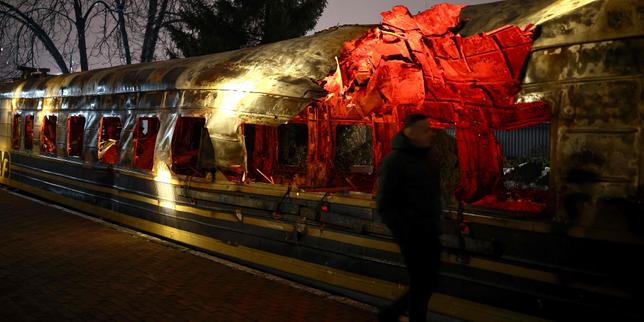
The strikes continue. The ships continue to burn. And the "allies" continue to stand together, while standing perfectly, resolutely apart.
The silence isn't just a lack of noise. It's a warning. It’s the sound of a continent holding its breath, waiting to see if the spark they refused to light is the one that finally burns the house down.