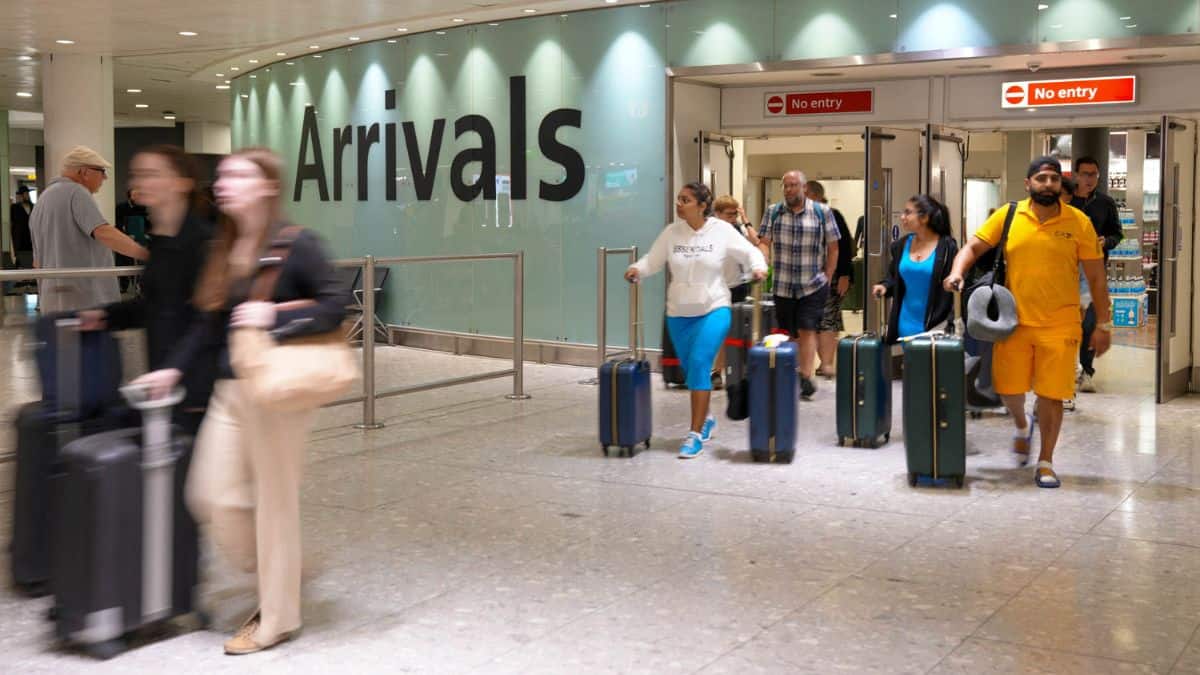
The United Kingdom is transitioning from a policy of identity-based entry to one of document-strictly-verified entry. For dual British citizens, the window of using a foreign passport to assert a right of abode is closing. This shift is not merely a bureaucratic preference; it is the final stage of the Digitisation of the UK Border, a system designed to automate the verification of immigration status at the point of departure rather than the point of arrival.
Under the new Electronic Travel Authorisation (ETA) framework, the British government is moving toward a binary verification state: a traveler either possesses an electronic link to a valid UK status or they do not. Dual citizens who previously relied on "informal recognition"—showing a foreign passport alongside an expired UK passport or a naturalisation certificate—now face a systemic bottleneck. Carriers (airlines, rail, and sea) are being integrated into the UK’s Home Office systems, requiring them to receive a digital "OK to Board" signal before a passenger can even reach the departure gate.
The Triad of Digital Enforcement
To understand why dual citizens are being sidelined, one must analyze the three mechanical layers of the UK’s new border architecture.
- Carrier Liability and Digital Pre-Clearance: UK law mandates that carriers ensure every passenger has permission to enter the UK. In the past, this was a manual check of physical visas or passports. The ETA system replaces manual discretion with an API-led verification. If a dual citizen presents a non-UK passport that requires an ETA (such as a US or Australian passport), the carrier’s system will ping the Home Office. If no ETA is found, the board signal is denied.
- The ETA Exclusion Logic: British citizens are ineligible for an ETA. This creates a logical paradox for the dual national. They cannot apply for an ETA because they are British, but they cannot prove they are British to the carrier’s automated system without a UK passport or a Certificate of Entitlement to the Right of Abode.
- Universal Border Signatures: The UK is moving toward a "Universal Permissions to Travel" model. By the end of 2025, every individual crossing the border—excluding British and Irish citizens—will require a digital permission. Because this permission is linked to a specific passport number, the "British identity" of a dual national is invisible to the system if it is not hosted on a UK-issued document.
The Certificate of Entitlement vs. The British Passport
The friction for dual nationals stems from the legal distinction between holding a status and proving a status. While a dual citizen remains British regardless of which passport they carry, the UK border now operates on a "document-first" evidentiary standard.
There are only two legally recognized methods for a dual national to bypass the ETA requirement when traveling on a foreign passport:
- The British Passport: The primary evidence of citizenship. It serves as a self-contained digital key that communicates directly with the UK’s Advanced Passenger Information (API) systems.
- The Certificate of Entitlement (ROE): A vignette (sticker) placed inside a foreign passport. This is the only mechanism that allows a foreign document to carry the digital signature of British Right of Abode.
The "Cost of Compliance" for dual nationals is rising. A Certificate of Entitlement currently costs £430, which is significantly more expensive than a standard UK passport renewal. Furthermore, the ROE expires when the foreign passport expires, creating a recurring financial and administrative burden.
The Breakdown of Discretionary Entry
Previously, Border Force officers exercised a degree of "residual discretion." A dual national arriving at Heathrow with a US passport and a scan of their UK birth certificate might have been granted entry after a manual identity check. This human-centric model is being phased out in favor of the e-Gate Infrastructure Expansion.
E-gates do not have the capacity for nuanced legal arguments or the verification of secondary documents like naturalisation certificates. They are programmed to recognize specific biometric chips and their associated permissions. When a dual national uses a foreign passport at an e-gate, the system checks for a visa, an ETA, or an ROE. If none are present, the gate remains closed.
This creates a "Point of Origin" failure. The crisis for the traveler no longer happens at the UK border; it happens at the check-in desk in New York, Paris, or Dubai. If the airline cannot verify the passenger’s right to enter, the airline faces a fine (currently £2,000 to £5,000 per passenger). Consequently, airlines will adopt the most conservative interpretation of the rules, denying boarding to anyone without a UK passport or an ETA.
Operational Bottlenecks in Passport Procurement
The systemic requirement for a UK passport has triggered a secondary effect: a surge in demand for His Majesty’s Passport Office (HMPO) services from the overseas "shadow population" of dual citizens.
- Processing Latency: Overseas applications historically take longer due to third-party courier dependencies and rigorous identity verification.
- The "Urgent Travel" Trap: Dual citizens who discover these rules 48 hours before a flight find themselves in a position where no "Fast Track" service exists for overseas applicants.
- The Identity Interlock: To issue a passport, HMPO often requires original documentation from the country of residence, which can take months to procure, creating a cascading delay.
Strategic Response for Dual Nationals
The transition to a fully digital border necessitates a shift in how dual nationals manage their "Travel Identity Portfolio." Reliance on the "vague legality" of being British is no longer an operational strategy for international transit.
The Priority Hierarchy for Compliance:
- Passport Alignment: Dual nationals should prioritize maintaining a valid UK passport regardless of their primary place of residence. The UK passport acts as the "Master Key" for the UK border’s automated systems.
- The ROE Alternative: If a dual national is prohibited by their other country of citizenship from holding a second physical passport (though they retain the nationality), they must apply for the Certificate of Entitlement. This is the only way to "tag" a foreign document with British status.
- The ETA Buffer (Non-Recommended): Some travelers may attempt to apply for an ETA using their foreign passport by omitting their British status. This is legally precarious. Providing false or incomplete information on a government application can lead to a "reception of deception" flag, which may complicate future citizenship status or border crossings.
The UK’s strategy is clear: the border is becoming a closed-loop digital ecosystem. For the dual citizen, the era of "identity by declaration" is over; the era of "identity by digital verification" has begun. Any individual planning travel to the UK who holds British citizenship alongside another nationality must audit their documentation immediately. If the UK-issued document is not in hand, the risk of being denied boarding is nearly 100% as the ETA system reaches full implementation across all global regions by the end of 2025.
Ensure all UK passport renewals are initiated at least six months prior to intended travel, as the system provides no "grace period" for dual nationals caught in the transition.