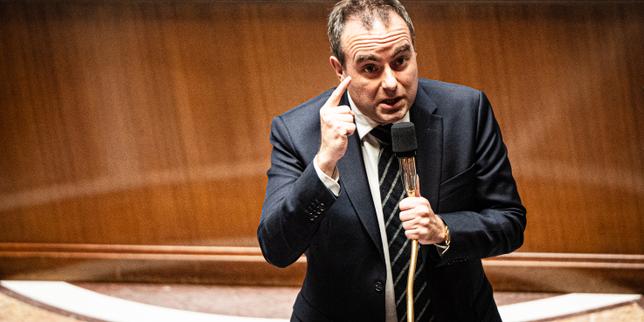
France is waking up to a nightmare it should have seen coming decades ago. Sébastien Lecornu is banging the drum for "faster orders" and "industrial mobilization," as if throwing money at a 1940s supply chain model will solve a 2026 problem. The consensus is lazy: we don't have enough shells, so we must buy more shells. It sounds logical. It is also dangerously wrong.
The obsession with "le stock" is a psychological crutch for a military-industrial complex that forgot how to innovate. While the Ministry of the Armed Forces scrambles to cut delivery times for 155mm artillery rounds, the very nature of the "high-intensity" conflict they fear has already shifted. We are preparing to win the last war while losing the current one.
The Myth of the "War Economy"
Lecornu talks about a war economy as if it’s a dial you can just turn to ten. It isn’t. You cannot decree an industrial base into existence when you have spent thirty years outsourcing your machine tools and precision components.
The current French strategy assumes that volume equals victory. In Ukraine, we see thousands of "dumb" shells fired daily for marginal gains. This is a war of attrition—a math problem where the side with the most steel wins. But France is not Russia. We do not have the demographic depth or the state-controlled industrial machinery to win a math problem.
If we try to compete on volume, we lose.
I have watched defense contractors toast to "record orders" while their actual production lines remain brittle. They are optimizing for a world that no longer exists. A "war economy" in a modern democracy is an oxymoron because our labor laws, environmental regulations, and specialized supply chains don't bend to ministerial whims.
Precision is the New Mass
The "People Also Ask" crowd wants to know: "How many shells does France need?"
That is the wrong question. The right question is: "How many targets must we destroy, and what is the cheapest way to do it?"
If you need 500 unguided shells to take out a single hardened position, your logistics chain is a target. You need trucks, fuel, and soldiers to move those 500 shells. You need a massive footprint. If you use one loitering munition or one high-precision strike, your logistics footprint vanishes.
Lecornu’s push for "faster orders" of traditional munitions ignores the fact that a $2,000 FPV drone with a shaped charge is currently outperforming a $5,000 artillery shell in cost-to-kill ratios. By the time the Nexter plants ramp up to full capacity, the shells they produce will be relics.
We are stockpiling Bayonets in the age of the machine gun.
The Lead-Time Lie
The Ministry claims they are "accelerating" orders. Let’s look at the mechanics.
Current lead times for complex missiles or even modernized artillery are measured in years, not months. Why? Because the "bottlenecks" aren't just in the assembly plants. They are in the Tier 3 and Tier 4 suppliers—the small shops in the Oise or the Rhône-Alpes that make a specific sensor or a heat-treated alloy.
These shops don't have "surge capacity." They have three skilled technicians and a backlog.
When the government places a massive order, it creates a bullwhip effect. Prices skyrocket, quality dips, and the actual delivery date barely moves. To truly "accelerate," you don't place bigger orders; you simplify the design.
We suffer from "over-engineering" syndrome. The French military wants the Ferrari of shells. In a high-intensity conflict, you need the Toyota Hilux of shells.
The Software-Defined Battlefield
Imagine a scenario where the physical shell is the least important part of the weapon system.
In this scenario, the "munition" is a modular carrier. The "intelligence" is a software package that can be updated in the field to counter new electronic warfare (EW) signatures.
- The Old Way: Order 50,000 shells. Wait 3 years. Discover the enemy has new jamming tech that makes them miss.
- The Modern Way: Build a generic kinetic delivery vehicle. Focus 90% of your budget on the sensor fusion and the ability to reprogram the seeker head overnight.
France is currently doubling down on the "Old Way." We are fetishizing the hardware because hardware is easy to count on a spreadsheet. Software is hard. Resilience is hard.
The Vulnerability of Centralization
The current push for industrial mobilization is focused on a few "national champions." This is a massive strategic error.
A centralized production line is a single point of failure. In a real conflict with a peer adversary (think Russia or a state-sponsored proxy in the Middle East), those factories are the first things to go.
Instead of five massive factories, we need 500 "micro-factories." We need a decentralized network of 3D printing hubs and modular assembly points that can be hidden in civilian infrastructure.
If Lecornu really wanted to "disrupt" the status quo, he would be subsidizing garage-level tech startups to build disposable, attritable weapons rather than begging the giants to work a Saturday shift.
The Cost of Being "Right"
The downside to my approach? It’s politically ugly.
It means telling the big defense firms that their 20-year maintenance contracts are dead. It means admitting that the "glory" of the French arms industry—the heavy tanks, the massive artillery—is becoming a liability. It means accepting that "Made in France" might have to be "Assembled in a Basement in Poland" if that’s where the agility is.
But the alternative is worse. The alternative is a France that is "well-stocked" with weapons that cannot find their targets, produced by a supply chain that can be severed by a single cyberattack or a well-placed missile.
Stop Counting Shells
We need to stop asking "How many?" and start asking "How fast can we iterate?"
The war in the Middle East and the grinding horror in Ukraine have proven that the feedback loop is the ultimate weapon. If it takes you eighteen months to implement a lesson learned on the battlefield into your production line, you are already dead.
Lecornu is proud of reducing a delay from 30 months to 15. In the digital age, 15 months is an eternity. It is five generations of drone software. It is three cycles of electronic warfare evolution.
French defense policy is currently a race to the bottom of a very deep, very old hole. We are buying insurance for a house that has already burned down.
The urgency isn't the munitions. The urgency is the intellect.
Stop buying the past.
Build the bypass.


