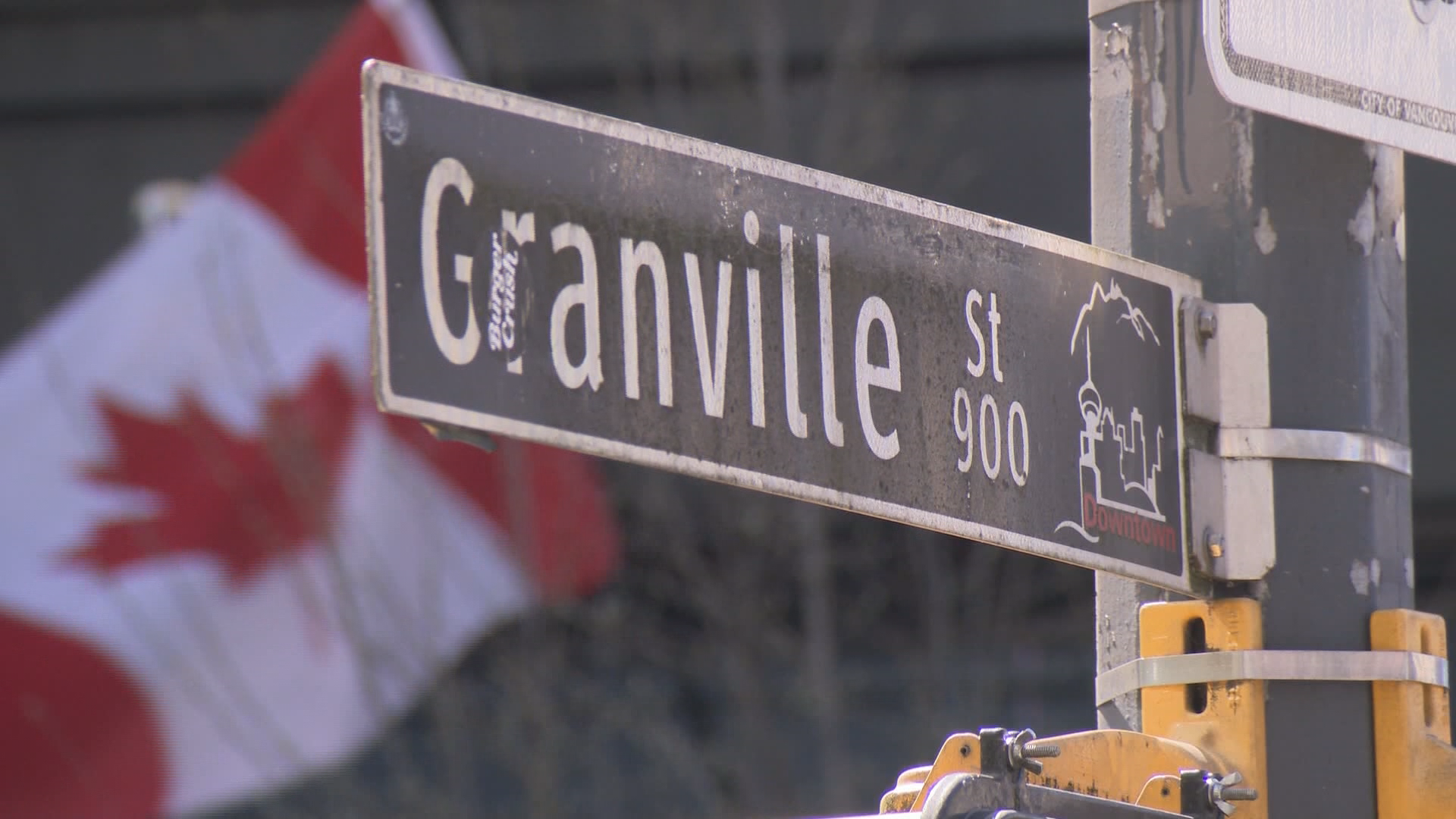
Granville Street isn’t dying. It’s already dead. The corpse is just twitching because business associations and city hall keep pumping it full of bureaucratic adrenaline.
The recent outcry from Downtown Van—the local business improvement association—is a masterclass in the "lazy consensus." They want more police. They want faster permits. They want the "Golden Era" back. It is a predictable, unimaginative script that ignores the brutal reality of urban evolution.
I have spent two decades watching cities try to "revitalize" entertainment districts by throwing more handcuffs and hanging flower baskets at the problem. It never works. It just creates a sterilized, expensive version of a failure. Granville Street doesn't need a facelift; it needs an autopsy and a total rebirth.
The Myth of the Safety Deficit
The loudest complaint is always "safety." The narrative suggests that if we just cleared the sidewalks of the visible manifestations of poverty and addiction, the "good" people would return with their wallets open.
This is a fundamental misunderstanding of urban friction.
Safety isn't the absence of crime; it’s the presence of legitimate activity. Granville is "unsafe" because it is a mono-culture. It is a dead zone for 18 hours a day, punctuated by six hours of alcohol-fueled chaos on Friday and Saturday nights. When you design a street solely for 19-year-olds to get hammered, you shouldn't be shocked when the daytime environment feels like a post-apocalyptic wasteland.
Adding more police officers is a band-aid on a gunshot wound. It doesn’t create vibrancy; it creates a police state that scares off the very creative class needed to fix the area.
The "Rezoning" Lie
The city talks about "reimagining" Granville through the Granville Street Promenade or the new policy frameworks. They want to entice developers to build shiny new office towers and hotels.
But here is what they won't tell you: the current zoning is a protection racket for mediocrity.
By forcing businesses to fit into narrow "entertainment" or "retail" boxes, the city has strangled the life out of the street. Why aren't there neon-lit micro-factories? Why can't we have 24-hour bookstores that serve scotch? Why are there no live-work artist lofts that actually overlook the strip?
The answer is red tape and a lack of imagination. The "Downtown Van" crowd calls for faster permits, but they are asking for faster permits to do the same boring things that failed in 2019. We don't need faster versions of the status quo. We need to abolish the status quo.
The Problem With "Clean and Safe"
Business Improvement Areas (BIAs) love the phrase "Clean and Safe." It sounds noble. In practice, it is a tool for homogenization.
When you prioritize "clean," you often kill "cool." Granville’s history—the grit, the neon, the noise—is its only asset. Trying to turn it into a polished outdoor mall like Robson Street is a fool’s errand. Robson is already failing because it’s a generic template you can find in any city from Dallas to Dubai.
If Granville wants to survive, it needs to embrace its status as the city’s "ID." It needs to be the place where things are a little messy, a little loud, and entirely unpredictable.
Imagine a Scenario Where We Stop Caring About Traditional Retail
Retail is a ghost. Amazon won. The era of people walking down a street to buy a pair of jeans at a 20% markup is over.
Instead of begging for "high-quality retail" to fill the empty storefronts, we should be turning them into high-intensity production spaces.
- Vertical Urban Farming: Turn the upper floors of those crumbling buildings into food production centers.
- Maker Spaces: Lower the barrier to entry so people are actually making things on the street, not just consuming them.
- Hyper-Density Housing: Not "luxury" condos. Micro-units. Student housing. Places for the people who actually work in the service industry to live.
The reason Granville feels like a "no-man's land" is because no one actually lives there. It’s a transit corridor and a party zone. Without a resident population that has a literal stake in the sidewalk, the street will always be a ward of the state.
The High Cost of Cheap Rent (and High Taxes)
Landlords on Granville are sitting on properties, waiting for a massive buyout that might never come. They keep rents high to justify their "valuation" to the banks, while the storefronts rot.
Meanwhile, the city’s property tax structure punishes anyone who tries to improve their space. We have created a system that rewards blight and punishes investment.
If Downtown Van actually wanted "action," they would lobby for a land value tax that penalizes owners for keeping buildings empty. They would demand a "vacancy tax" for commercial storefronts that stay dark for more than six months.
But they won't. Because many of the people on those boards are the very landlords holding the street hostage.
Stop Asking the City for Permission
The most successful urban transformations in history didn't start with a "City Council Motion." They started with "Tactical Urbanism."
Look at the history of the Meatpacking District in New York or Shoreditch in London. Those areas didn't become hubs because the city government had a "vision." They became hubs because the city was too broke or too distracted to stop people from doing interesting, illegal things in empty buildings.
Granville needs more "illegal" activity—not the criminal kind, but the bureaucratic kind. Pop-up galleries that don’t have a permit. Underground clubs that ignore the archaic liquor laws. Markets that set up without asking for a three-year feasibility study.
The Brutal Truth
The "Golden Era" of Granville Street was a fluke of timing and lack of competition. That world is gone.
If you want to "fix" Granville, you have to be willing to lose it first. You have to stop subsidizing the current failure and let the market—the real market, not the protected real estate market—decide what that space is worth.
Stop asking for more "eyes on the street." Start giving people a reason to look at the street in the first place.
If the current businesses can’t survive without a permanent police escort and a government-funded marketing campaign, they shouldn't be there. Clear the way for the people who don't need a "Safe Streets" initiative to feel at home in the heart of a city.
Kill the Granville Strip. Long live the Granville District.
Stop mourning a neighborhood that didn't like you anyway. Open the doors. Let the noise in. Get out of the way.