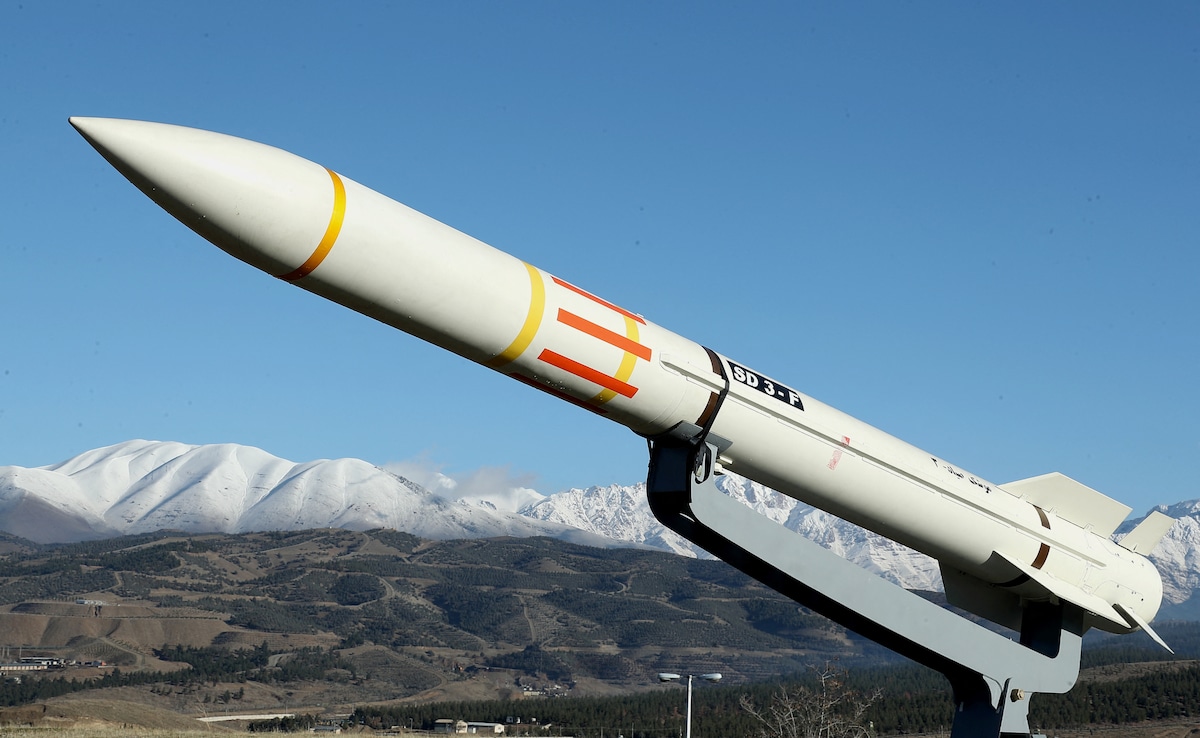
General Michael "Erik" Kurilla, head of U.S. Central Command, recently dropped a data point that should have set off sirens in every intelligence agency from Langley to Tel Aviv. Since the regional fires ignited in late 2023, Iranian ballistic missile launches have plummeted by a staggering 86 percent. On the surface, this looks like a win for Western deterrence. It suggests a regime backpedaling, perhaps spooked by the arrival of carrier strike groups or the sudden realization that their proxy network is being methodically dismantled.
But that interpretation is dangerously shallow.
When a major military power stops shooting, it rarely means they have run out of ammunition or lost their nerve. In the world of high-stakes brinkmanship, a sudden drop in operational tempo often signals a pivot in strategy rather than a collapse of capability. Tehran is not disarming. It is recalibrating. By examining the logistics of the Iranian "Axis of Resistance" and the shifting geometry of Middle Eastern air defenses, a more chilling picture emerges. This is not a retreat. This is a massive consolidation of high-end assets for a fight that hasn't started yet.
The Logic of Conservation
Modern warfare is a game of inventory management. For years, Iran utilized its ballistic arsenal as a form of "armed diplomacy," lobbing missiles at targets in Iraq or Syria to signal displeasure or demonstrate reach. These were often low-stakes demonstrations. However, the current regional environment has transitioned from low-simmering friction to a high-intensity conflict. In this environment, every solid-fuel motor and guidance kit is a precious resource that cannot be wasted on symbolic gestures.
Military analysts track "burn rates" to understand an adversary's sustainability. By slashing launches by 86 percent, Iran is effectively building a strategic reserve. They are moving away from the "use it or lose it" mentality that defined their proxy engagements over the last decade. Instead, they are stockpiling their most advanced platforms—the Kheibar Shekan and the Fattah—which are designed to challenge sophisticated integrated air defense systems (IADS).
The math of a saturation attack is cold and unforgiving. To overwhelm a system like the Patriot PAC-3 or the Israeli Arrow, an attacker needs a specific density of incoming targets. If you fire ten missiles, you might get one hit. If you fire a hundred simultaneously, the interceptor-to-target ratio tilts heavily in favor of the aggressor. By holding back now, Tehran is ensuring that if they decide to go "all in," they have the numbers required to achieve a catastrophic breakthrough.
The Proxy Shift
Another overlooked factor in the declining launch numbers is the professionalization of the Houthi and Hezbollah rocket forces. Previously, Tehran had to do its own heavy lifting to prove its capabilities. Now, the Islamic Revolutionary Guard Corps (IRGC) has successfully outsourced the frontline risk.
The Houthis in Yemen have become a primary testing ground for Iranian technology. By providing the designs and key components for the Sammad drone series and the Ghadr ballistic missiles, Iran can observe how their hardware performs against Western naval assets in the Red Sea without having to pull the trigger themselves. This creates a "deniable laboratory." Every time a Houthi missile is intercepted by a U.S. destroyer, IRGC engineers in Tehran receive invaluable telemetry data. They learn the engagement envelopes of the SM-2 and SM-6 interceptors. They see how the Aegis Combat System prioritizes targets.
This data allows them to refine their own home-based arsenal. Why would the IRGC launch from Iranian soil—inviting direct retaliation—when they can achieve the same diagnostic results via a surrogate in Sana’a? The drop in direct Iranian launches is a sign of a maturing, distributed network where the center of the web remains still while the outer strands vibrate.
The Russian Connection and Reverse Engineering
We must also look north. The war in Ukraine has fundamentally altered the Iranian defense industry's supply chain and priorities. The growing military partnership between Moscow and Tehran has created a two-way street of hardware and expertise. Russia needs Iranian drones and, increasingly, their short-range ballistic missiles (SRBMs) like the Fateh-110.
There is a distinct possibility that the "missing" 86 percent of Iranian launches isn't just a matter of storage, but a matter of export. If Iran is shipping hundreds of airframes to Russia to support the Kremlin’s winter offensives, their domestic "test" schedule will naturally contract. In exchange, Iran is likely receiving advanced Russian electronic warfare (EW) suites and potentially the S-400 air defense system.
This swap strengthens Iran’s "porcupine" strategy. By trading missiles for better defensive tech, they make it harder for the U.S. or Israel to conduct a decapitation strike. It is a trade-off that favors long-term survival over short-term intimidation. The industry is no longer just about building a "big stick"; it’s about building a shield that allows the stick to be used with impunity later.
Electronic Warfare and the Accuracy Revolution
We also have to consider that Iran may have realized their older ballistic models are becoming obsolete against modern jamming. The Middle East is currently the most active EW environment on the planet. GPS spoofing and signal degradation are rampant from the Mediterranean to the Persian Gulf.
If the IRGC realized their current generation of missiles was underperforming in this "dirty" electromagnetic environment, they would naturally halt launches. Shooting a missile that misses its target by 500 meters is a propaganda disaster. It reveals weakness. It is far more likely that the Iranians have gone back to the drawing board to integrate Inertial Navigation Systems (INS) that don't rely on satellite signals or to upgrade their terminal seekers with optical or infrared sensors.
This technical pause is common in the development cycle of any major power. You don't keep firing 1990s technology when you know the enemy has 2024 defenses. You wait until you can field a "silver bullet" that can punch through.
The Shadow of the Nuclear Program
Finally, there is the elephant in the room: the nuclear threshold. Ballistic missiles are the primary delivery vehicle for a nuclear warhead. As Iran inches closer to weapons-grade enrichment, the value of their missile fleet changes. It is no longer a conventional weapon; it is a potential strategic deterrent.
When a nation is on the verge of becoming a nuclear power, it tends to treat its delivery systems with extreme reverence. They become the "sovereign assets" of the state. Firing them off in localized skirmishes in Iraq or Syria is a distraction from the ultimate goal of establishing a permanent deterrent. The 86 percent drop in launches may be the quietest, loudest warning we have ever received that Tehran has shifted its focus from regional meddling to the final stages of strategic breakout.
The drop in launch frequency is not a sign of a dying program. It is the silence of a predator that has stopped barking because it is preparing to bite. We are witnessing a transition from the era of "missile diplomacy" to the era of "missile readiness." The West must stop celebrating the lack of smoke in the desert and start looking at what is being built in the tunnels beneath it.
The next time those launch rates spike, the targets won't be empty warehouses or remote outposts. They will be the crown jewels of regional security, and the missiles will be faster, smarter, and far more numerous than anything we have seen before.
Keep your eyes on the telemetry, not the headlines.