The sudden removal of Ali Khamenei from the Iranian political apparatus creates an immediate structural crisis that goes beyond simple leadership replacement. This event triggers a predefined yet untested constitutional mechanism while simultaneously stressing the informal power networks that actually govern the Iranian state. To understand the trajectory of a post-Khamenei Iran, one must analyze the intersection of the Assembly of Experts, the Islamic Revolutionary Guard Corps (IRGC), and the clerical establishment of Qom. These three entities form a volatile triad that must now resolve the tension between ideological continuity and survivalist pragmatism.
The Constitutional Mechanism of Power Transition
Article 111 of the Iranian Constitution dictates the immediate aftermath of a Supreme Leader’s incapacity or death. A provisional leadership council—consisting of the President, the head of the judiciary, and one of the theologians from the Guardian Council—assumes temporary duties. This council is not a permanent solution but a stopgap designed to prevent a total administrative collapse while the Assembly of Experts deliberates.
The Assembly of Experts, an 88-member body of Islamic jurists, holds the sole legal authority to elect the next Rahbar (Leader). The selection process functions on a principle of Velayat-e Faqih (Guardianship of the Jurist), requiring the candidate to possess not only political acumen but also specific religious credentials.
The Eligibility Constraint
The pool of viable successors is narrowed by a paradoxical requirement: the candidate must be sufficiently senior to command religious respect from the traditional clergy in Qom, yet politically aligned with the security apparatus to ensure the survival of the revolutionary state. This creates a bottleneck. If the Assembly chooses a high-ranking Grand Ayatollah with independent views, they risk a schism with the IRGC. If they choose a political loyalist with weak religious standing, they undermine the theocratic legitimacy of the office itself.
The IRGC as the Shadow Arbiter
While the Assembly of Experts provides the legal framework, the Islamic Revolutionary Guard Corps (IRGC) provides the kinetic reality. Over the last two decades, the IRGC has evolved from a military branch into a massive conglomerate with interests in telecommunications, construction, and energy. Their primary objective in the succession process is the protection of this vast economic portfolio.
The IRGC views the Supreme Leader as the ultimate guarantor of their "state-within-a-state" status. Any successor who hints at rapprochement with the West or internal liberalization threatens the IRGC’s monopoly on the smuggling economy and sanctioned trade. We can categorize the IRGC's intervention strategy into three phases:
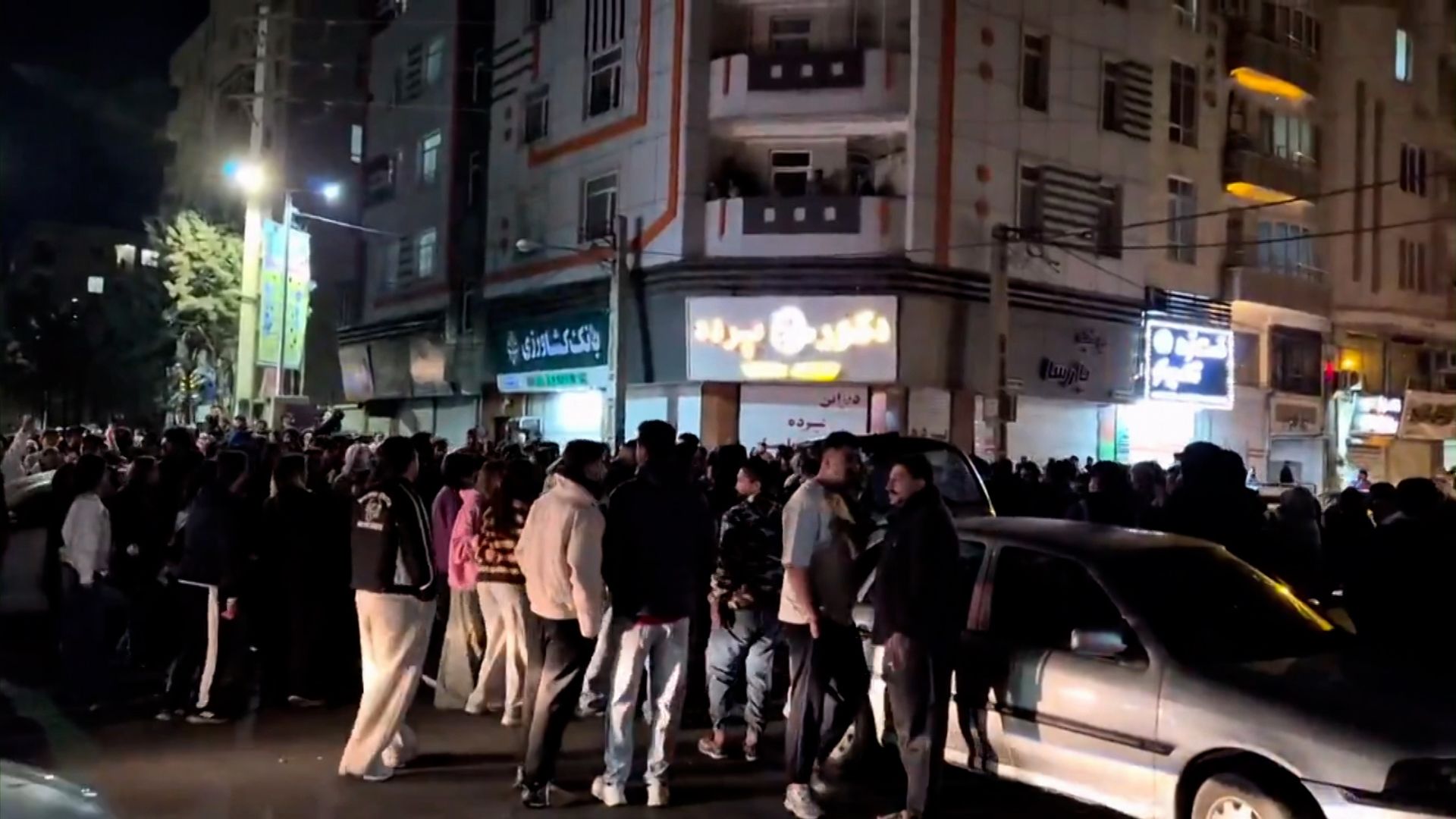
- Securing the Perimeter: Immediate deployment of the Basij and internal security forces to suppress any opportunistic civil unrest or protests that might arise during the period of mourning and transition.
- Vetting the Shortlist: Using intelligence assets to influence members of the Assembly of Experts, ensuring that "quietist" clerics—those who believe religion should stay out of politics—are sidelined.
- The Praetorian Shift: If the clerical transition becomes deadlocked, the IRGC may move toward a more overt military-theocratic hybrid, where the new Leader serves as a symbolic figurehead while a council of generals directs national policy.
Geopolitical Kinetic Responses and the Escalation Ladder
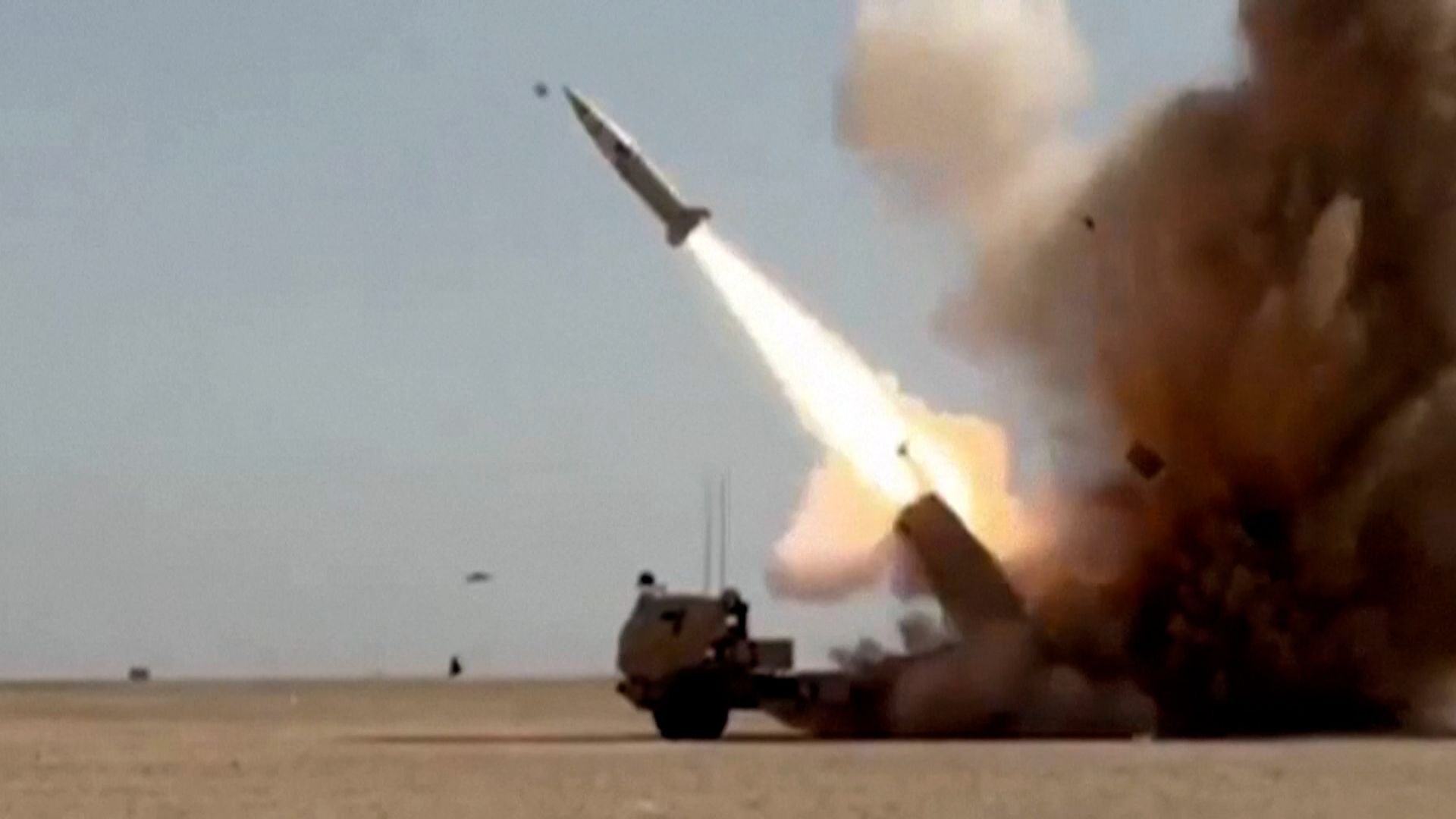
A joint US–Israeli strike on the Iranian leadership represents a fundamental breach of the established "shadow war" norms. In strategic terms, this shifts the conflict from a gray-zone attrition model to an overt state-on-state kinetic engagement. Iran’s response is dictated by the "Prestige-Deterrence Trade-off."
The Proximal Deterrence Variable
Iran’s primary defensive asset is its network of regional proxies, often referred to as the Axis of Resistance. The effectiveness of this network depends on decentralized command structures. If the central node in Tehran is decapitated, these groups—Hezbollah, the Houthis, and various PMFs in Iraq—face a coordination problem.
- Hezbollah's Calculus: As the most sophisticated proxy, Hezbollah must decide if it will exhaust its precision-guided missile (PGM) stockpile in a retaliatory strike that would likely trigger a full-scale Israeli invasion of Lebanon.
- The Houthi Variable: The Yemeni theater offers a low-cost, high-impact method for Iran to signal its reach by further disrupting maritime traffic in the Bab el-Mandeb, affecting global energy prices without inviting a direct invasion of the Iranian heartland.
The Nuclear Threshold
The most significant risk in the wake of such an attack is the acceleration of the Iranian nuclear program. Deprived of its traditional leadership and facing an existential threat from high-tech conventional strikes, the Iranian security establishment may conclude that "strategic patience" is a failed doctrine. The push toward 90% enrichment and weaponization becomes a rational survival move. This creates a "Breakout Paradox": the very strike intended to neutralize the threat may provide the ultimate justification for Iran to cross the nuclear finish line to ensure it never happens again.
Economic Stressors and Internal Stability
The Iranian economy is currently characterized by high inflation, a devalued Rial, and systemic corruption. A leadership vacuum exacerbates these issues by creating capital flight and a freeze on domestic investment.
The Iranian state relies on a "Distributive Legitimacy" model, where loyalty is bought through subsidies and state employment. If the succession process is prolonged, the administrative friction will likely interrupt these distribution channels. This leads to a breakdown in the social contract. The "Cost of Dissent" for the average Iranian citizen decreases when the state appears fractured at the top. The regime’s ability to manage internal "shocks"—such as labor strikes in the oil sector or mass urban protests—is severely compromised when the security forces are preoccupied with the elite power struggle in Tehran.
The Logic of Systematic Purges
Historically, transitions in revolutionary regimes are marked by "The Consolidation Purge." To ensure the new Leader’s authority, those identified as "waverers" or "pragmatists" are often systematically removed from their positions in the Ministry of Intelligence (MOIS) and the judiciary. This is not merely a matter of cruelty; it is a structural necessity to eliminate alternative power centers.
The transition will likely see a hardening of the "Hardline" faction. The pragmatic conservatives, who favored some level of engagement with the global financial system, will find themselves labeled as complicit or weak in the face of the "Joint Aggression." This narrows Iran's diplomatic path, making a return to the JCPOA or any successor treaty functionally impossible in the medium term.
Tactical Realignment of Regional Powers
The Saudi-Iranian normalization process, brokered by China, enters a state of deep freeze. Riyadh, while likely quietly satisfied with the weakening of its rival, must calculate the risk of "spillover" violence. If Iran perceives that its neighbors assisted in the intelligence gathering or logistics of the strike, it may launch "Lateral Retaliation" against oil infrastructure in the GCC to internationalize the crisis and force a ceasefire.
Israel’s strategic objective in such a strike is the "Decapitation of the Command and Control." However, this assumes that the Iranian state is a top-down hierarchy. In reality, the Iranian system is a "rhizomatic" entity—a tangled web of competing bureaus and semi-autonomous military units. Removing the Supreme Leader cuts the head off the snake, but the snake has multiple nervous systems.
Strategic Forecast for the Immediate Term
The most probable outcome is the emergence of a "Hardline Regency." This involves a hand-picked successor by the IRGC-dominated Assembly of Experts, likely a mid-ranking cleric with a background in the judiciary or the security services. This figure will be less a "Philosopher-King" and more a "CEO of the Revolution."
The primary strategic move for Western and regional actors is to prepare for an Iranian state that is simultaneously more paranoid and more willing to take asymmetrical risks. The "Shadow War" has ended; the era of "Direct Attrition" has begun.
The US and its allies must now account for a "Decentralized Response" where various IRGC departments launch independent retaliatory operations—cyberattacks on critical infrastructure, harrassment of shipping in the Strait of Hormuz, and targeted assassinations abroad—to prove that the system survives its leader. The focus must shift from preventing a transition to managing the fallout of a regime that now views its survival through the lens of total escalation.
Monitor the movements within the Mashhad-based clerical networks and the specific messaging coming from the IRGC’s "Qods Force" commanders. Their degree of public alignment in the first 72 hours will indicate whether the transition will be a managed handover or a precursor to internal civil strife.
Would you like me to map the potential successors within the Assembly of Experts based on their historical alignment with the IRGC?