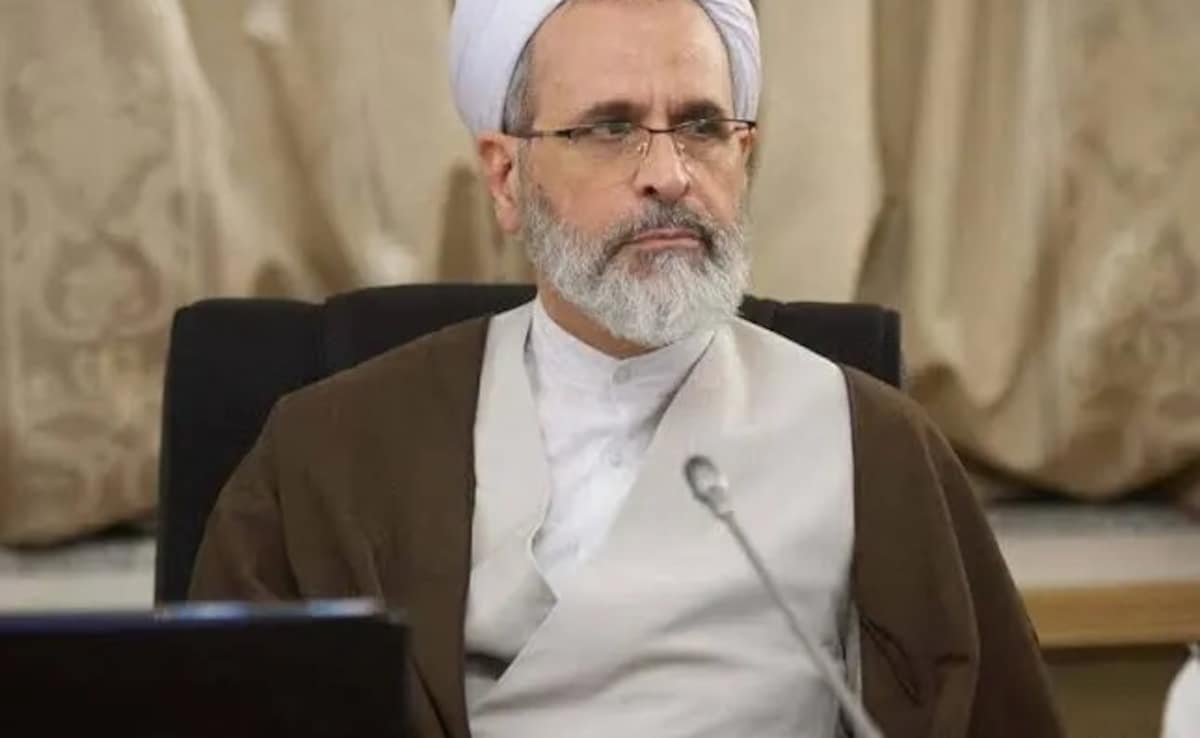
The sudden elevation of Alireza Arafi to the role of Interim Supreme Leader of Iran represents more than a personnel shift; it is the activation of a high-stakes constitutional failsafe designed to preserve theocratic continuity during a period of acute systemic stress. To understand Arafi’s positioning, one must look past the biographical narrative and analyze the institutional vectors that converged to make his appointment a logical necessity for the Iranian Deep State. The transition process in Iran is governed by a rigid legal framework that prioritizes "jurisprudential purity" and "administrative loyalty," two metrics where Arafi outpaces more visible but politically volatile contenders.
The Tripartite Power Base: Mapping Arafi’s Institutional Weight
The selection of a Supreme Leader, even in an interim capacity, is not a popularity contest. It is a calculation of institutional control. Arafi’s ascent is built upon three distinct pillars of influence that bridge the gap between the clerical elite in Qom and the security apparatus in Tehran.
1. Management of the Clerical Infrastructure
Arafi’s tenure as the head of the Iranian Seminaries (Hawza) provides him with direct oversight of the ideological production of the state. In this capacity, he controls the accreditation, funding, and curriculum of thousands of clerics. This creates a massive patronage network that ensures the "religious street" remains aligned with the state’s executive decisions. By managing the Hawza, Arafi serves as the gatekeeper of the Velayat-e Faqih (Guardianship of the Islamic Jurist) ideology, providing him with the theological legitimacy required to occupy the highest office.
2. Integration with the Revolutionary Guard (IRGC)
Unlike reform-minded clerics or traditionalists who maintain a distance from the military, Arafi has consistently synchronized his rhetoric and policy with the Islamic Revolutionary Guard Corps. This alignment is critical because the IRGC serves as the ultimate guarantor of the regime's survival. Arafi’s role in the Al-Mustafa International University—an institution often scrutinized for its dual role in cultural diplomacy and intelligence recruitment—demonstrates his comfort operating at the intersection of religion and national security.
3. The Constitutional Assembly Mandate
As a member of the Assembly of Experts and the Guardian Council, Arafi holds the legal "keys to the kingdom." His presence on these bodies means he is not just a candidate for power but a designer of the rules that govern it. This dual-hatted role allows him to neutralize legal challenges before they manifest, ensuring a frictionless transition that prevents the power vacuum often associated with authoritarian succession.
The Cost Function of Theocratic Succession
Any transition of power in a sanctioned, revolutionary state carries inherent risks. The Iranian leadership must solve for a multivariable equation where the primary goal is the minimization of "Succession Friction." We can define this friction through three specific variables:
- Internal Factionalism ($F_i$): The risk of open conflict between the "Hardliners" (Paydari Front) and the "Pragmatic Conservatives."
- Civil Unrest ($U_c$): The probability of street protests catalyzed by perceived weakness or illegitimacy at the top.
- External Intervention ($E_x$): The degree to which foreign adversaries can exploit a leadership gap to destabilize the regime.
Arafi is the "low-friction" choice. He lacks the polarizing public profile of Ebrahim Raisi or the dynastic baggage of Mojtaba Khamenei. By selecting a high-level bureaucrat-cleric, the system signals stability to domestic stakeholders and continuity to international observers.
Structural Bottlenecks in the Interim Phase
The interim status is inherently precarious. The Iranian Constitution dictates that a permanent leader must be chosen within a strict timeframe by the Assembly of Experts. During this window, Arafi faces several structural constraints that limit his ability to enact radical policy shifts.
The Consensus Constraint
The Interim Supreme Leader cannot rule by fiat in the same way a permanent Leader can. He must operate via a "Leadership Council" logic, even if he holds the title individually. Every major move regarding the nuclear program or regional proxies requires the explicit backing of the IRGC high command and the heads of the Judiciary and Parliament. Arafi’s primary function is not to innovate, but to preside over a collective holding pattern.
The Legitimacy Gap
Arafi lacks the revolutionary credentials of Ruhollah Khomeini or the long-term political maneuvering history of Ali Khamenei. His authority is derived from his titles rather than his personhood. This creates a "legitimacy gap" that can only be bridged by maintaining a hyper-conservative stance. Any sign of moderation would be interpreted by the security apparatus as a pivot toward "Westoxification," potentially triggering an internal coup or a realignment of the Assembly of Experts against him.
The Al-Mustafa Factor: Exporting the Revolution
To ignore Arafi’s history with Al-Mustafa International University is to miss the core of his strategic utility. This institution is the primary vehicle for Iran’s "Soft Power" across Africa, Central Asia, and Latin America. Arafi’s leadership there underscores his understanding of global demographics and the long-term project of building a pro-Tehran clerical class worldwide.
This experience suggests that under an Arafi-influenced administration, Iran’s foreign policy will likely double down on "Ideological Export." While traditional diplomacy may remain stalled, the grassroots expansion of the "Axis of Resistance" through educational and religious networks will accelerate. This is a move toward a more sophisticated, decentralized form of influence that is harder to track and sanction than traditional state-to-state transfers.
Operational Risks: The Shadow of the Assembly
The Assembly of Experts is the only body with the theoretical power to dismiss a leader. While it has historically functioned as a rubber stamp, the interim period changes the incentives. Factions within the Assembly—specifically those aligned with the security services—will use this time to vet Arafi’s performance.
The primary metric of success for Arafi will be his ability to maintain "Social Silence." If the transition is marked by a resurgence of the "Woman, Life, Freedom" movement or significant labor strikes, the Assembly may look toward a more "Iron Fist" candidate. Arafi’s challenge is to project enough strength to deter dissent while appearing sufficiently collegiate to satisfy the clerical elders.
Strategic Forecast: The Permanence of the Temporary
The history of revolutionary regimes shows that interim leaders frequently become permanent fixtures when the "ideal" candidate is too divisive. Arafi is currently the path of least resistance.
The strategic play for the Iranian establishment is to use Arafi’s interim period to "normalize" his presence. By the time the Assembly of Experts meets to vote on a permanent successor, Arafi will have already occupied the offices, met with the generals, and issued the decrees. He is effectively running a "incumbency simulation."
If Arafi can navigate the next six months without a major security breach or a collapse in the Rial’s value, the "Interim" tag will likely be removed. The international community should prepare for a leadership that is less charismatic than its predecessors but significantly more technocratic and institutionally integrated. This marks the transition of the Islamic Republic from a "charismatic revolutionary state" to a "clerical-bureaucratic autocracy."
The focus now shifts to the IRGC’s internal promotions. If we see a concurrent rise in Arafi-aligned generals within the Quds Force, the transition is not just likely—it is complete. Monitor the appointments within the Setad (the Execution of Imam Khomeini's Order); if Arafi’s associates begin filling board seats in these multi-billion dollar conglomerates, the financial architecture of his permanent rule is being laid.