The Feel-Good Fallacy of Inclusion
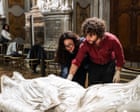
Naples is making headlines for letting the visually impaired "touch" the art. The media is swooning. The PR departments are patting themselves on the back. It sounds like progress. It looks like empathy.
It is actually a patronizing stunt.
Museums are obsessed with the optics of accessibility while fundamentally failing the people they claim to serve. Giving a blind person a 3D-printed plastic replica of a Caravaggio is not "experiencing art." It is a consolation prize. It is the aesthetic equivalent of giving someone a description of a steak and calling it dinner.
We have entered an era of "performative accessibility." Institutions are spending thousands on tactile plaques and haptic feedback gloves to solve a problem they don't even understand. They are treating the blind as a monolith that just needs a "touchable" version of a visual medium to feel included.
The Visual Bias of Tactile Art
The core of the problem is that these tactile experiences are designed by sighted people.
When a sighted curator commissions a 3D relief of a painting, they are attempting to translate color, light, and perspective into height and texture. But light doesn't have a texture. $E = h \nu$ describes the energy of a photon, but it doesn't tell your fingertips what "yellow" feels like.
By forcing visual art into a tactile box, museums are actually highlighting what the visually impaired are missing rather than providing a unique, valuable experience. It’s a deficit-based model of inclusion.
- Perspective is a visual lie. Parallel lines converging at a vanishing point is a trick of the eye. To a touch-based learner, those lines don't converge. They remain parallel.
- Scale is distorted. A tactile map of a cathedral ceiling loses the "awe" factor of $20$-meter heights.
- Materiality is erased. 3D-printed resin feels like cheap toys, regardless of whether the original was oil on canvas or cold Carrara marble.
I have spent years consulting on sensory design. I’ve seen museums blow millions on "sensory rooms" that blind visitors use exactly once before realizing the experience is a shallow imitation of the real thing. They aren't looking for a "blind version" of a painting. They are looking for an experience that respects their specific sensory reality.
Stop Translating and Start Creating
If a museum actually cared about the visually impaired, they would stop trying to "translate" visual masterpieces and start commissioning Haptic Originals.
Why are we obsessed with making the Mona Lisa touchable? It was never meant to be felt. The brushwork is flat. The magic is in the sfumato—a visual blurring technique that is physically non-existent.
Instead of a plastic Mona Lisa, why not commission a sculpture designed specifically for the hands?
- Temperature variance: Use materials that hold heat differently to represent "light" and "shadow."
- Vibration: Incorporate low-frequency sound that resonates through the floor, creating a physical sense of space.
- Weight and Mass: Let visitors feel the literal gravity of an object.
The industry is stuck in a "braille-everything" mindset. It's lazy. It’s the same logic that leads tech companies to put a screen on a fridge. Just because you can add a feature doesn't mean it improves the user's life.
The High Cost of Pity Marketing
Let’s look at the numbers. A high-quality 3D scan and resin print of a mid-sized sculpture can cost upwards of $5,000. For a full gallery, you’re looking at a quarter-million-dollar investment in plastic replicas.
What else could that money do?
- Staffing: Hire visually impaired docents who can provide high-fidelity verbal descriptions.
- Infrastructure: Fix the erratic floor levels and lighting that actually pose safety risks.
- Technology: Invest in indoor GPS and wayfinding apps that allow for independent navigation.
Most "tactile tours" require a sighted guide to lead the visitor by the hand to the "touch station." This isn't independence. It’s a guided field trip for adults. True accessibility is the ability to walk into a building and navigate it without having to ask for a special "disability kit" at the front desk.
The Myth of "Universal Design"
The "People Also Ask" sections of the internet are filled with questions like, "How do blind people see art?"
The brutally honest answer? They don't. And that's okay.
We need to stop being terrified of the fact that different bodies experience the world differently. By trying to make everything "universal," we end up with a watered-down, beige version of culture that satisfies no one.
A museum shouldn't be a visual-only space with a few "touchable" scraps thrown to the side. It should be a multisensory environment where the acoustics are as curated as the lighting.
I’ve worked with architects who think putting a tactile strip on the floor is "solving" accessibility. It’s not. It’s a band-aid on a bullet wound. If the room sounds like a tin can because of poor acoustic treatment, a blind visitor is going to be disoriented and exhausted within twenty minutes.
The Downside of My Argument
Admittedly, my approach is harder. It’s more expensive to rethink an entire building’s sensory profile than it is to print ten plastic models and call a press conference. It requires curators to step outside their visual comfort zone and admit that they don't know how to "curate" for the skin or the ears.
But if we don't move past this "replica" phase, we are just building a high-tech version of a zoo. Look at the blind person touching the statue! Isn't it inspiring?
No. It’s boring.
Kill the "Do Not Touch" Sign for Everyone
If you want to truly disrupt the museum world, stop making "blind-only" tactile experiences.
Touch is a fundamental human need. Sighted people want to touch things, too. The "Do Not Touch" sign is a relic of 19th-century preservation anxiety that has been largely rendered obsolete by modern materials science and cleaning techniques.
Why are we segregating the senses?
- Tactile feedback helps everyone learn. Studies show that haptic interaction increases memory retention for sighted and non-sighted people alike.
- It breaks the "White Cube" monotony. Museums are notoriously sterile. Allowing physical interaction makes the space human.
- It forces better art. If an object is boring to touch, maybe it shouldn't be the centerpiece of a physical space.
The Naples model is a step backward because it keeps the tactile experience as a "special accommodation." It reinforces the idea that touching is for the "broken" and seeing is for the "normal."
The Next Step for Curators
If you are a curator reading this and you’re feeling defensive: good. Your current strategy is a PR stunt.
If you actually want to innovate, fire your 3D-printing consultant. Go into your gallery, close your eyes, and try to navigate. Listen to the hum of the HVAC. Feel the change in air pressure as you move between rooms. Notice the lack of information coming from your feet.
That is your real canvas.
Stop trying to explain what a painting looks like to someone who can't see it. Start creating a world that is worth feeling.
Don't just give them a plastic replica. Give them the building. Give them the sound. Give them the weight of history.
Take the "Do Not Touch" signs off the original sculptures and invest in a better restoration team instead of a PR firm.
Stop patronizing your audience and start challenging them.