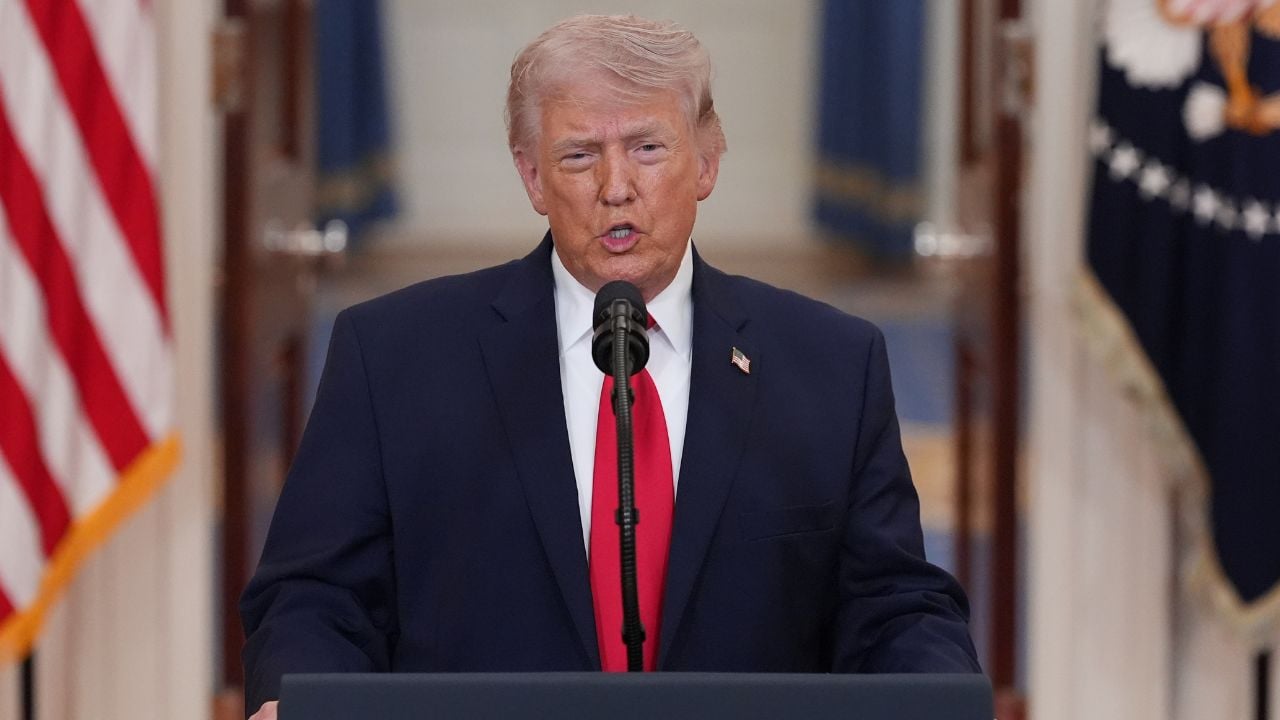
The federal government is handing out cash to kids, and it isn't a small-time stimulus check. Treasury Secretary Scott Bessent recently confirmed that 5 million children have already been signed up for what the administration calls Trump Accounts. Even more striking is the fact that 1.2 million of those kids are currently eligible for an immediate $1,000 seed payment from the U.S. Treasury.
This isn't just another savings plan. It’s an aggressive attempt to turn every American child into a shareholder. If you’ve got a kid born between January 1, 2025, and December 31, 2028, they’re essentially being handed a lottery ticket where the house actually wants them to win.
The $1,000 head start for newborns
The math here is simple but the implications are massive. For children born in that specific four-year window, the Treasury Department drops $1,000 into a tax-advantaged account. That money doesn't sit in a dusty vault. It goes straight into low-cost index funds tracking the U.S. stock market.
Bessent and the administration are betting on the power of compounding. If that $1,000 sits untouched for 65 years at average market returns, it could balloon into roughly $500,000 by the time that child hits retirement age. That’s half a million dollars for doing absolutely nothing other than being born at the right time.
But it isn't just for newborns. While the $1,000 "seed money" is restricted to those born in the 2025-2028 window, every American citizen under 18 can open one of these accounts. They just don't get the free grand from Uncle Sam. Instead, they rely on parents, grandparents, and even private donors to fill the bucket.
Why 5 million signups happened so fast
The speed of the rollout has caught many off guard. Five million accounts in such a short window suggests that families are moving fast to grab their piece of the pie. A big reason for this is the simplicity of the signup process. You don't have to navigate a complex government portal or spend hours on hold with a federal agency.
To claim the seed money or open an account, most families just check a box on IRS Form 4547 during tax season. It’s built into the system people already use. By making it a "check the box" exercise, the government removed the friction that usually kills these kinds of programs.
Private money is flooding the system
It's not just taxpayers funding this. This is where the policy gets weird—and potentially much more lucrative. Private philanthropists and corporations are jumping in to "backfill" accounts for kids who weren't born in the $1,000 window.
Michael and Susan Dell, for example, committed over $6 billion to provide $250 seed payments to 25 million children living in lower-income ZIP codes. We’re seeing a new kind of "benefit" emerging in the corporate world too. Companies like Charles Schwab, Mastercard, and Uber have already signaled they’ll start matching employee contributions to these accounts, much like they do with a 401(k).
Imagine a world where your boss doesn't just help you save for your retirement, but also helps fund your toddler’s future house. That’s the vision Bessent is selling. It’s "Main Street meets Wall Street" in a way that bypasses traditional welfare.
The rules you need to know
You can’t just pull the money out when your kid wants a new car at 16. These accounts have teeth.
- Age 18 Milestone: The funds are locked until the child turns 18. Before then, you can't touch them for anything.
- Withdrawal Rules: Once they hit 18, the account acts like a traditional IRA. The money can be used for college, a down payment on a home, or starting a business.
- Taxation: Contributions are made with after-tax dollars (like a Roth), but the growth is where the magic happens. While deposits aren't taxed, withdrawals later in life are treated as income.
- Contribution Limits: Parents and friends can kick in up to $5,000 a year per child. If you max that out, the projections aren't just in the hundreds of thousands—they’re in the millions.
Creating a nation of capitalists
There's a clear political and social goal under the hood. Senator Ted Cruz, who helped spearhead the legislation, hasn't been shy about the intent. The idea is to give young people a direct stake in the success of American companies. If a teenager sees their "Trump Account" growing because the S&P 500 is up, they’re less likely to be skeptical of the market.
Bessent has even described these accounts as a "back door" to proving the value of private accounts over traditional Social Security. By moving the needle from government-managed benefits to privately managed, market-linked investments, the administration is trying to reshape the American economic identity.
Is there a catch?
Critics point out that this doesn't help with immediate poverty. If a family is struggling to pay rent today, $1,000 locked away for 18 years doesn't put food on the table. There’s also the risk of market volatility. If the stock market hits a decade-long slump, those "guaranteed" riches could look a lot smaller.
Furthermore, the accounts are limited to broad, U.S.-based index funds. You can’t go out and buy individual meme stocks or crypto with your kid’s seed money. It has to stay in "All-American" companies. While that limits risk, it also keeps the money tied strictly to the performance of the domestic economy.
What you should do now
If you haven't looked at Form 4547 yet, you're leaving money on the table.
First, check your child’s eligibility for the $1,000 seed. If they were born in 2025 or will be born before the end of 2028, that money is effectively theirs for the taking. Second, even if your kids are older, open the account anyway. The tax-advantaged growth and the potential for corporate or philanthropic matching make it a far better vehicle than a standard savings account.
Don't wait for the July 4th official "activation" to start planning. Talk to your employer about whether they plan to offer matching contributions. Many companies are using this as a recruiting tool. If yours isn't, they're already behind the curve. Get the paperwork in order, check the box on your taxes, and let the market do the heavy lifting for the next two decades.