Your grocery bill is about to get a lot uglier. It isn't just standard inflation or a bad harvest. The real culprit is a geopolitical powderkeg in the Middle East that most people only watch on the news without realizing it dictates the price of their morning toast. When the US and Iran trade blows, the first thing that breaks isn't a diplomatic treaty. It's the global fertilizer supply chain.
If you think fertilizer is just "dirt medicine" for farmers, you’re missing the bigger picture. Modern agriculture is essentially a system for turning fossil fuels into food. We use massive amounts of natural gas to create nitrogen-based fertilizers. Without them, global crop yields would crater by nearly 50 percent. Now, consider that the Middle East sits on the literal tap of the world's energy and mineral exports. When that tap gets jolted by drone strikes or blocked shipping lanes, the shockwaves hit every farm from Iowa to the Punjab. If you liked this post, you should check out: this related article.
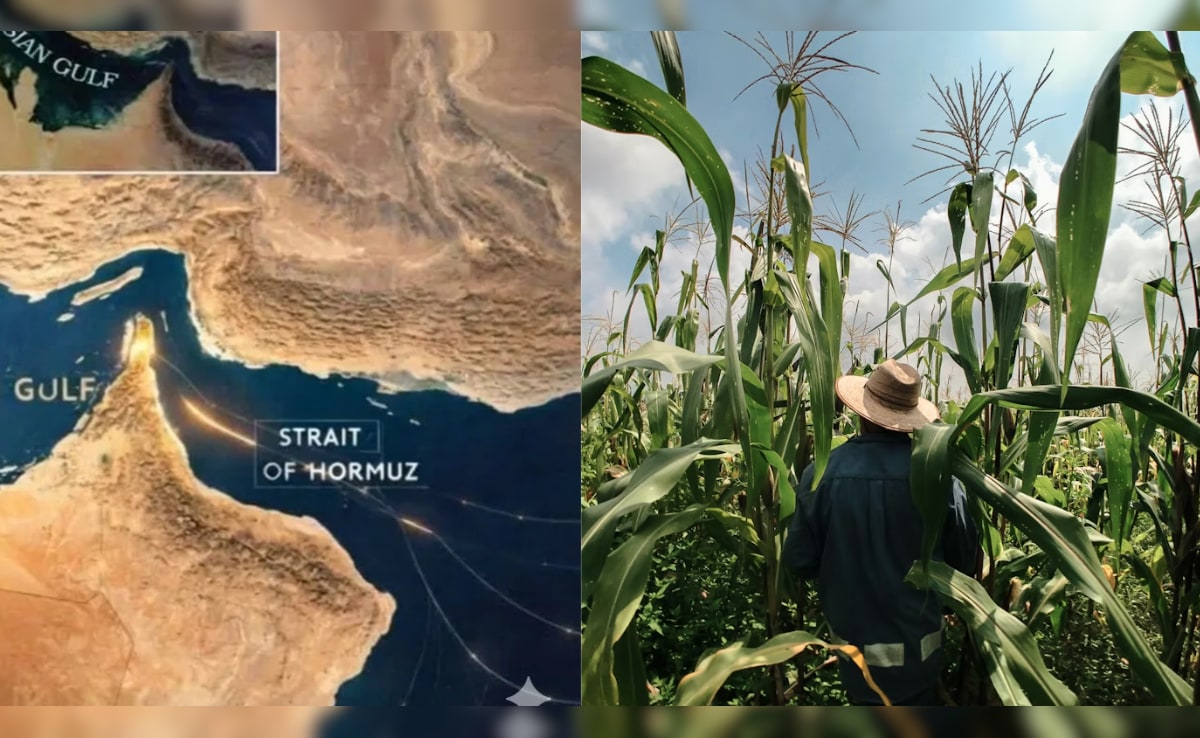
The Strait of Hormuz Is the Worlds Food Artery
Most analysts talk about oil when they mention the Strait of Hormuz. That’s a mistake. While oil moves the cars, fertilizer moves the calories. This narrow stretch of water is the exit point for a huge chunk of the world's urea and phosphate exports. Iran itself is a major producer of urea, and its neighbors like Qatar and Saudi Arabia rely on this single waterway to get their product to global markets.
If the US-Iran conflict escalates to a point where the Strait is closed or even just deemed a "high-risk" zone by insurers, the cost of shipping fertilizer skyrockets overnight. We saw this happen during previous tensions. Insurance premiums for cargo ships can jump 1000 percent in a week. Those costs don't stay with the shipping companies. They get passed to the fertilizer distributor, then the farmer, and finally to you at the checkout line. For another perspective on this development, check out the recent update from Forbes.
It’s a domino effect. If a farmer in Brazil can’t afford nitrogen because a tanker is stuck in the Persian Gulf, he plants less corn. Less corn means higher prices for livestock feed. Higher feed prices mean your steak and eggs just became luxury items.
Why Nitrogen Is the Real Currency of War
We often forget how fragile the Haber-Bosch process is. This is the industrial method we use to pull nitrogen out of the air and turn it into ammonia. It requires an incredible amount of heat and pressure, which means it requires a lot of natural gas.
$N_2 + 3H_2 \rightarrow 2NH_3$
In a conflict scenario, natural gas is redirected. It goes toward power generation or is hoarded by nations fearing a long-term energy shutoff. When gas prices spike because of Middle Eastern instability, fertilizer plants in Europe and Asia simply shut down. They can't turn a profit when their input costs triple.
During the 2022 energy crisis, we saw nearly 70 percent of European ammonia production go offline. A full-scale US-Iran war would make that look like a minor hiccup. Iran has the second-largest gas reserves on the planet. If those reserves are knocked offline or sanctioned into oblivion, the global nitrogen market loses its floor.
The Phosphate Problem Nobody Is Talking About
Nitrogen gets the headlines, but phosphate is the silent killer. While Morocco holds the lion's share of global phosphate reserves, the processing and trade routes are heavily influenced by Middle Eastern stability. Conflict breeds protectionism. When countries feel a war coming, they stop exporting. They keep their nutrients at home to ensure their own people don't starve.
China has already done this in the past, slapping export bans on fertilizer to keep domestic prices low. If the US and Iran enter a prolonged hot war, expect every major producer to pull up the drawbridge. You’ll see "Fertilizer Nationalism." Nations will treat bags of NPK (Nitrogen, Phosphorus, and Potassium) like they treat gold bars or semiconductor chips.
Impact on the 2026 Growing Season
Let’s look at the hard numbers. In previous periods of high tension, urea prices have surged from $300 a ton to over $1,000 in less than a year. If a conflict breaks out now, we are looking at a scenario where the 2026 growing season becomes the most expensive in human history.
Farmers operate on razor-thin margins. Most don't have the cash flow to absorb a 300 percent increase in their primary input cost. They have two choices. They can buy less fertilizer and accept a lower yield—meaning less food on the market—or they can take out massive loans and pray that food prices stay high enough to cover the debt. Either way, the consumer loses.
What Happens to the Global South
This isn't just about expensive groceries in suburbs. For developing nations, a fertilizer shortage is a death sentence. Countries in Sub-Saharan Africa and parts of South Asia are extremely sensitive to price swings. When fertilizer prices doubled a few years ago, millions of smallholder farmers simply stopped using it. The result was a measurable spike in malnutrition.
A US-Iran war isn't just a military engagement. It’s a systemic shock to the biology of the planet. We have built a world that can only feed 8 billion people because of intensive chemical inputs. You take those inputs away, and the math doesn't work anymore.
Misconceptions About Energy Independence
You'll hear politicians say that the US is energy independent and therefore shielded from this. That’s a lie. Or at least, it's a half-truth that ignores how global markets function. Natural gas is a global commodity. Even if the US produces its own gas, American producers will sell to the highest bidder. If a war in the Middle East sends European or Asian gas prices to the moon, US prices will follow them up.
Furthermore, the US still imports a significant amount of specific fertilizer components. We are part of a web. You can't pull a thread in the Persian Gulf without the whole tapestry—pardon the expression, let's say the whole fabric—of American agriculture feeling the tug.
Steps to Protect Your Food Security
You can't stop a drone strike in the Middle East, but you can change how you interact with the food system. The era of cheap, infinite calories is hitting a wall.
First, start looking at local supply chains. Small-scale local farmers who use regenerative practices or compost-based systems are less dependent on the global petro-chemical market. They might be more expensive now, but when the global system breaks, they’ll be the only ones with a stable price point.
Second, understand that "food inflation" is a lagging indicator. The fertilizer crisis happening today won't show up in your cereal box for another six to nine months. If you see headlines about escalating tensions in the Gulf, that is your signal to buy shelf-stable staples before the price hike hits the retail level.
Third, pay attention to the export policies of countries like Russia, China, and Canada. These are the "Big Three" of fertilizer. If they start restricting exports in response to Middle Eastern instability, the shortage is no longer a "risk"—it’s a reality.
The link between a missile in the desert and the price of a loaf of bread is direct and unforgiving. We are past the point where geopolitics was something that happened "over there." It’s happening on your dinner plate right now. Don't wait for the evening news to tell you that food is expensive. Look at the shipping lanes today and you'll see the grocery store of tomorrow.
Stop thinking about this as a "war" in the traditional sense. It's a supply chain disruption with a body count. If you aren't watching the fertilizer markets, you aren't paying attention to the real war. Diversify your food sources and prepare for a high-cost environment that won't go away just because a ceasefire is signed. The infrastructure of global hunger is more fragile than anyone wants to admit.