You’ve seen the headlines. You’ve felt that low-grade hum of anxiety every time you scroll through your feed. It seems like every week there’s a new "red line" crossed, a new alliance formed, or a massive military drill that looks a little too much like the real thing. People are asking if we’re heading toward World War Three because, for the first time in decades, the answer isn’t a flat "no."
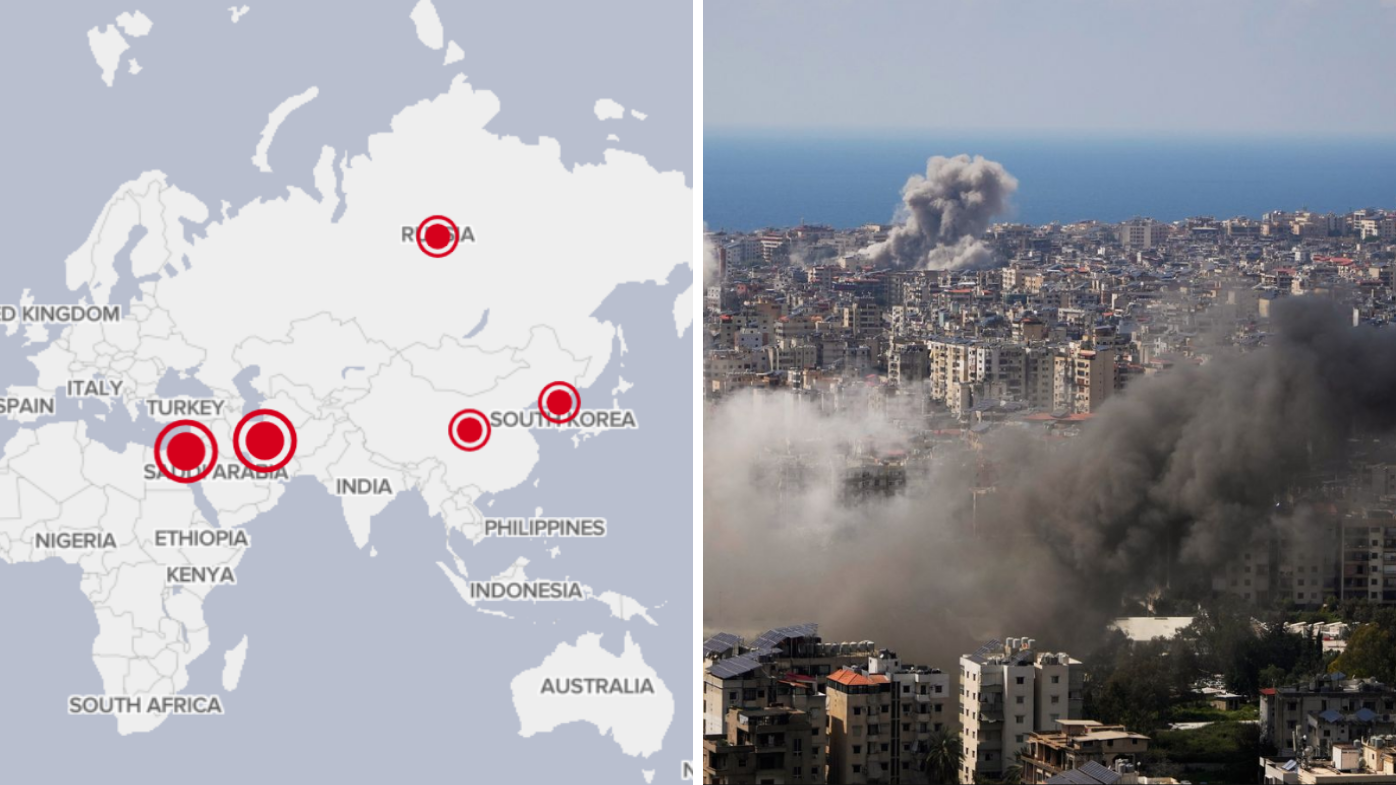
But here’s the truth. We aren't in a 1939 scenario where a single invasion sets the whole world on fire overnight. It’s messier than that. We're living through a "polycrisis" where regional wars in Ukraine and the Middle East, coupled with a cold-burning tech race in the Pacific, create a global friction point. The risk of a total global conflict is higher than it was ten years ago, but it’s not inevitable. It depends on whether world leaders can keep their ego in check when the "accidental" shots start flying.
The end of the post-Cold War peace
For about thirty years, we lived in a bit of a bubble. We thought major powers wouldn't fight each other because it was bad for business. That’s gone. Modern geopolitics has shifted from "how do we get rich together" to "how do I make sure you don't get stronger than me." This shift is the primary driver of World War Three fears.
Look at the breakdown of arms control treaties. During the Cold War, the U.S. and the Soviet Union had rules. They had red phones. They had inspectors looking at each other's nukes. Today, those treaties are mostly scrap paper. Russia has suspended its participation in the New START treaty. China is rapidly expanding its silo count without being part of any formal limitation agreement. When the rules disappear, the chance of a mistake—a literal "oops" that ends a city—skyrockets.
Ukraine is the laboratory of modern global war
The war in Ukraine isn't just a regional border dispute. It’s a proxy war that has effectively divided the world into two camps again. On one side, you have the NATO alliance providing intelligence, tanks, and long-range missiles. On the other, you have a burgeoning "axis" of Russia, Iran, and North Korea, with China providing the economic backstop.
This matters because it's where the tech for the next world war is being tested. We're seeing $500 drones take out multimillion-dollar tanks. We're seeing how Starlink and satellite internet change the battlefield. If a World War Three does happen, it won't look like Saving Private Ryan. It’ll look like a swarm of autonomous machines managed by AI, moving faster than a human general can think. The danger here is "escalation dominance." If one side feels they’re losing the tech race, they might reach for the "big buttons" to level the playing field.
The Taiwan flashpoint and the Pacific squeeze
While Europe is bleeding, the Pacific is where the real heavyweight title fight sits. The tension over Taiwan is the most likely spark for a direct conflict between the U.S. and China. This isn't just about democracy or "sovereignty." It’s about the silicon.
Taiwan produces over 90% of the world’s most advanced semiconductors. If that supply chain breaks, the global economy doesn't just dip—it stops. I’m talking about your phone, your car, your hospital's MRI machine, and the guidance system on a Tomahawk missile. If China decides to move on Taiwan, the U.S. faces a choice: let the global tech economy fall under Beijing's thumb or engage in a direct kinetic war with another nuclear power.
We’ve seen a massive buildup of "island chain" defenses. The U.S. is revitalizing bases in the Philippines and Japan. China is building artificial islands with runways. They’re practicing "gray zone" warfare—using coast guard ships and fishing boats to bully neighbors without technically starting a war. It’s a high-stakes game of chicken.
Why nuclear weapons might not be the deterrent we think
We used to rely on "Mutually Assured Destruction" (MAD). The idea was simple: if you kill me, I’ll kill you, so nobody does anything. But that logic is fraying.
Military theorists now talk about "tactical" nuclear weapons. These are smaller nukes designed to be used on a battlefield rather than to level a city. The scary part? Some leaders believe you can use a small one without triggering a total nuclear exchange. That’s a massive gamble. Once the nuclear threshold is crossed, there’s no guidebook on how to stop.
The Pentagon’s 2023 China Military Power Report noted that Beijing likely has over 500 operational nuclear warheads and is on track to have 1,000 by 2030. When you have three major players (U.S., Russia, China) instead of two, the math of deterrence gets way more complicated. It’s no longer a see-saw; it’s a three-way standoff where nobody wants to turn their back.
The invisible war is already happening
If you’re waiting for the "declaration of war" on the evening news, you’re looking at the wrong screen. In many ways, the early stages of a global conflict are already active in the digital space.
Cyberattacks on critical infrastructure aren't science fiction. We’ve seen attempts to breach power grids, water treatment plants, and banking systems. State-sponsored hacking groups like North Korea's Lazarus or Russia's Sandworm are constantly probing defenses. A true World War Three would likely begin with the lights going out in major cities and the internet snapping shut. This "pre-war" phase is designed to soften a nation’s resolve and create internal chaos before a single soldier crosses a border.
Misinformation and the internal collapse
One thing we don't talk about enough is how internal instability invites external aggression. When a country is divided—politically, socially, economically—it looks weak to its rivals.
If you look at historical precedents, empires often get involved in foreign wars to distract from problems at home. Or, conversely, they get attacked because their enemies see they’re too busy fighting themselves to mount a defense. The hyper-polarization in the West is a strategic gift to those who want to see the current global order dismantled. It’s hard to win a world war if you can’t even agree on who the enemy is.
How to actually prepare for a volatile decade
Panic is a waste of energy. It doesn't move the needle. Instead, you should focus on building personal and communal resilience. History shows that during major global shifts, the people who fare best are those who aren't entirely dependent on fragile, "just-in-time" systems.
- Diversify your information. Stop getting your geopolitical news from TikTok or 15-second clips. Read long-form analysis from places like the Council on Foreign Relations or the International Institute for Strategic Studies.
- Build a "buffer." You don't need a bunker, but you do need three months of living expenses in a liquid form and a basic supply of essentials. If the global supply chain catches a cold, you don't want to be fighting for the last bag of rice.
- Understand your local risks. Are you near a major port? A military base? A primary tech hub? Knowledge is the best antidote to the "what if" loops in your head.
- Support de-escalation. Direct war between superpowers is a choice, not a weather event. Pressure on political leaders to maintain open lines of communication—even with "enemies"—is the only way to prevent a mistake from turning into a catastrophe.
The world is undeniably in a dangerous spot. The "guardrails" that kept us safe after 1945 are rusted out. But we’ve been here before—during the Cuban Missile Crisis, during the 1983 Able Archer exercise—and we made it through because people realized that in a modern global war, there are no winners, only survivors.



