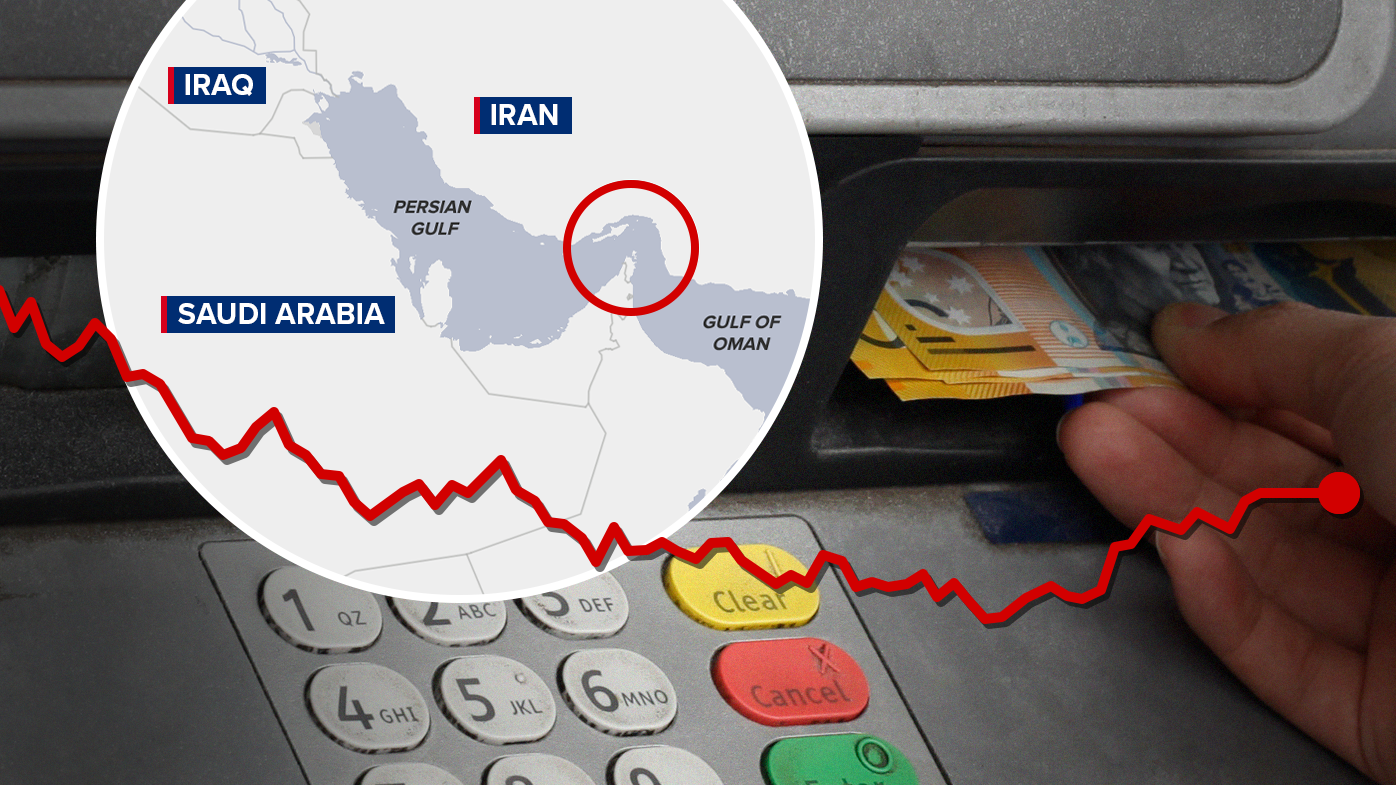
The targeted strike on Bahrain’s Sitra refinery complex introduces a specific, non-linear shock to the global energy market that transcends simple supply-side disruption. While initial market reactions often focus on crude oil futures, the primary economic distortion occurs within the refined product spreads—specifically the "crack spread," or the price differential between a barrel of crude and the petroleum products extracted from it. This event serves as a catalyst for a structural tightening in the middle distillate market, exposing the fragility of global refining capacity and the increasing effectiveness of low-cost asymmetric warfare against high-value energy infrastructure.
The Triad of Refined Product Vulnerability
To understand the macro-economic fallout of the Bahrain incident, one must deconstruct the refining sector into three operational pillars: throughput capacity, configuration complexity, and geographic logistics. Bahrain’s Sitra refinery is not merely a processing plant; it is a critical node in the East-of-Suez balance.
1. Throughput Elasticity and the Capacity Ceiling
The global refining system currently operates with minimal spare capacity. When a major facility like Sitra—which has been undergoing a multi-billion dollar modernization to increase capacity to 380,000 barrels per day—is sidelined, the "lost barrels" cannot be easily absorbed by other regional players. Most Tier-1 refineries in the Middle East are already optimized for maximum utilization to capture high margins. This creates a hard ceiling on supply elasticity.
2. Configuration Complexity and Product Slate Shifts
Refineries are categorized by their Nelson Complexity Index (NCI). Higher NCI facilities can process heavier, sourer crudes into high-value "white products" like jet fuel and ultra-low sulfur diesel (ULSD). The Sitra upgrade was specifically designed to reduce the output of low-value fuel oil in favor of these middle distillates. A strike here does not just remove "oil" from the market; it specifically removes high-specification diesel and aviation fuel from the global supply chain, forcing a sudden reliance on less efficient, lower-complexity refineries elsewhere.
3. Logistical Friction and the Freight Multiplier
The Bahrain strike forces a recalibration of maritime logistics. As localized supply vanishes, regional buyers must source replacement volumes from more distant hubs, such as the US Gulf Coast or Singapore. This extends the "ton-mile" demand for product tankers. Increased transit times effectively lock up more inventory on the water, reducing the immediate availability of spot-market volumes and adding a "freight premium" to the final landed cost of the fuel.
The Crack Spread as a Lead Indicator of Economic Stress
Financial markets often misinterpret refinery strikes as bullish for crude oil. In reality, the relationship is inverse. If a refinery is offline, its demand for crude input drops, which—ceteris paribus—should be bearish for crude prices. However, the price of the final product skyrockets because of the supply shortage.
This divergence is measured by the crack spread. The 3-2-1 crack spread formula provides a baseline for this calculation:
$$Crack\ Spread = \frac{(2 \times Price_{Gasoline} + 1 \times Price_{Diesel}) - (3 \times Price_{Crude})}{3}$$
When a refinery is struck, the numerator (product prices) increases while the denominator (crude price) stays flat or softens due to lower localized demand. For global industrial sectors, this is the most dangerous metric. High crack spreads indicate that even if crude oil is "cheap," the actual energy used to power ships, trucks, and planes remains prohibitively expensive. This "refining tax" acts as a direct drag on global GDP, manifesting as persistent transportation-led inflation.
Asymmetric Attrition: The Cost-Exchange Ratio
The Bahrain incident highlights a critical shift in the security architecture of energy assets. The cost-exchange ratio between the weapon used and the damage inflicted is heavily skewed in favor of the aggressor.
- Aggressor Cost: A long-range suicide drone or a loitering munition may cost between $20,000 and $150,000.
- Target Value: The Sitra refinery modernization project represents an investment exceeding $7 billion.
- Economic Impact: Even a non-catastrophic strike that forces a 14-day precautionary shutdown results in millions of dollars in lost revenue, plus the "risk premium" added to every barrel of oil traded globally for the following month.
This creates a "security paradox." Hardening a refinery against small-scale aerial threats requires surface-to-air missile (SAM) batteries or electronic warfare (EW) suites that cost orders of magnitude more than the threats they are meant to neutralize. Furthermore, the mere threat of a strike increases insurance premiums for tankers docking at the facility, effectively raising the cost of production without a single shot being fired.
Identifying the "Hidden" Bottleneck: Hydrocracker Integrity
The most significant technical risk in the wake of the Bahrain strike involves the hydrocracker units. These are the "engines" of a modern refinery, using high-pressure hydrogen to break long-chain hydrocarbons into diesel and jet fuel.
If a strike causes a sudden, uncontrolled shutdown (a "trip") of a hydrocracker, the thermal shock can cause metallurgical fatigue in the reactor vessels. Unlike simple piping, which can be patched in days, a damaged hydrocracker reactor can take 12 to 18 months to replace due to long-lead manufacturing requirements. If the Bahrain strike hit the high-pressure circuits of the new resid hydrocracking unit, the market is not looking at a temporary blip, but a multi-quarter structural deficit in global diesel supply.
Global Distillate Inventory Context
The timing of this disruption is particularly acute. Global middle distillate inventories (diesel and heating oil) have been hovering at or below five-year seasonal averages in major hubs like the ARA (Antwerp-Rotterdam-Amsterdam) and the US East Coast.
- Low Buffer Capacity: Low inventories mean there is no "shock absorber" in the system. Any supply disruption is immediately reflected in spot prices rather than being cushioned by stocks.
- Seasonal Heating Demand: While the northern hemisphere is exiting peak winter, the agricultural planting season is beginning. This creates a baseline "floor" for diesel demand that is inelastic.
- The Jet Fuel Recovery: As international long-haul aviation continues its post-pandemic normalization, jet fuel demand is competing directly with diesel for the same middle-of-the-barrel molecules.
Strategic Realignment of Trade Flows
In the immediate aftermath, expect a "pivot to the East." Indian and Chinese "teapot" refineries, which have been operating at high rates to process discounted Russian feedstock, are the only entities with the potential spare capacity to fill the void left by Bahrain.
This creates a geopolitical irony: Western markets, attempting to decouple from specific energy sources, become more dependent on the refining margins of Asian superpowers when Middle Eastern infrastructure is compromised. The "Sitra Gap" will likely be filled by Chinese product exports, which are currently governed by government-issued quotas. If Beijing chooses to restrict these quotas to prioritize domestic price stability, the global crack spread will expand further, creating a "perfect storm" for European and American fuel consumers.
Quantifying the Risk Premium
The "geopolitical risk premium" is often dismissed as a vague sentiment, but it can be quantified through the volatility surface of oil options. Following the Bahrain strike, the "call skew"—the cost of betting on a price spike versus a price drop—sharply increased. Traders are no longer just pricing the barrels lost today; they are pricing the probability of a systemic campaign against other regional assets, such as the Abqaiq processing plant or the East-West Pipeline in Saudi Arabia.
The critical metric to monitor is the "Time Spread." If the front-month contract for diesel is trading significantly higher than the second-month (a state known as backwardation), it signals that the physical shortage is immediate and severe. If the Bahrain shutdown extends beyond the initial assessment period, this backwardation will deepen, incentivizing traders to pull every available drop of fuel out of storage, further depleting the global safety net.
Operational Playbook for Industrial Consumers
Logistics and industrial firms must transition from "Just-in-Time" to "Just-in-Case" fuel procurement strategies. The Bahrain incident proves that refining capacity is the new global choke point, even more so than crude oil production.
The primary strategic move is the aggressive hedging of the "Distillate-to-Brent" spread. Companies should not hedge crude oil; they must hedge the specific refined product they consume. By locking in the crack spread, a firm protects itself against the specific volatility caused by refinery disruptions, which often move independently of the underlying crude price.
Additionally, diversifying supply contracts to include "delivered-at-place" (DAP) terms shifted to the supplier's risk can mitigate the sudden spikes in freight and insurance costs that follow such kinetic events in the Persian Gulf. The era of cheap, stable refining margins is over; the Sitra strike is the definitive signal of a new period of high-frequency supply shocks.