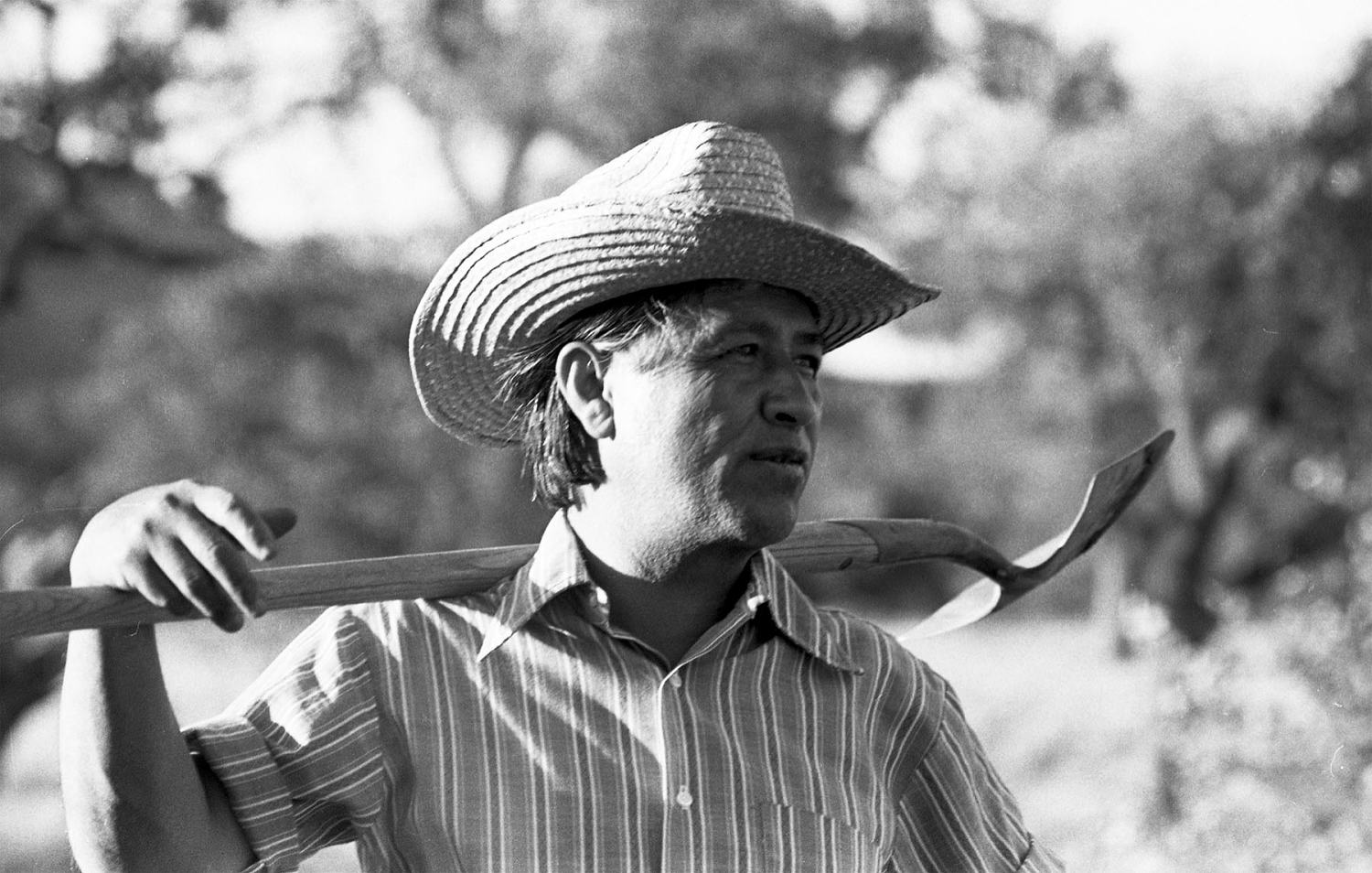
The black eagle on the red flag didn't just represent a union. For a generation of farmworkers and their children, it was a secular crucifix. To grow up in a Mexican-American household in the seventies or eighties was to live under the watchful, stoic gaze of Cesar Chavez. His face was on the posters in the community centers. His name was spoken in the same breath as the saints. He was the man who fasted until his skin clung to his ribs, all to ensure that the people who picked the nation's grapes could do so with a modicum of dignity.
But then the whispers started to travel. They didn't come from the growers or the union-busters—those enemies were expected. They came from the inside.
Imagine a small, wood-paneled room in La Paz, the United Farm Workers (UFW) headquarters in the Tehachapi Mountains. It is the late 1970s. A loyalist, someone who has dedicated their life to the "La Causa," sits across from Chavez. They expect a strategy session on labor contracts. Instead, they find themselves subjected to "The Game." It is a psychological exercise borrowed from Synanon, a notorious drug rehabilitation cult. In this room, friends are forced to scream insults at one another. They are pressured to confess "sins" against the movement. The air is thick with paranoia.
This isn't a scene from a fictional thriller. It is the documented reality that has left the Latino community grappling with a painful, modern dilemma. How do you hold onto the progress a man won while acknowledging the wreckage he left behind?
The Shadow of the Saint
We are conditioned to want our heroes pure. We want them carved out of white marble, stainless and unyielding. When Miriam Pawel published her investigative work and later her biography, The Crusades of Cesar Chavez, the marble began to crack. The records revealed a leader who, in his later years, became increasingly isolated and dictatorial. He purged the union of its most talented organizers—people like Eliseo Medina and Jerry Cohen—because he feared their influence.
Worse were the allegations of verbal and psychological abuse. The very man who championed the humanity of the worker was accused of stripping it away from his own staff. He turned the UFW into something that looked less like a labor union and more like a personality cult.
For many Latinos, this information feels like a betrayal of the blood. It’s a gut punch to the collective memory. You look at the street signs named after him, the schools, the paid holiday in California, and you feel a flickering of cognitive dissonance. If the foundation of the house was built by a man who could be cruel, does the house still stand?
The stakes are higher than mere historical accuracy. This is about the soul of a movement. If we erase Chavez, we risk erasing the history of the farmworker struggle itself. We risk forgetting the 300-mile march from Delano to Sacramento. We risk losing the memory of the mothers who stood on the picket lines while being sprayed with pesticides. But if we keep the myth intact, we lie to ourselves. We tell a story that prioritizes the "Great Man" over the thousands of anonymous hands that actually picked the fruit and held the line.
The Architecture of Paranoia
Consider the "Synanon" period of the UFW. Chavez became obsessed with Chuck Dederich, the founder of a cultish rehab program. Chavez brought Dederich’s tactics to La Paz, convinced they would "purify" the union.
In these sessions, long-term volunteers—people who had worked for five dollars a week plus room and board—were humiliated. They were told they were "pro-grower" or "counter-revolutionary" if they questioned Chavez’s shifting whims. It was a scorched-earth policy within his own ranks.
This behavior had a tangible cost. The UFW’s membership plummeted. Contracts went unsigned. The focus shifted from the fields to the internal drama of the mountain compound. While Chavez was fasting for the cameras, his internal purges were hollowing out the organization's ability to actually protect workers. The movement stalled because the leader could no longer distinguish between a critic and an enemy.
This is the messy, jagged truth. It’s uncomfortable. It doesn't fit on a postage stamp.
Moving Beyond the Pedestal
The current movement to "disavow" Chavez isn't necessarily about tearing down every statue. It’s about a more sophisticated form of memory. It’s about moving the camera lens away from the lone man at the podium and widening the shot.
When we widen the shot, we see Dolores Huerta. We see Larry Itliong and the Filipino workers who actually started the Delano grape strike before the UFW even existed. We see the nameless thousands who organized their own neighborhoods.
There is a specific kind of grief in realizing your hero was flawed. It feels like losing the person twice—once to history, and once to the truth. But there is also a liberation in it. By acknowledging the abuse and the cult-like atmosphere of the late-era UFW, we stop expecting our leaders to be gods. We start building movements that are robust enough to survive the failures of a single person.
The invisible stakes here involve the next generation of activists. If we teach them that Chavez was a perfect saint, they will feel like failures the moment they make a human mistake. If we teach them the truth—that he was a brilliant, courageous, deeply flawed, and eventually paranoid man—we give them a blueprint for reality. We show them that you can change the world and still lose your way.
The black eagle still flies. The red flag still represents a dream of equity. But the man who held the pole is finally being seen in the light, where the shadows are longest and the truth is most visible.
We don't have to choose between the history and the heartbreak. We live in the space between them. We keep the lessons of the strike, the power of the boycott, and the necessity of the union. But we leave the "Game" and the ego behind in the dust of the Central Valley.
A father sits with his daughter under a mural in East Los Angeles. He points to the face of the man in the work shirt. He doesn't tell her the man was a god. He tells her the man was a worker who forgot, for a while, that he was no better than the people he led. He tells her that the movement belongs to her, not to the face on the wall.
The daughter looks at the mural, then at her own hands, and realizes she doesn't need a saint to lead her. She only needs the person standing next to her.
Would you like me to research the specific legislative impacts of the UFW's decline during the late 70s to provide more context on the cost of these internal conflicts?