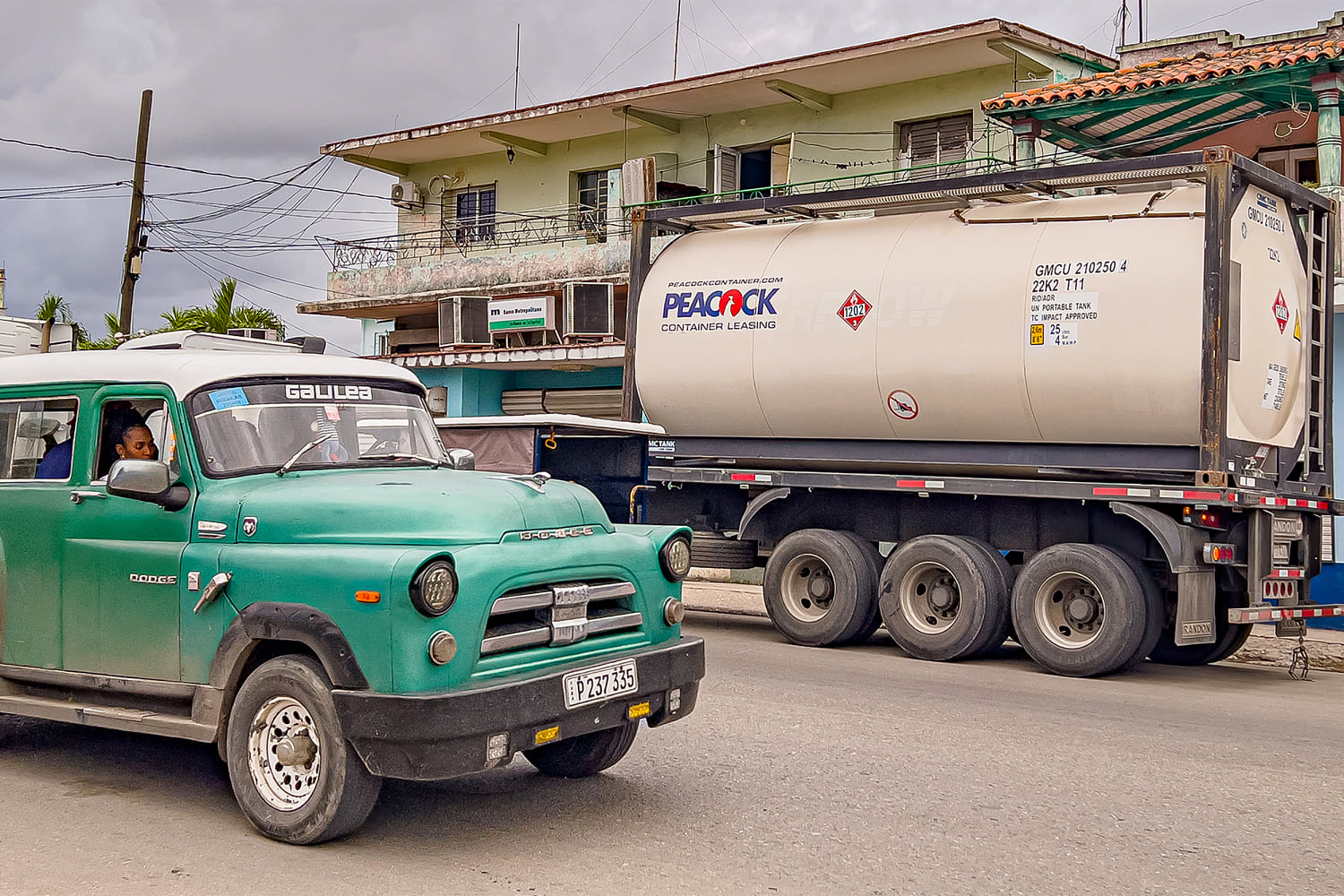
Cuba is currently enduring a systemic collapse disguised as a temporary shortage. While headlines focus on the visual desperation of kilometer-long queues and drivers sleeping in Russian-made Ladas to secure five gallons of gasoline, the reality is far more clinical. The Cuban energy grid isn't just low on fuel; it is suffering from a terminal lack of liquidity and a broken geopolitical alliance. The lines are not just a symptom of scarcity. They are the physical manifestation of a state that has run out of both credit and friends.
The Myth of the Simple Shortage
Standard reporting often blames the United States embargo or recent logistics hiccups for the empty tanks in Havana. This perspective is incomplete. The current crisis is the result of a fundamental shift in how the Cuban government manages its "energy bridge" with international partners. For decades, the island relied on a lopsided trade with Venezuela—oil in exchange for medical and security services. That flow has slowed to a trickle as Caracas struggles with its own infrastructure decay and debt obligations.
When Venezuela failed to meet the quota, Cuba turned to the open market. But the open market requires hard currency, something the Cuban Central Bank lacks. When a tanker arrives at a Cuban port today, it often sits offshore for days. The captain isn't waiting for a berth; the captain is waiting for the wire transfer to clear. If the money isn't there, the ship sails away. This "hand-to-mouth" existence means that a single delayed payment results in an immediate, nationwide dry spell.
The Five Gallon Illusion
The government’s decision to cap sales at small increments like five or eight gallons is a psychological tactic as much as a conservation measure. By forcing the population into a constant state of "the hunt," the state effectively keeps people occupied. If a citizen spends 18 hours in a line to get enough fuel for two days of work, they have no time for political organization or dissent.
However, this rationing has backfired by creating a massive shadow market. In the dark corners of the Vedado neighborhood, fuel is traded like gold. Private taxi drivers, the "boteros," have shifted their entire business model. They no longer drive for fares; they wait in line to buy subsidized fuel and then flip that fuel to private generators or high-end tourism transport at a 400 percent markup. The official economy is being cannibalized by its own survival mechanisms.
The Technological Decay of the Cupet System
The infrastructure itself is rotting. Even if a hundred tankers arrived tomorrow, the island’s ability to refine and distribute that fuel is compromised. The Cupet (Unión Cuba-Petróleo) refineries are aging relics of Soviet engineering, designed for a different era and a different grade of crude.
Maintaining these facilities requires specialized parts that are increasingly difficult to source. Because the state has prioritized short-term stability over long-term capital expenditure, the refineries operate at a fraction of their nameplate capacity. We are seeing a total breakdown of the "just-in-time" delivery model. The tankers unload, the fuel goes into trucks that are themselves breaking down, and it arrives at stations where the pumps frequently malfunction due to erratic power supply. It is a cascading failure where every gear in the machine is stripped.
The Geopolitical Pivot That Failed
Havana bet heavily on Russia and Mexico to fill the void left by Venezuela. Last year, shipments from Mexico's Pemex provided a brief reprieve, but those were political gifts, not sustainable business transactions. Mexico has its own fiscal pressures and a national oil company drowning in debt. They cannot subsidize the Cuban lifestyle indefinitely.
Russia, meanwhile, is a fickle partner. While Moscow talks a big game about "strategic cooperation," their oil is redirected toward markets that can pay in Yuan or Rubles. Cuba offers neither. The Kremlin is happy to use Cuba as a thorn in Washington's side, but they aren't interested in a repeat of the Soviet-era subsidies that nearly bankrupted the USSR. The modern Russian oligarch wants a return on investment.
The Impact on the New Private Sector
The most tragic irony of the fuel crisis is its effect on the "pymes"—the newly legalized small and medium-sized private enterprises. These businesses were supposed to be the engine of Cuba’s economic "update." Instead, they are being strangled in the crib. A bakery cannot run its ovens on hope. A delivery service cannot operate without diesel.
The state is essentially competing with its own citizens for the same limited pool of energy. In this fight, the state wins by default, diverting fuel to the military and "essential services," while the private sector—the only part of the economy showing signs of life—is left to rot in the sun. This creates a feedback loop. No fuel means no production. No production means no exports. No exports means no hard currency. No hard currency means no fuel.
The Math of Desperation
To understand the scale of the failure, one must look at the price disparity. At the official pump, if you can find it, gas is relatively cheap in terms of the local peso. But in the real world, the price is dictated by the informal exchange rate of the US dollar or the Euro.
$$Price_{Real} = \frac{Price_{Official}}{Efficiency_{System}} + OpportunityCost_{Labor}$$
The "Opportunity Cost" in the equation above is what kills the economy. When hundreds of thousands of able-bodied workers are sitting idle in gas lines, the nation's GDP isn't just stagnant; it is actively shrinking. Every hour spent in a queue is an hour not spent manufacturing, teaching, or innovating. Cuba is effectively trading its human capital for a few liters of low-grade gasoline.
Why the Tourism Pivot is Not Enough
For years, the plan was simple: use tourism to generate the cash needed to buy fuel. But the tourism industry itself requires massive amounts of energy. Air conditioning for hotels, tour buses for excursions, and electricity for the airports all eat into the very reserves the tourists are supposed to help replenish.
We are seeing "energy cannibalism." The government is forced to cut power to residential neighborhoods (the dreaded "apagones") to keep the lights on in the five-star hotels of Varadero. This creates a visible, visceral class divide. The residents watch from their darkened balconies as the tourist resorts glitter in the distance. This is a dangerous social cocktail that the Cuban leadership has, until now, managed to suppress through a mix of nostalgia and fear. But nostalgia doesn't power a refrigerator.
The Electricity Connection
Gasoline and diesel are only half the story. The island’s electrical grid is heavily dependent on "distributed generation"—essentially thousands of small diesel generators. When the fuel trucks don't arrive, the lights go out.
The reliance on these generators was a strategic choice made by Fidel Castro during the "Energy Revolution" of the early 2000s. It was meant to make the grid more resilient to hurricanes. Instead, it made the grid hyper-dependent on a constant, rolling supply of fuel. If the logistics chain breaks for even 48 hours, the entire country plunges into darkness. The current situation isn't a series of isolated blackouts; it is one long, flickering collapse.
No Easy Exit
There is no "fix" that doesn't involve a radical restructuring of the Cuban economy. The state cannot continue to subsidize fuel it cannot afford to buy. But removing those subsidies would lead to hyperinflation and potential social unrest that would make the July 2021 protests look like a rehearsal.
The government is trapped. They are attempting to move toward a dollarized fuel market, where certain stations only accept foreign currency cards. This is a desperate attempt to capture hard currency directly from the diaspora and tourists. However, it only deepens the divide between those with "fe" (faith, but also the Spanish acronym for "family abroad") and those who must survive on a state salary.
The lines will continue because the lines are the only thing the system has left to offer. It is a slow-motion breakdown of a 20th-century socialist model colliding with a 21st-century global energy market that demands payment upfront. The tankers will keep loitering off the coast, and the people will keep sleeping in their cars, waiting for a wire transfer that may or may not come.
Go to the port of Mariel and watch the horizon. Count the days the ships sit idle. That is the only real-time economic indicator that matters in Cuba today.