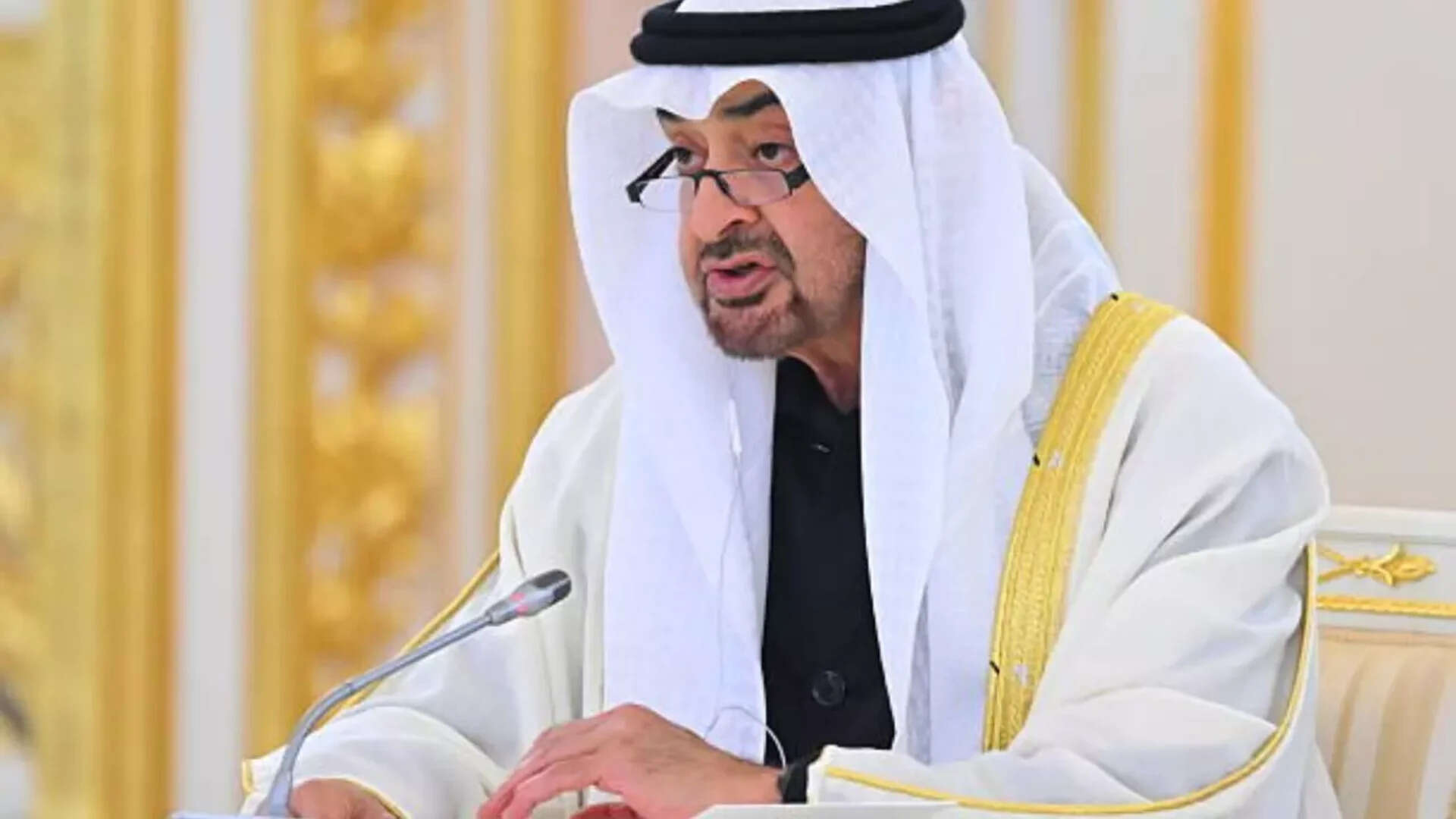
The sight of Sheikh Mohamed bin Zayed Al Nahyan, President of the United Arab Emirates, sitting among shoppers at the Dubai Mall for a public iftar was not a coincidence. It was a masterclass in soft power. While regional tensions simmer and the geopolitical map of the Middle East shifts under the weight of conflict, the UAE leader chose the most visible commercial hub on the planet to break his fast. This move was designed to broadcast a message of stability, accessibility, and normalcy to a global audience that is currently looking at the region with a mix of anxiety and skepticism.
In a part of the world where leadership is often shielded by layers of security and palace walls, a sitting president dining in a food court is a jarring image. It breaks the traditional barrier between the ruler and the ruled. However, to understand the gravity of this appearance, one must look past the iPhone photos and the viral social media clips. This was a strategic deployment of "the common touch" at a time when the UAE is positioning itself as the primary safe haven for global capital and international residents in an increasingly volatile neighborhood.
The Strategy Behind the Scrutiny
Security for a head of state is never truly relaxed. For every civilian who managed to snap a blurry photo of the President, there were dozens of specialized security personnel blending into the crowd. The "surprise" nature of these visits is a hallmark of the MBZ era. By appearing in public spaces—cafes, malls, and walking paths—the leadership reinforces a narrative that the UAE is immune to the chaos affecting nearby nations. It is a psychological play. If the leader of the country feels safe enough to eat a meal in a public mall, the logic goes, then the foreign investor should feel safe keeping their money in Dubai’s banks.
This accessibility serves a dual purpose. Domestically, it strengthens the social contract. The UAE operates on a model of tribal capitalism where the legitimacy of the state is tied to the approachability and perceived benevolence of the ruling families. Externally, it acts as a high-definition advertisement for the Emirates' unique brand of security. In a week where headlines were dominated by regional escalations, the counter-narrative from Abu Dhabi was a quiet dinner in a bustling shopping center.
Commercial Centers as Political Stages
Dubai Mall is not just a place to buy luxury goods. It is a sovereign asset and a barometer for the health of the national economy. Choosing this specific location for a public iftar emphasizes the intersection of state power and commercial interests. The mall serves as a microcosm of the UAE’s demographic experiment—a place where hundreds of nationalities mix under the watchful eye of a highly efficient state apparatus.
The Message to the Global North
For Western observers and institutional investors, the imagery is intended to contrast sharply with the traditional tropes of Middle Eastern governance. It suggests a modern, secularized form of leadership that prioritizes economic continuity over ideological fervor. The President’s presence in a mall, surrounded by the brands of the S&P 500, anchors the UAE firmly in the global economic grid. It says that despite the noise from neighboring borders, the business of the UAE remains the business of the world.
The Message to the Region
To the surrounding region, the optics are more pointed. At a time when several neighboring states are grappling with internal dissent or economic stagnation, the UAE is showcasing a model of "authoritarian stability" that appears remarkably resilient. The President is not hiding. He is not in a bunker. He is in the middle of a crowd. This visibility is a projection of strength that doesn't require a military parade to make its point.
The Friction of Reality
Despite the polished surface of the event, the UAE faces significant challenges that a public dinner cannot fully mask. The country is navigating a complex diplomatic tightrope, maintaining ties with various global powers while trying to insulate its domestic economy from regional spillover. The "stable" image is a product of intense behind-the-scenes work, ranging from advanced surveillance technologies to a hyper-active foreign policy that often puts the UAE at odds with other regional heavyweights.
There is also the matter of the "Gilded Cage" perception. While the public sees a leader among the people, the reality is that the UAE’s social and legal structures remain strictly controlled. The openness seen in the Dubai Mall food court does not necessarily translate to an openness in political discourse. The state manages the narrative with the same precision it uses to manage the President’s security detail.
Economic Resilience Through Symbolism
The timing of the appearance coincides with a period of record-breaking growth for the UAE's non-oil sector. The country is aggressively moving toward a post-hydrocarbon future, and that transition requires an endless influx of foreign talent and "patient capital." Public displays of normalcy are essential for the "Golden Visa" economy. If the UAE can convince the world’s elite that it is the most stable and predictable place to live between London and Singapore, it wins.
The President’s iftar is a brick in that wall of perception. It is a signal to the hedge fund managers in DIFC and the tech entrepreneurs in Abu Dhabi that the captain of the ship is on deck and unbothered. The "wow factor" experienced by the tourists in the mall that evening was the intended effect, but the real audience was sitting in boardrooms thousands of miles away.
The Long Game of Soft Power
Soft power is often defined as the ability to get what you want through attraction rather than coercion. In the Middle East, the UAE has become the undisputed master of this craft. By leaning into the imagery of a modern, accessible, and peaceful state, the leadership is attempting to decouple the UAE’s brand from the broader "instability" tag often applied to the region.
This isn't just about a meal. It's about the construction of a national identity that is synonymous with the future. While other nations are defined by their past or their conflicts, the UAE wants to be defined by its lifestyle and its infrastructure. The President eating at the mall is a visual shorthand for that ambition. It tells a story of a country that has moved past the traditional struggles of its neighbors and entered a different league of global players.
The Cost of the Narrative
Maintaining this image of perfect stability is an expensive and exhaustive endeavor. It requires a massive investment in public relations, a sophisticated intelligence network, and a constant stream of "mega-projects" to keep the world’s attention. The risk, of course, is that a single security lapse or a major regional miscalculation could shatter the glass. This is why the President’s public appearances are so carefully curated—they are high-stakes gambles on the strength of the UAE’s internal security.
The mall iftar is a reminder that in the modern world, politics is theater. The best actors are the ones who make their performance look like a spontaneous moment of human connection. As the UAE continues to navigate a world of shifting alliances and economic uncertainty, expect to see more of these "unscripted" moments. They are the frontline of a sophisticated campaign to ensure that, no matter what happens elsewhere, the mall stays open and the investors stay put.
Assessing the Outcome
The immediate result of the Dubai Mall visit was a surge in positive sentiment across digital platforms. It provided a human face to a government that is often seen as a collection of logos and skyscrapers. For the average resident, it reinforced a sense of belonging and safety. For the observer, it was a demonstration of a leadership style that is confident enough to dispense with the usual formalities of power.
The real test, however, is not the sentiment of the moment but the durability of the perception. As the region enters a new phase of uncertainty, the UAE leadership is betting that the "business as usual" approach will be their greatest asset. They aren't just running a country; they are managing a brand that depends entirely on the idea that the UAE is the exception to the regional rule.
Keep an eye on the frequency of these public appearances over the next twelve months. If the President continues to step into the public eye in high-traffic commercial zones, it will signal a sustained effort to double down on the UAE’s status as a global sanctuary. It is a strategy of visibility in an era where most leaders are looking for a place to hide.
Watch the flow of capital into the Dubai real estate market and the Abu Dhabi stock exchange in the weeks following such high-profile events. The correlation between "presidential accessibility" and "investor confidence" is a metric the UAE government monitors with clinical precision. It is the most effective way to measure the ROI on a simple meal shared in a public space.