March in Southern California is traditionally a month of transition, a period where the marine layer fights the encroaching desert air for dominance. When the thermometer hits 85 degrees in Pasadena or 90 in Riverside during the third week of March, the local news cycle shifts into a predictable, frantic gear. "Record-breaking heat," they scream. "The worst March heat wave in history," they claim.
They are lying to you. Or, more accurately, they are coddling you.
What we are witnessing in Southern California right now isn't a meteorological anomaly. It is the restoration of the mean. If you find yourself "suffering" through a 92-degree afternoon in the Inland Empire, you aren't a victim of climate catastrophe; you are a victim of short-term memory and a complete lack of thermal literacy. We have become so accustomed to the artificial, refrigerated bubbles of our offices and EVs that we have forgotten how a Mediterranean climate actually functions.
The Myth of the Statistical Record
Most people consume weather data like they consume social media: without context and with a heavy bias toward the immediate present. When a news anchor tells you this is the "hottest March 20th since 1958," they are using a tiny window of recorded history to manufacture a sense of crisis.
Meteorological record-keeping in Los Angeles only goes back to 1877. In geological terms, that is a blink. It is a rounding error. To suggest that a three-day spike in temperature is "unprecedented" based on a 150-year dataset is statistically illiterate. We are living on the edge of a desert. Deserts get hot. Sometimes, they get hot before the calendar says they should.
The real story isn't that the air is hot; it’s that our infrastructure is built for a fantasy version of California that never truly existed—a version where every day is a breezy 72 degrees. We built sprawling suburbs with black asphalt roofs and concrete driveways that act as thermal batteries, and then we act shocked when the neighborhood feels like an oven. That isn't a heat wave. That is poor urban planning meeting a standard high-pressure system.
The Santa Ana Scapegoat
The "competitor" narrative blames the current conditions on a "stubborn ridge of high pressure" and the offshore flow. They treat the Santa Ana winds like a villain in a comic book. This is a fundamental misunderstanding of the California ecosystem.
The Santa Anas are the lungs of the region. They clear out the stagnant, smog-filled air of the basin and replace it with crisp, dry air from the Great Basin. Yes, the humidity drops to 10%. Yes, the fire risk increases. But the dry heat of a March Santa Ana is infinitely more manageable than the humid, stagnant "monsoonal" moisture we see in August.
If you are complaining about 90 degrees and 10% humidity, you have lost the plot. That is "convertible weather." That is the reason people pay a "sunshine tax" to live here. To label this as "the worst heat wave" is an insult to anyone who has spent a week in July in Phoenix or a humid afternoon in Houston. We are experiencing a period of high atmospheric clarity and thermal intensity. It is a feature of the geography, not a bug in the climate.
Stop Hydrating and Start Adapting
The modern advice for "surviving" these periods is insultingly basic: "Drink plenty of water and stay in the shade."
If your plan for a 15-degree temperature swing is to clutch a gallon of water and hide in a dark room, you have failed as a biological entity. Human beings are the most adaptable thermal regulators on the planet. We evolved on the African savannah, chasing prey for hours in temperatures that would make a March day in Malibu look like a trip to the meat locker.
The reason you feel "exhausted" by a 90-degree day in March is that your body hasn't been allowed to acclimate. You spend 95% of your life in a climate-controlled environment set to exactly 69 degrees. Your sweat glands are effectively vestigial organs. When the temperature spikes, your system panics because it has forgotten how to dump heat.
Instead of cranking the AC to 60 and hiding, you should be doing the opposite. Open the windows. Go for a walk at 2:00 PM. Force your body to remember how to function in the heat. This isn't just "tough guy" rhetoric; it's a physiological reality known as heat acclimatization. It takes about 7 to 14 days for the body to increase plasma volume and sweat rate efficiency. By "protecting" yourself from the heat, you are ensuring that the next spike feels even worse.
The Economy of Outrage
Why does the media insist on calling this a "deadly heat wave"? Because fear sells air conditioning and clicks.
A headline that says "Typical High Pressure System Brings Warm, Dry Air to Southern California" doesn't get shared. A headline that uses the word "Worst" or "Unprecedented" creates a sense of urgency that justifies 24-hour coverage. This is the "weatherization" of news. We have turned the natural ebb and flow of the seasons into a series of catastrophic events.
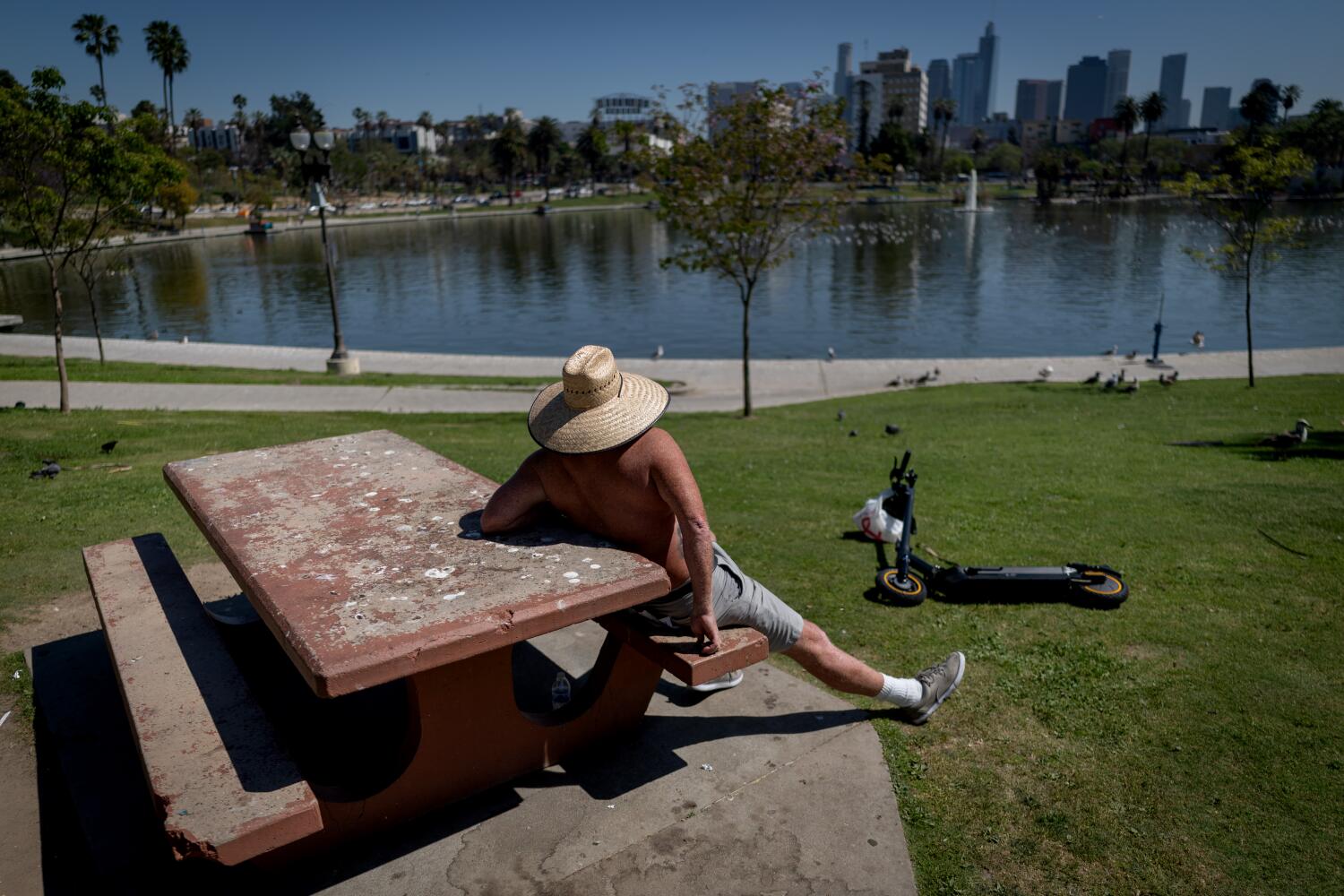
I’ve spent twenty years watching local news stations send reporters to stand in front of digital bank thermometers in Woodland Hills. They look for the oldest person they can find at a park and ask them how they’re "coping." It’s a performance. It’s theater designed to make you feel like the world is ending so you’ll stay tuned for the 11 o’clock broadcast.
The Real Danger Is Not the Heat
If you want something to actually worry about, don't look at the thermometer. Look at the fuel load.
The real "nuance" that the mainstream articles miss is that a March heat wave isn't a threat because of the temperature; it's a threat because of the timing. Southern California just came off a series of wet winters. The hills are green. The "superbloom" is in full effect. Every environmentalist is posting photos of poppies on Instagram.
Those poppies are future charcoal.
A heat wave in March accelerates the "curing" of the fine fuels. It bakes the moisture out of the grasses before they have a chance to complete their life cycle. By the time we hit June, those beautiful green hills will be a tinderbox. The "worst" part of this heat isn't that you might sweat through your shirt; it's that we are pre-heating the state for a record-breaking fire season.
But the "competitor" won't tell you that. They’ll just tell you to "check on your neighbors" and "keep your pets indoors." They focus on the immediate, minor discomfort rather than the long-term systemic risk.
Rethink Your Relationship with the Sun
We treat the sun like an enemy to be avoided. We slather ourselves in chemicals and hide behind triple-pane glass. We have become a state of indoor-dwelling cave-dwellers who happen to live in the most beautiful climate on Earth.
This "heat wave" is an invitation. It is an invitation to remember that we live in a semi-arid zone. It is a reminder that the desert is always trying to reclaim the coast. Instead of mourning the end of "winter"—which, in Southern California, is just a slightly damp autumn—embrace the intensity.
Stop checking the weather app every fifteen minutes. Stop contributing to the collective hysteria of the "heat wave" narrative. The air is warm, the sky is clear, and the wind is blowing. If that is your definition of a crisis, you aren't ready for what a real California summer looks like.
Get out of the air conditioning. Turn off the news. Go sweat.