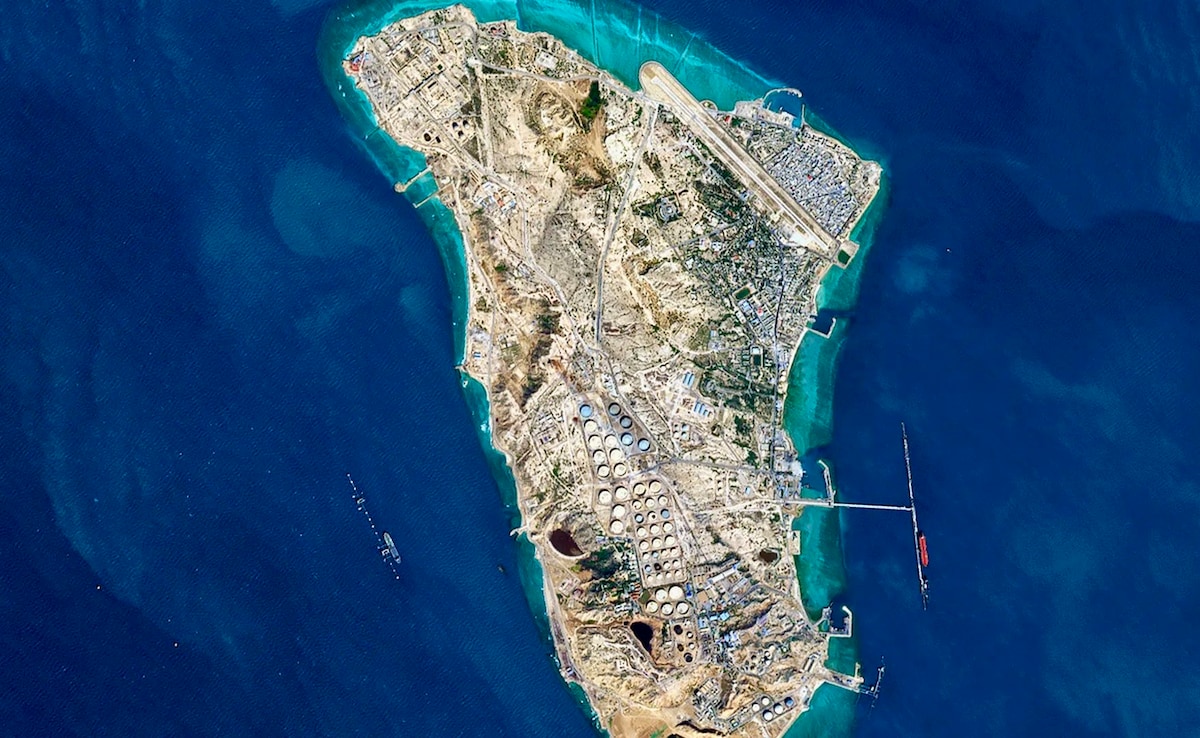
The White House loves a good map with a red "X" on it. It’s clean. It’s cinematic. It suggests that complex geopolitical problems can be solved with a few well-placed munitions. The current chatter surrounding Kharg Island—Iran's primary oil export terminal—is the latest example of this shallow strategic thinking. The "lazy consensus" in Washington suggests that "taking out" Kharg would decapitate the Iranian economy and force a regime collapse.
It wouldn't.
It would actually trigger a global systemic failure that the West is fundamentally unprepared to manage. We aren’t talking about a temporary spike in gas prices. We are talking about the end of the petrodollar’s remaining leverage and the forced acceleration of a China-led energy bloc. If you think $5 a gallon is a crisis, wait until you see what happens when you remove 90% of Iran’s export capacity from a delicately balanced global market.
The Myth of the Surgical Strike
Military planners talk about "surgical strikes" as if they are removing a tumor. In reality, hitting Kharg Island is more like performing a heart transplant with a chainsaw. Kharg handles roughly 90% of Iran’s crude exports. The assumption is that by removing this revenue, the Iranian government wilts.
This ignores the last forty years of history. Pressure doesn't cause this regime to wilt; it causes it to radicalize. When you eliminate the primary legitimate avenue for a nation's wealth, you don't stop the flow of money. You simply move it into the shadows. I have watched markets react to sanctions for decades; the result is always the same. Black markets harden, middle-men get rich, and the target nation becomes more insulated from Western financial pressure, not less.
The $200 Barrel Reality Check
Let’s look at the math that the "take out" enthusiasts ignore. Global oil spare capacity is a thin margin. If Kharg goes offline, you aren't just losing Iranian barrels. You are inviting an immediate, symmetrical response against the infrastructure of the Abqaiq plant in Saudi Arabia or the desalination plants in the UAE.
Imagine a scenario where the Strait of Hormuz becomes a graveyard of tankers.
The moment a missile hits Kharg, insurance premiums for every vessel in the Persian Gulf go vertical. Shipping companies will refuse to enter the region. You aren't just losing 1.5 million barrels per day (bpd) from Iran; you are risking the 20 million bpd that flows through that narrow chink in the world’s armor.
China Won't Just Sit There
The biggest flaw in the "Take Out Kharg" argument is the "Washington Vacuum" fallacy—the idea that the US acts and the rest of the world merely reacts.
China is the primary customer for Iranian crude. They buy it in Yuan. They buy it through "teapot" refineries that operate outside the reach of the US Treasury. If the US destroys the source of China's discounted energy, do you think Beijing writes a stern letter? They don't. They move to secure their energy interests by providing Iran with the very kinetic defense systems—or even direct naval "escorts"—that make a US strike far more costly than a simple drone run.
By attacking Kharg, the US effectively declares economic war on China’s energy security. This isn't chess; it’s a bar fight where you just hit the biggest guy in the room’s best friend.
The Feedback Loop of Failure
- The Strike: Kharg is neutralized.
- The Reaction: Brent crude hits $150 within 48 hours.
- The Escalation: Iran uses its "mosquito fleet" and mines to shut the Strait.
- The Economic Blowback: Global manufacturing costs skyrocket, triggering a debt crisis in emerging markets and a recession in the West.
- The Strategic Result: Iran remains a power, but now it has nothing left to lose.
The Sanctions Trap
We’ve been told for years that "maximum pressure" works. If it worked, we wouldn't be talking about Kharg Island today. The reality is that the Iranian economy has already "death-proofed" itself against total collapse. They have developed a sophisticated "resistance economy" that thrives on the very chaos the West tries to use as a deterrent.
Destroying Kharg Island would be the ultimate admission that sanctions have failed. It is the move of a player who has run out of cards and decides to flip the table. Flipping the table doesn't make you the winner; it just means everyone is eating off the floor.
The Hard Truth About Deterrence
True power isn't the ability to destroy an island. It’s the ability to make the other side believe you don't have to. The moment you drop the bombs, your leverage vanishes. You have spent your "Kharg card."
If the White House actually follows through on this rhetoric, they aren't "taking out" a target. They are taking out the last pillar of stability in the global energy market. They are trading a short-term political win for a decade-long economic depression.
Stop looking at the map. Start looking at the ledger.
The cost of "taking out" Kharg Island is a price the American consumer, the global economy, and the future of Western influence cannot afford to pay. If you want to neutralize Iran, you don't do it with Tomahawks. You do it by making their oil irrelevant through domestic energy dominance and technological shifts. Blowing up a terminal is a 20th-century solution to a 21st-century problem.
It’s lazy. It’s dangerous. And it’s exactly what the "experts" want because they don't have to live with the consequences of the fire they're trying to light.