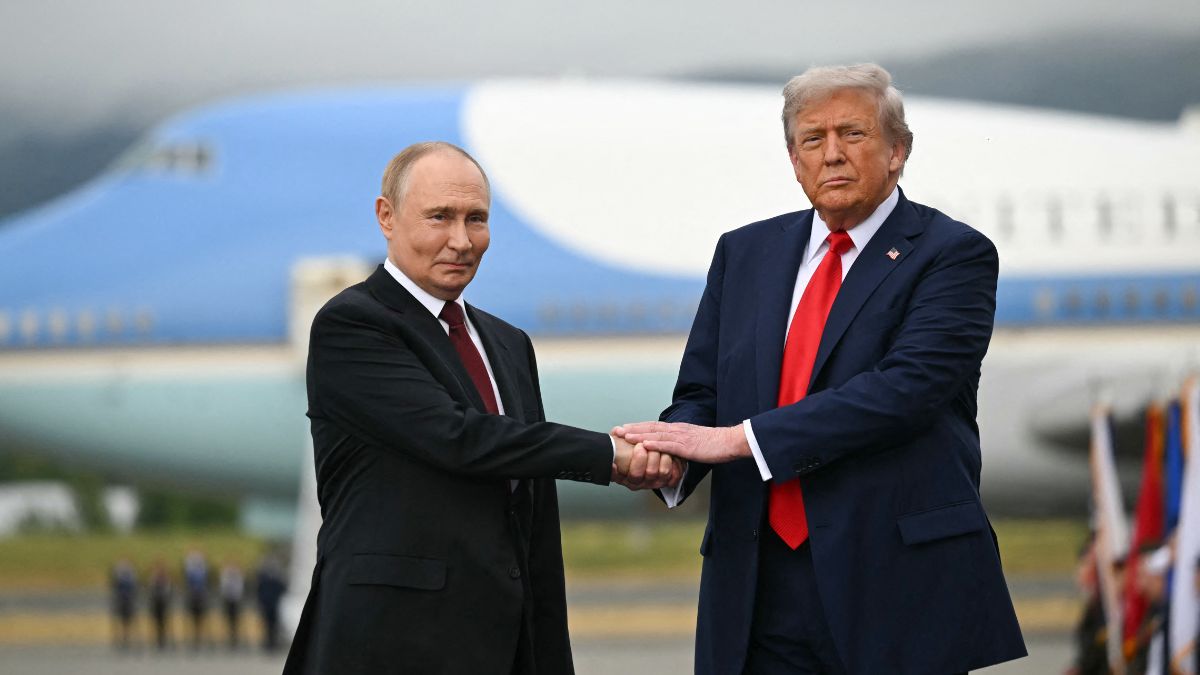
The assertion that the Russo-Ukrainian War can be resolved within a 24-hour window assumes a linear negotiation model where the primary bottleneck is a lack of high-level willpower. This perspective overlooks the structural entrenchment of "maximalist objectives"—strategic goals that require the total political or territorial concession of the adversary. For a deal to materialize in such a compressed timeframe, the incentives for cessation must outweigh the existential costs of compromise for both Kyiv and Moscow. Currently, the mathematical reality of the conflict suggests a "War of Attrition" equilibrium where neither side perceives the cost of continued fighting as higher than the cost of the proposed peace terms.
The Asymmetry of Territorial Sovereignty vs. Strategic Depth
The conflict is currently defined by a fundamental mismatch in non-negotiable assets. Ukraine’s objective function is centered on Territorial Integrity, specifically the 1991 borders. This is not merely a sentimental goal; it is a prerequisite for long-term economic viability and internal political stability. Conversely, the Russian Federation’s objective function is centered on Strategic Depth and Neutralization. The Kremlin views a sovereign, Western-aligned Ukraine as a permanent threat to its southern flank.
When two parties possess mutually exclusive "Zero-Sum" requirements, the "24-hour" solution requires one of two mechanisms:
- Total Coercion: One party is forced to abandon its core objective through the immediate threat of systemic collapse.
- External Guarantee Displacement: A third party (the United States) replaces the security value of the lost objectives with a superior alternative.
Neither mechanism is currently operational. The Russian economy has pivoted to a "War Footing" model, insulating it from immediate domestic collapse, while Ukrainian domestic resolve remains tied to the recovery of occupied lands.
The Triad of Deadlock: Sovereignty, Security, and Reparations
To understand why a rapid diplomatic "breakthrough" remains elusive, we must categorize the points of contention into three distinct pillars. Each pillar represents a layer of complexity that resists simplified mediation.
1. The Legality of Annexation
Moscow has formally integrated five Ukrainian regions (including Crimea) into its constitution. Reversing this requires a constitutional amendment—a political impossibility for the current Russian administration. For Ukraine, recognizing these annexations would trigger a constitutional crisis and potentially a civil insurgency. This creates a Legal Immutability Trap. Any 24-hour deal would likely require a "frozen conflict" status, which both sides have historically used to re-arm rather than to stabilize.
2. The NATO Security Paradox
Ukraine views NATO membership as the only credible deterrent against a third invasion. Russia views Ukraine's exclusion from NATO as its primary "Red Line." If the U.S. attempts to broker a deal by "taking NATO off the table," it removes Ukraine’s primary security incentive. Without a replacement security guarantee that is equally "hard" (e.g., a bilateral defense treaty with the U.S.), Kyiv has no rational reason to stop fighting, as a ceasefire would merely provide Russia with a logistical reset.
3. The Economic Accountability Gap
The cost of Ukrainian reconstruction is estimated in the hundreds of billions of dollars. Kyiv demands Russian assets (currently frozen in the West) be used for this purpose. Moscow views this as "Theft." A rapid peace deal would have to solve the funding of a broken state without the use of seized assets, or risk the total economic collapse of the "peaceful" Ukraine.
The Mechanics of Putin’s Maximalism
The term "maximalist" is often used colloquially to describe stubbornness, but in a geopolitical context, it refers to Total War Objectives. Putin’s stated goals—"denazification" and "demilitarization"—are euphemisms for the installation of a client regime in Kyiv.
The Russian strategy operates on a Temporal Advantage Hypothesis. The Kremlin believes that Western democratic cycles will eventually lead to "Ukraine Fatigue," resulting in a degradation of military aid. If Russia believes that waiting another 12 to 18 months will lead to a total Ukrainian collapse, they have zero incentive to accept a 24-hour compromise that leaves the current Ukrainian government in power.
This creates a Negotiation Floor problem. If the mediator (the U.S.) cannot lower Russia's "Floor" (the minimum they will accept) or raise Ukraine's "Ceiling" (the maximum they will give), the 24-hour window is a mathematical impossibility.
The Cost Function of U.S. Leverage
The U.S. possesses two primary levers to force a 24-hour resolution: the "Carrot" (sanctions relief and normalized relations) and the "Stick" (unprecedented escalatory military aid or the total withdrawal of support).
However, these levers are hindered by the Credibility of Commitment.
- If the U.S. threatens to cut off Ukraine, it risks the collapse of the European security architecture and the signaling of weakness to other global adversaries.
- If the U.S. offers Russia sanctions relief, it must coordinate with the G7 and the EU, many of whom view Russia as a permanent existential threat that cannot be "bought off."
The complexity of these multilateral interests means the U.S. President does not operate in a vacuum. A 24-hour deal requires the unilateral compliance of the EU, NATO, and the Ukrainian parliament—none of whom are bound by U.S. executive orders.
Strategic Divergence in the Black Sea and Donbas
A granular look at the map reveals the tactical friction points. Russia has established a "Land Bridge" to Crimea. Relinquishing this bridge severs Russia's logistical spine in the south. For Ukraine, the loss of access to the Sea of Azov and the degradation of its Black Sea ports represents a permanent 10% to 15% reduction in GDP potential.
No amount of diplomatic pressure can erase the geographical reality that a Ukraine without its industrial heartland (the Donbas) and its maritime access is a "Vassal State" in the making. The 24-hour peace thesis assumes that these economic and geographical realities can be papered over with a signed document, but history shows that Economic Inviability is the primary driver of renewed conflict.
The Failure of the "Minsk" Precedent
Any attempt at a rapid deal will inevitably look like "Minsk III." The previous Minsk agreements failed because they relied on "Constructive Ambiguity"—language that allowed both sides to interpret the terms differently.
- Russia interpreted "Special Status" for the Donbas as a Russian veto over Ukrainian foreign policy.
- Ukraine interpreted it as limited local governance under Kyiv’s control.
A 24-hour deal, by its very nature, relies on ambiguity to reach a quick signature. However, ambiguity in high-stakes geopolitics is a precursor to escalation. To achieve a durable peace, the definitions of "border," "sovereignty," and "neutrality" must be hyper-specific. This level of specificity cannot be drafted, vetted, and agreed upon in a single day.
The Forecast for Mediary Intervention
The realistic path to a cessation of hostilities is not a single 24-hour event, but a multi-stage Escalation-to-De-escalation cycle. The U.S. would first need to convince Moscow that the "Temporal Advantage Hypothesis" is false—that aid will not only continue but will shift from "Defensive" to "Decisive." Simultaneously, the U.S. would need to provide Kyiv with a security framework that bypasses the NATO "Open Door" policy with immediate, tangible hardware and intelligence guarantees.
The friction remains the Vladimir Putin Variable. As long as the Russian leadership views the elimination of a sovereign Ukraine as a requirement for "Great Power" status, no amount of Western deal-making will suffice. The conflict will only end when the Russian military reaches a "Culmination Point"—the moment where the cost of holding the front lines exceeds the state’s capacity to generate power.
The strategy for the incoming administration must shift from the rhetoric of "The Quick Deal" to the logistics of "The Sustainable Deterrent." Peace in Ukraine is not a matter of a single conversation, but the recalibration of the entire European security balance. This requires a transition from reactive crisis management to a proactive "Containment 2.0" framework, ensuring that even if the shooting stops, the Ukrainian state remains an indigestible entity for the Russian Federation.