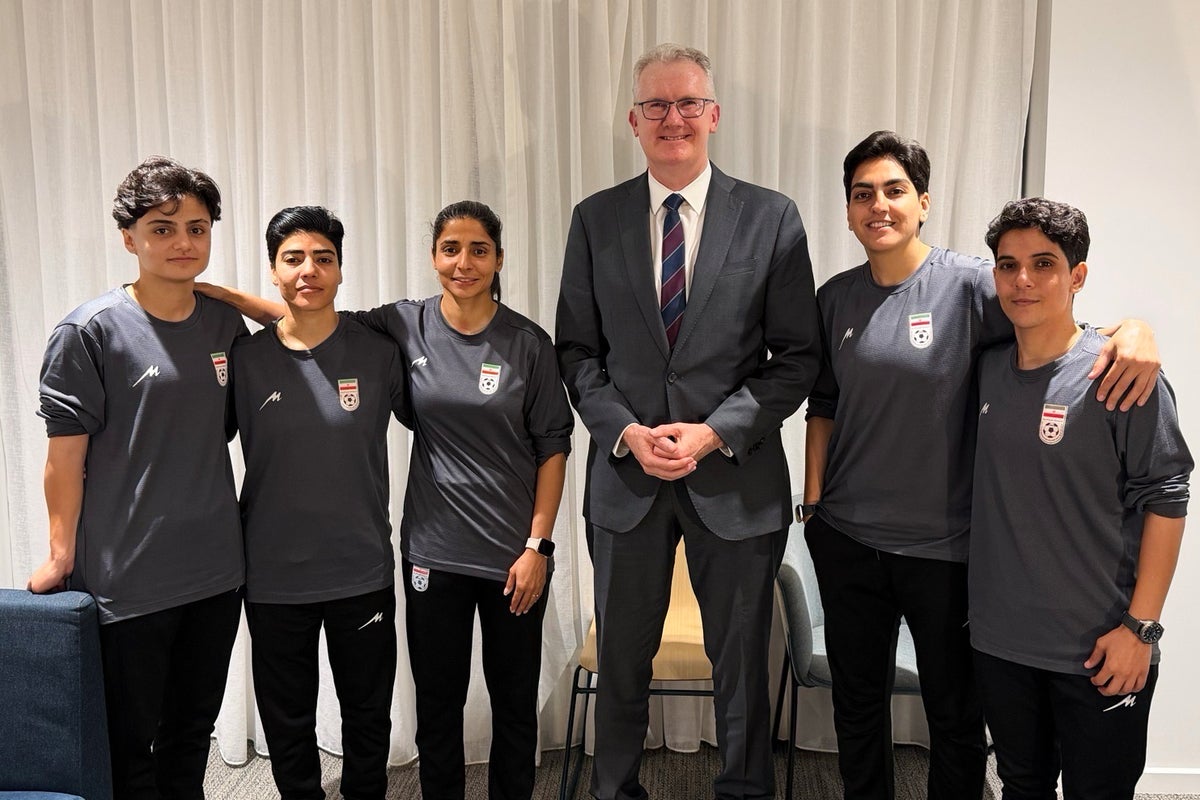
The headlines are practically written by a template at this point. "Chaos." "Chilling orders." "Players dragged onto buses." It’s the kind of high-octane melodrama that sells tabloids but does absolutely nothing to help anyone understand the actual mechanics of sports and statecraft. When an Iranian player seeks asylum or a squad looks tense under the watchful eye of Tehran, the Western media treats it like a shocking glitch in the matrix.
It isn't a glitch. It’s the architecture of the system.
If you’re reading the standard coverage of the Iranian national team's recent struggles, you’re being fed a diet of surface-level panic. You’re being told that this is an unprecedented collapse of morale. I’ve spent years watching how authoritarian regimes use—and occasionally break—their sporting icons. What we’re seeing isn't "chaos." It’s a highly coordinated, albeit brutal, negotiation between a state and its most visible cultural exports.
The Myth of the Distracted Athlete
The first "lazy consensus" we need to dismantle is the idea that political pressure inherently destroys performance. We love the narrative of the "distracted" athlete—the idea that because a player is worried about a "chilling 4-word order" from home, they’ve forgotten how to track a winger or execute a set-piece.
History suggests otherwise. Pressure is the default state for any athlete coming from a highly politicized environment. When the Iranian squad refuses to sing their national anthem or stares down cameras, they aren’t "distracted." They are communicating. If we think the problem is "chaos," we’re missing the point. The "chaos" is the strategy.
Consider the 1970s and 80s, when Eastern Bloc athletes were under constant surveillance. Did they crumble? No. They became some of the most disciplined, if haunted, competitors in history. The assumption that the Iranian team is "falling apart" because of political tension is Western projection. It assumes that an athlete can only perform if they’re in a state of Zen-like, apolitical comfort.
The real story isn't that they’re under pressure. It’s how they’ve managed to weaponize that pressure against the very state that’s trying to suppress them.
When Asylum Bids Are the New Scouting Reports
The media loves a good defection story. It sounds like a Cold War thriller. "Asylum bid." "Protests." It makes for a great front page, but it’s a lazy way to frame a complex career move.
When a high-level player from a sanctioned nation seeks asylum, we should stop treating it exclusively as a political move and start seeing it for what it often is: the only way to professionalize.
If you are a top-tier footballer trapped in a league where you can’t get paid in a stable currency and your passport is a liability, seeking asylum isn't just a cry for freedom. It’s a career-saving pivot. I’ve seen enough of these cases to know that the "chilling orders" from Tehran are often less about the individual player and more about the regime’s desperate need to maintain its "cultural capital."
Every player who leaves is a hole in the state’s propaganda machine. The "chaos" we see reported is actually the friction of a state trying to stop its most valuable assets from realizing their market value elsewhere. If you want to understand why they’re being "dragged onto buses," don't look for a moral explanation. Look at the ledger.
The False Narrative of "Chilling Orders"
Let’s talk about those "chilling 4-word orders." We’ve all seen the clickbait. It’s usually something like "Behave Or Face Consequences" or "Return And Face Punishment."
These aren't orders. They are performance art.
The Iranian government knows exactly how the Western press will react to these leaks. They use them to project an image of absolute control to their domestic audience. They want you to think they’re in total command of every player’s movement. But the reality is that the regime is terrified.
They are terrified of a squad that has more influence than the clerics. They are terrified of a captain who can command the attention of millions with a single social media post. When we repeat these "chilling" narratives, we’re doing the regime’s PR for them. We’re reinforcing the myth of their omnipotence.
Instead of reporting on the "chaos," we should be reporting on the state's total loss of control. If they had control, they wouldn't need to drag players onto buses. They wouldn't need to leak "chilling" orders to the foreign press.
Why the "Save the Team" Sentiment is Toxic
Whenever these stories break, a wave of well-meaning Westerners starts a "Save the Iranian Team" campaign. It’s the worst kind of slacktivism. It assumes that these players are helpless victims who need a white knight to swoop in and "liberate" them.
I’ve spoken to players in these positions. The last thing they want is a patronizing "Save Us" campaign that only makes their situation back home more dangerous. They aren’t asking for your pity. They’re asking for your attention to the actual issues: the lack of funding, the crumbling infrastructure, and the way FIFA looks the other way while member associations are used as political tools.
If you want to help, stop sharing the "chaos" stories and start asking why FIFA hasn't banned the Iranian Football Federation for blatant government interference. FIFA’s own statutes (specifically Article 14 and 19) are very clear: member associations must be independent of political influence.
But FIFA loves the "chaos" narrative, too. It’s a convenient distraction. As long as we’re talking about "chilling orders," we aren’t talking about why FIFA continues to collect television revenue from a region where they’re supposedly upholding "human rights."
The "Bus" Incident: A Logistics Reality Check
Let’s talk about the "players dragged onto buses" claim. To the average reader, it sounds like a kidnapping. To anyone who’s ever worked in team logistics in a high-security environment, it sounds like... a Tuesday.
Teams are moved in bubbles. They are moved with security. They are moved under tight schedules. Does the Iranian security apparatus use more force than, say, the security detail for the French national team? Absolutely. But the "dragging" narrative is often a visual shorthand used by journalists who don't understand how team transport works in a hostile environment.
The problem isn't the bus. The problem is the destination.
Focusing on the "drama" of the transport is a distraction from the reality of the confinement. The players aren't "in chaos." They are being managed like high-value inventory. If we want to be honest about the situation, we need to stop using the language of a thriller and start using the language of a hostage negotiation. Because that’s what this is.
The Brutal Truth About International Football
We like to think that international football is about sport. It isn't. Not for countries like Iran. For them, the national team is a traveling billboard. It’s a way to prove they can compete on a global stage despite sanctions.
When the billboard starts talking back, the state panics.
That isn't "chaos." It’s a revolution in miniature. Every time an Iranian player refuses to celebrate a goal or gives a coded interview, they are dismantling the state's narrative. The "chaos" that the media reports is actually the sound of a very old, very brittle machine starting to seize up.
We’ve been conditioned to look for the "chilling" part of the story. We’ve been trained to feel a sense of doom when we see headlines about Iranian football.
I’m telling you to look for the strength.
The fact that these players can even step onto a pitch, let alone compete at a high level while being monitored by secret police, is one of the greatest athletic feats in the world today. It’s not "chaos." It’s an elite level of compartmentalization that most Western athletes wouldn't survive for a week.
The Strategy for the Future: Stop Consuming the "Chaos"
If you’re a fan or an analyst, your "next move" isn't to feel bad for these players. It’s to change how you consume the news.
Stop clicking on the "chilling 4-word order" headlines. They’re a distraction. Instead, look for the data on player transfers. Look at how many Iranian players are successfully moving to European leagues. Look at the financial flows of the Iranian Football Federation.
The regime wants you to think this is a horror movie. They want you to think they’re the monster in the closet. But the monster is scared of the players. The monster is the one in "chaos."
The players are the ones with the power. They are the ones with the world watching. They are the ones who can actually change the narrative by simply refusing to play the part the regime has written for them.
The next time you see a headline about "players dragged onto a bus," remember this: You don't drag people who are powerless. You only drag the people who have the ability to run in a direction you can't follow.
Stop mourning the Iranian national team. Start respecting the fact that they are currently engaged in the most high-stakes game of their lives, and they’re winning by simply existing.
The "chaos" is the sound of the state losing.
Turn up the volume.