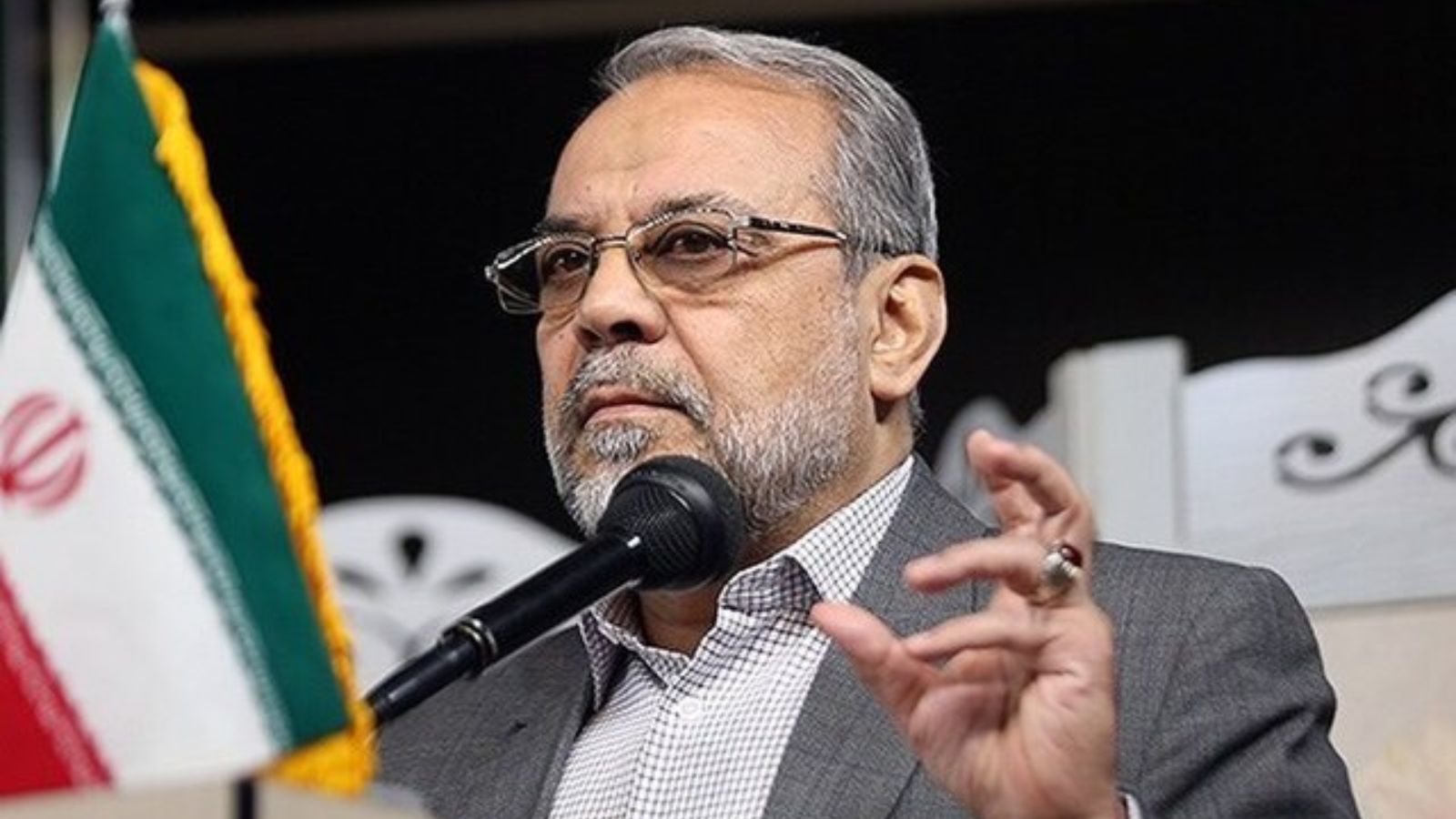
The foreign policy establishment is falling for the same old trick. You’ve seen the headlines: Mohammad Bagher Ghalibaf, the Speaker of Iran’s Parliament, is being whispered about as the "pragmatic" bridge between Tehran and Washington. The narrative is lazy, predictable, and dangerously wrong. It suggests that because a man wears a suit instead of a robe and understands the mechanics of a budget, he is somehow a secret reformer waiting for a phone call from the State Department.
This isn't just a misreading of a politician. It’s a fundamental misunderstanding of how power functions in the Islamic Republic. I’ve watched Western analysts chase these "moderate" ghosts for two decades, usually right before they get burned by the very hardliners they tried to humanize. Ghalibaf isn't the solution to the U.S.-Iran deadlock; he is the ultimate manifestation of the system’s ability to camouflage itself.
The Technocrat Myth
The "lazy consensus" argues that Ghalibaf is a technocrat first and an ideologue second. They point to his time as Mayor of Tehran, where he built highways and modernized waste management, as proof that he values efficiency over martyrdom.
Here is the nuance they missed: In Iran, technocracy is a tool of survival, not a shift in values. Ghalibaf didn't build those bridges to open Iran to the world; he built them to prove that the IRGC (Islamic Revolutionary Guard Corps) can run a city better than the civilians can. He is a former IRGC air force commander. That isn't a line on a resume; it is his DNA.
To suggest he is a "US interlocutor" ignores the fact that his entire career has been dedicated to strengthening the "Resistance Economy"—a system designed specifically to make Iran immune to Western pressure. You don't negotiate with a man whose life's work is building a shield against your primary lever of influence.
The Strategic Fallacy of the Middleman
Washington has a pathological need to find a "backchannel." We saw it with Rafsanjani in the 90s and Rouhani in the 2010s. The logic goes like this: if we find someone who speaks the language of international relations, we can bypass the Supreme Leader’s office.
It’s a fantasy. In the Iranian power structure, the Speaker of Parliament holds significant ceremonial weight but zero independent foreign policy authority.
- The Supreme National Security Council (SNSC): This is where the real decisions happen.
- The Office of the Supreme Leader: This is where the final "yes" or "no" lives.
- The IRGC Quds Force: This is the entity that actually executes regional strategy.
Ghalibaf sits in a legislative body that has been increasingly sidelined. If he is "floating" his name as an interlocutor, he isn't doing it to change Iran’s trajectory. He’s doing it to increase his own leverage in the internal succession struggle. By engaging with him, the U.S. isn't opening a door to peace; it's being used as a pawn in a domestic power play.
Stop Asking if They Will Talk
The question "Will Iran talk to the U.S.?" is the wrong question. Of course they will talk. They’ve been talking for forty years—through Oman, through Switzerland, through the back alleys of New York hotels.
The real question is: "What does Ghalibaf actually bring to the table?"
If the answer is "the ability to sign a deal that the IRGC won't sabotage," then the answer is a resounding zero. Ghalibaf is part of the "Baqer" generation of the Guard—men who believe that the West is in terminal decline. They don't want a "Grand Bargain." They want a tactical reprieve to finish their missile programs and stabilize their currency.
The Cost of the Pragmatist Delusion
When we treat Ghalibaf as a viable partner, we make three critical errors that I’ve seen play out in boardrooms and diplomatic chambers alike:
- We alienate the Iranian street: The youth in Iran don't see Ghalibaf as a "pragmatist." They remember his role in cracking down on student protests in 1999 and 2003. When Washington validates him, it tells the Iranian people that we care more about a temporary nuclear freeze than their actual aspirations.
- We inflate his price: By signaling that we see him as the "sane" option, we give him the green light to demand concessions that he can't actually deliver on.
- We ignore the "Deep State": The IRGC is not a monolithic block, but it is unified in its distrust of any deal that requires genuine transparency. Ghalibaf cannot deliver transparency without dismantling the very economic empire that funds his political base.
The Irony of the Suit and Tie
There is a specific kind of Western arrogance that believes a man who uses PowerPoint and speaks about "urban planning" must secretly want to be our friend. Ghalibaf is the "Blinken" of the IRGC—polished, efficient, and utterly committed to the mission.
The mission isn't reform. The mission is the preservation of the Velayat-e Faqih (Guardianship of the Jurist) under a more modern, efficient facade.
Imagine a scenario where Ghalibaf actually enters a formal dialogue. He would focus on sanctions relief for sectors controlled by his allies. He would offer "vague" assurances on regional proxies while the Quds Force continues to ship hardware to its satellites. He is the master of the "tactical retreat" to ensure a long-term victory.
The Brutal Reality of Iranian Succession
We are currently in the most volatile period of Iranian politics since 1989. The Supreme Leader is aging. The jockeying for position is intense. Ghalibaf is fighting for his political life against the even more radical "Paydarist" faction in Parliament.
By positioning himself as a potential interlocutor with the West, he is attempting to show the Iranian establishment that he is the only one who can manage the "Great Satan" without selling out the Revolution. He’s looking for a win to show the Leader. If the U.S. gives him that win, we aren't moderating Iran; we are funding the next generation of hardline leadership.
The High Price of "Good Enough"
The competitor article suggests that Ghalibaf is "good enough" for a deal. This is the hallmark of a failed strategy. "Good enough" gave us the JCPOA, which lacked the sunset clauses and regional oversight needed to make it stick. "Good enough" ignores the fact that Ghalibaf’s "pragmatism" is just a more effective way to be an adversary.
If you’re a stakeholder in the Middle East, or a business leader trying to hedge against regional instability, don't bet on the "Ghalibaf Pivot." It is a mirage designed to keep the West engaged while the system in Tehran hardens its shell.
We need to stop looking for the "Iranian Gorbachev." He doesn't exist. And even if he did, he wouldn't be a former Guard commander with a history of crushing dissent.
Stop looking for a bridge where there is only a wall painted to look like a door. Ghalibaf is the wall. He’s just better at choosing the paint.
Don't buy the "interlocutor" hype; watch the IRGC’s budget instead. That tells the real story.