.jpeg?width=1200&auto=webp&trim=0%2C0%2C0%2C0)
Fear sells. Specifically, the fear of a "total war" between the United States and Iran has become a reliable annuity for defense consultants and doom-scrolling pundits. Every time a drone crosses a border, the same tired spreadsheet reappears. It predicts a global economic meltdown, $200 oil, and the collapse of the Strait of Hormuz.
This consensus is not just wrong; it is lazy. It ignores the last twenty years of evolution in asymmetric warfare and energy independence. Most "cost of war" analyses are relics of a 20th-century mindset that assumes conflict looks like a game of Risk. It doesn't.
If you are waiting for a cinematic, 1940s-style declaration of war that resets the global economy, you are looking in the rearview mirror. The war is already happening, the costs are already baked in, and the "catastrophe" everyone warns about is a phantom designed to keep bloated defense budgets intact.
The Myth of the $150 Oil Barrel
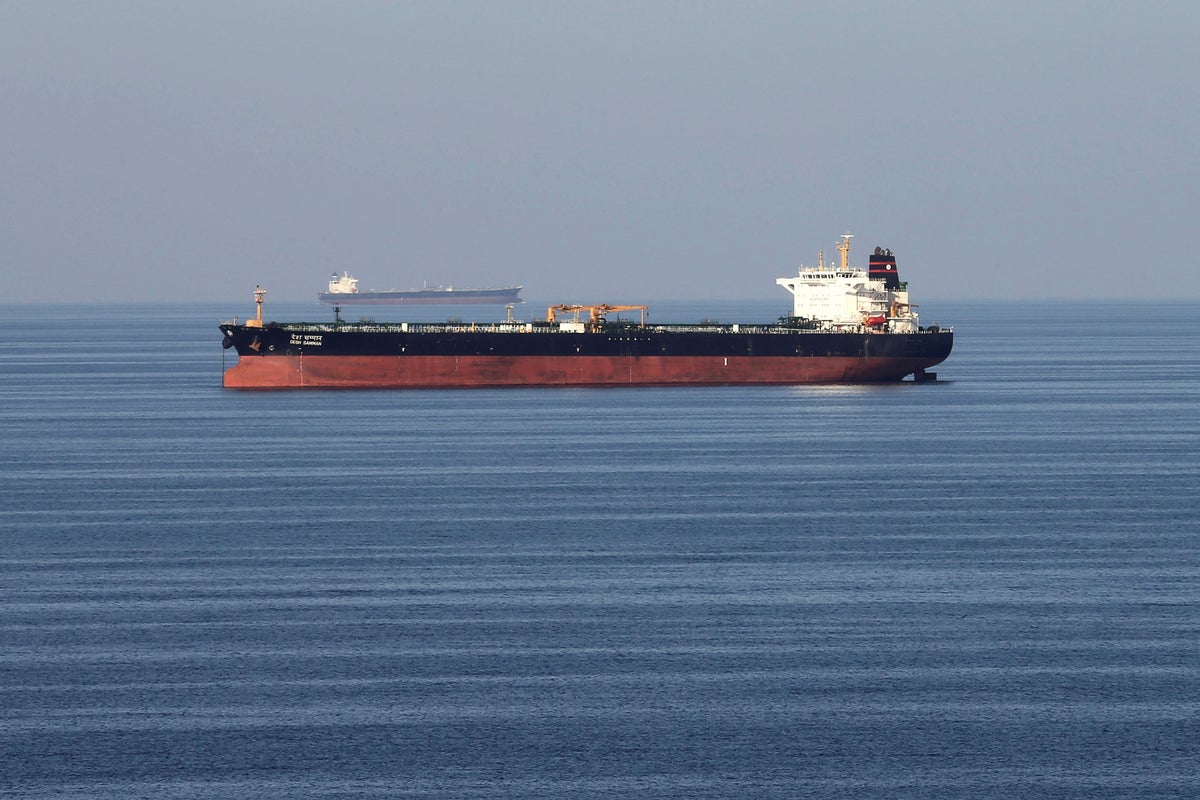
The most common "expert" take is that a hot war with Iran would shutter the Strait of Hormuz, sending oil prices into a vertical climb. This assumes the global energy market is as fragile as it was during the 1973 oil crisis.
It isn't.
Since the shale revolution, the United States has transitioned from a desperate importer to the world’s top producer. More importantly, the infrastructure of the Middle East has adapted. Saudi Arabia’s East-West Pipeline (Abqaiq-Yanbu) can bypass the Strait entirely, moving millions of barrels per day to the Red Sea. The UAE has similar workarounds.
Furthermore, China—Iran's biggest customer—has no interest in a total shutdown of the Persian Gulf. If Tehran actually tried to "close" the Strait, they wouldn't just be fighting the U.S. Navy; they would be committing economic suicide by alienating their only remaining superpower lifeline.
We need to stop pretending that every regional skirmish leads to $10 a gallon gas. The market has already priced in the instability. True volatility comes from the unknown, and at this point, Iran's capabilities are the most mapped-out variables in modern history.
Why "Thousands Dead" is a Flawed Metric
Competitor articles love to lead with body counts. They aggregate the potential loss of life into a single, terrifying number to grab headlines. This is a disservice to actual military strategy.
In a modern US-Iran engagement, the "front line" doesn't exist. We are talking about a conflict defined by:
- Cyber-attrition: Targeting electrical grids and financial switches rather than infantry trenches.
- Proxy-drain: The war is fought in Lebanon, Yemen, and Iraq, not on the streets of Tehran or Washington.
- Precision decapitation: The era of mass troop deployments is over.
When analysts scream about "thousands of casualties," they are usually projecting the Iraq War onto a completely different geography. Iran is a mountainous fortress. No one—not the Pentagon, not the most hawkish senator—is planning a ground invasion of the Iranian plateau.
The real cost isn't in lives lost to bullets; it’s the systematic degradation of regional stability that creates a permanent "war tax" on global trade. We aren't looking at a spike in deaths; we are looking at a permanent plateau of low-level violence that the world has already learned to ignore.
The Hidden Winners of Regional Tension
Nobody wants to admit that certain sectors thrive on the threat of war while being terrified of actual resolution.
If the US and Iran ever actually sat down and settled their grievances, the "security-industrial complex" would lose its best marketing tool. The constant threat allows for:
- Unchecked Defense Spending: The "Iranian Threat" justifies the existence of carrier strike groups that would be obsolete in a conflict with a peer competitor like China.
- Intelligence Budget Creep: Billions are funneled into monitoring proxy groups that, while dangerous, do not pose an existential threat to the American mainland.
- Political Distraction: For both the leadership in Tehran and the hawks in D.C., an external enemy is the ultimate cure for sagging domestic approval ratings.
I have watched policy shops churn out the same "War in Numbers" reports for fifteen years. They always use the same scary font. They always highlight the same narrow corridor of water. They never mention that the "crisis" is the most profitable status quo in the world.
The Asymmetry Trap
The "lazy consensus" assumes that Iran would fight a conventional war. They won't. They can't.
Iran’s military doctrine is built on "active defense." They don't need to sink a U.S. carrier to "win." They only need to make the insurance premiums for shipping so high that it becomes a political liability for the sitting President.
This isn't a war of billions spent on missiles; it's a war of thousands spent on sea mines and cheap drones. The U.S. spends $2 million on a RIM-162 Evolved SeaSparrow Missile to shoot down a drone that cost $20,000 to build.
That is the "war in numbers" that actually matters. It’s an accounting nightmare. The U.S. is using a sledgehammer to swat flies, and the flies are winning the budget war.
Dismantling the "Global Economy in Crisis" Narrative
The global economy is far more resilient than the 24-hour news cycle suggests. During the height of the "Tanker War" in the 1980s, oil still flowed. During the recent Red Sea disruptions by the Houthis, shipping routes shifted, costs ticked up, but the "global collapse" never arrived.
The world has built-in redundancies. Supply chains are decentralizing away from single-point-of-failure regions.
The argument that a US-Iran war would "break" the world is a scare tactic used to justify interventionism or isolationism, depending on who is holding the pen. In reality, the global market treats the Middle East like a volatile tech stock: high risk, but largely partitioned from the core index.
The "People Also Ask" Reality Check
Does Iran have nuclear weapons?
No. But the pursuit of them is more valuable than the weapons themselves. A nuclear-armed Iran is a target. A "pre-nuclear" Iran is a negotiation partner.
Would a war raise gas prices?
Temporarily, yes. Permanently, no. The moment prices hit a certain threshold, American fracking becomes even more profitable, flooded the market and driving prices back down. The "energy crisis" is a self-correcting mechanism in the 2020s.
Who wins a US-Iran war?
Nobody. But the current "simmering" conflict is a victory for the military contractors and the hardliners on both sides who keep their jobs by ensuring the fire never goes out, but never burns the house down.
Stop looking for the "Big One." The war isn't coming; it's been here for decades, and you've been paying for it every single day through a bloated federal budget and a foreign policy based on 1970s trauma. The "numbers" aren't in the casualties of a future conflict—they are in the trillions we've already wasted preparing for a war that neither side can afford to actually start.
Quit buying the apocalypse. It’s bad for your portfolio and worse for your head.
The most "disruptive" thing you can do is realize that the tension is the product, and you are the customer. Stop paying for it.