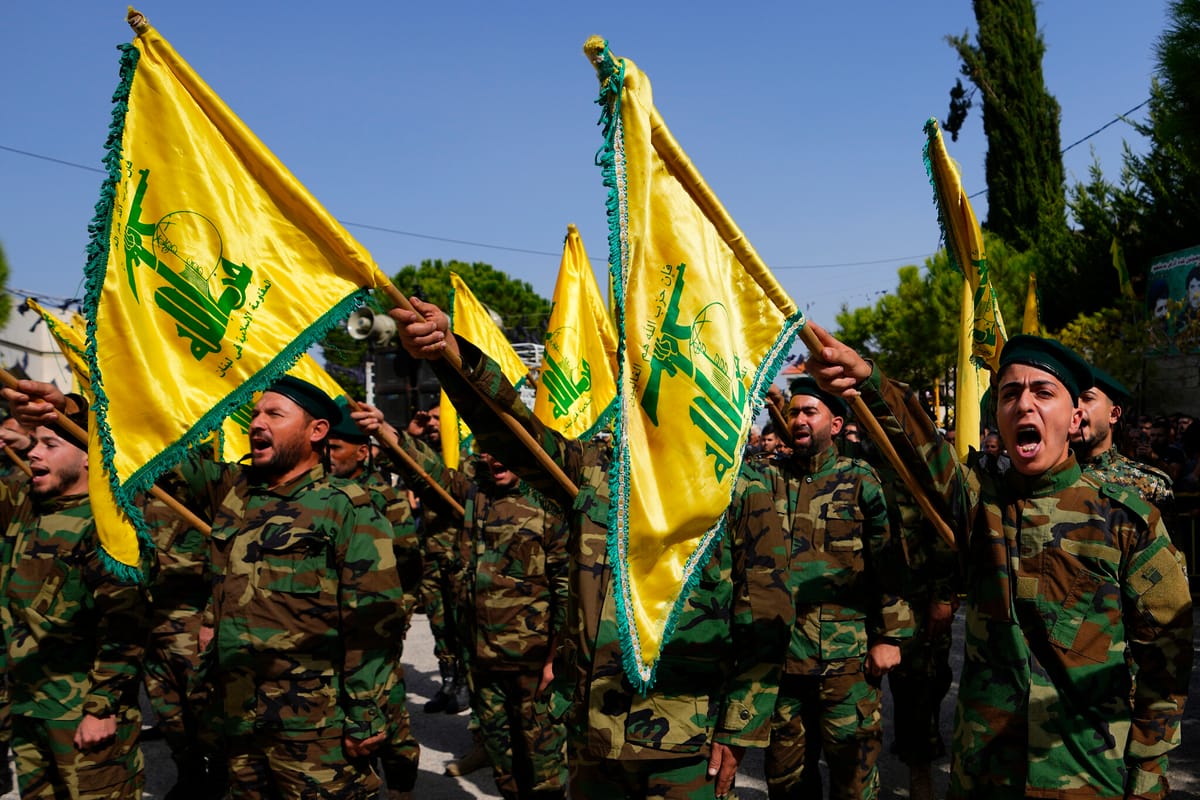
If you think Hezbollah is just another regional militia with rusty AK-47s and some homemade rockets, you’re stuck in 1990. The reality is far more clinical. Over the last decade, and especially following a massive tactical "reboot" orchestrated by Iran’s Islamic Revolutionary Guard Corps (IRGC), the Lebanese group has transformed into a light infantry force that rivals the sophistication of many NATO members. This isn't just about more missiles. It's about a fundamental shift in how they fight, how they think, and how they’ve integrated into Iran’s "Axis of Resistance."
The IRGC didn't just give them better gear. They gave them a new nervous system.
The Syrian Laboratory and the IRGC Blueprint
The Syrian Civil War was a horrific human tragedy, but for the IRGC, it served as the ultimate training ground. Before 2011, Hezbollah was primarily a defensive guerrilla force. They were good at hiding in caves in Southern Lebanon and launching "hit and run" ambushes. Syria changed that. For the first time, Hezbollah fighters were forced to conduct large-scale offensive operations, seize territory, and hold urban centers.
They weren't alone. IRGC Quds Force commanders were embedded at every level. This wasn't a suggestion; it was a total overhaul. Hezbollah learned how to coordinate with air cover—mostly Russian—and how to use armored vehicles. They moved from being "the guys in the bushes" to a structured army capable of maneuvering thousands of troops across international borders.
I’ve looked at the tactical shifts from the battles in Qusair and Aleppo. You see a clear evolution. The IRGC pushed Hezbollah to adopt a "mosaic" command structure. This means local commanders have the autonomy to make high-level decisions without waiting for a call from Beirut or Tehran. In a high-intensity war with Israel, where communications will be jammed or destroyed within minutes, this decentralization is a nightmare for any opposing general.
Beyond the Rocket Count
Everyone talks about the 150,000 rockets. It’s a scary number, sure. But the real story is the transition from "dumb" rockets to precision-guided munitions (PGMs).
The IRGC realized that volume only gets you so far if the Iron Dome can intercept 90% of it. They started a program to smuggle GPS kits into Lebanon that turn old, unguided Zelzal-2 missiles into surgical tools. We’re talking about the difference between hitting "somewhere in Tel Aviv" and hitting a specific window in the Ministry of Defense.
The Drone Revolution
Hezbollah’s drone program is perhaps the most visible sign of the IRGC’s "reboot." They aren't just using commercial quadcopters to drop grenades. They’ve integrated the Ababil and Mohajer series—Iranian designs that can fly hundreds of kilometers.
These drones serve three roles:
- Suicide Missions: Also known as loitering munitions. They are cheap, hard to track, and can overwhelm air defenses through sheer numbers.
- Intelligence: Real-time battlefield surveillance that gives Hezbollah commanders the same "eye in the sky" advantage usually reserved for modern states.
- Electronic Warfare: Using drones to sniff out Israeli signals and jam communications.
The IRGC taught them that you don't need a multi-billion dollar Air Force to achieve air superiority. You just need enough cheap plastic and gasoline to make the other guy's radar go haywire.
The Radwan Force and the Doctrine of Invasion
For decades, the threat from Lebanon was missiles. Now, the threat is boots on the ground—specifically the Radwan Force. This is Hezbollah’s elite unit, trained by the IRGC’s Saberin commandos. They are the tip of the spear.
Their training shifted from "don't let the enemy in" to "we are going in." The IRGC has helped them map out the Galilee region in obsessive detail. They’ve built an underground infrastructure that makes the tunnels in Gaza look like amateur hour. These aren't just crawl spaces; they are reinforced concrete arteries with ventilation, electricity, and enough supplies to hold out for months.
The goal is a "conquest of the Galilee." Even if they only hold a small border village for 48 hours, the psychological impact would be a massive victory for Iran. The IRGC rebooted Hezbollah to ensure that the next war isn't fought in the suburbs of Beirut, but in the streets of Northern Israel.
Financial Independence and the Narco State Myth
There’s a common misconception that Hezbollah is just a puppet waiting for a check from Tehran. While Iran provides the bulk of the funding—estimated at $700 million annually—the IRGC helped them build a global business empire to hedge against sanctions.
They operate in the "Triple Frontier" of South America, run money laundering schemes in Africa, and have deep ties to the Captagon trade. This isn't just about greed. It’s about resilience. If Iran’s economy craters tomorrow, Hezbollah has enough diversified cash flow to keep the lights on and the missiles fueled. The IRGC basically taught them how to be a mafia and a government at the same time.
Why the Reboot Worked
It worked because it wasn't a colonial relationship. The IRGC treats Hezbollah as a partner, not a proxy. There’s a shared ideological DNA that makes the military integration seamless. When an IRGC general talks to a Hezbollah commander, they’re speaking the same tactical and religious language.
They've also mastered the art of "Grey Zone" warfare. They know exactly how much they can push without triggering a full-scale invasion that would destroy their assets. They play the long game. The IRGC rebooted them to be a "deterrent force," meaning their mere existence prevents certain actions by the US and its allies in the region.
The Tactical Reality for 2026
If a conflict breaks out now, you won't see a repeat of 2006. You'll see high-speed drone swarms, precision strikes on power grids, and specialized commando units crossing the border. The IRGC has successfully turned Hezbollah into a regional expeditionary force that can be deployed to Yemen, Iraq, or Syria at a moment’s notice.
They are the blueprint for every other militia in the Middle East. If you want to understand where the Houthis or the Popular Mobilization Forces in Iraq are headed, just look at Hezbollah. They are the finished product.
To track this effectively, watch the movement of Iranian cargo planes into Damascus and the frequency of "joint operations rooms" between these groups. The tech is already there. Now it's just about the timing. If you're analyzing regional security, stop looking for a "smoking gun" from Tehran and start looking at the integrated command structures. That’s where the real power lies. Keep an eye on the Golan Heights; it's the next frontier for this integrated IRGC-Hezbollah doctrine.